





One in Five People See Themselves as Better Drivers when Multitasking
Netradyne Introduces Driver Score System to Boost Driver Safety
Once a positive measurement is achieved by a driver, Netradyne’s Driver·i devices automatically capture video and award a Driver Streak, a subtype of DriverStars within the Netradyne system.
April 4, 2024
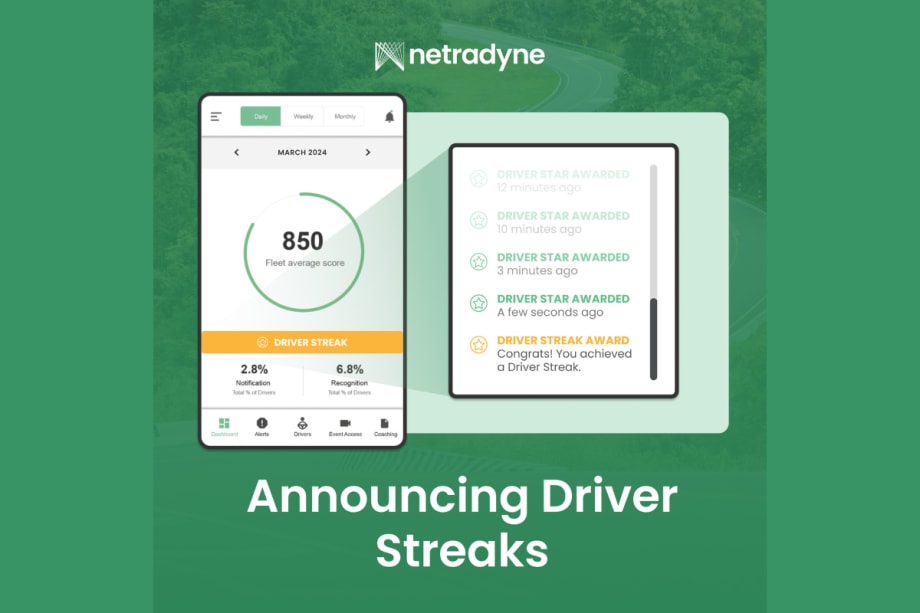
Once a positive measurement is achieved by a driver, Netradyne’s Driver·i devices automatically capture video and award a Driver Streak, a subtype of DriverStars within the Netradyne system.
Photo: Netradyne
2 min to read
Netradyne has expanded its rollout of solutions geared toward enhancing and habitualizing safe driving skills for both commercial fleet drivers and pedestrians by focusing on positive reinforcement.
The expanded rollout of new patented DriverStars called Driver Streaks and Driver Dispute are meant to reinforce safe driving behaviors.
How the System Works
Once a positive measurement is achieved by a driver, Netradyne’s Driver·i devices automatically capture video and award a Driver Streak, a subtype of DriverStars within the Netradyne system.
Examples of possible Driver Streaks include a Stop Sign Streak, which is achieved when a driver stops at consecutive stop signs; or a Safe Speed Streak, achieved when a driver completes a significant total of monitored driving minutes without going above the set speed threshold.
Driver Streaks also includes consecutive driving while being distraction-free as well as maintaining a safe following distance during their trip.
“The biggest thing I’ve noticed is the reduction in phone calls and issues since implementing the Driver·i system,” Sharp Transit EVP Skip Wood said. “If we continue to prioritize our attention on drivers highlighted by the GreenZone alerts and scores (both high and low performers), we will see a dramatic improvement in overall performance.”
Additionally, Driver·i recognizes driver actions like creating space for a vehicle on a street shoulder or achieving separation by slowing down and automatically awards a DriverStar, which has a positive impact on drivers’ GreenZone Scores. DriverStars can also be initiated by safety managers or earned through positive driving performance and reaction.
Easily accessible through the Driver·i portal (IDMS) and in the Driver App, Netradyne is also introducing a new Driver Dispute feature that allows drivers to dispute a claim they perceive as inaccurate.
Safety managers are notified when a driver has submitted a dispute for a particular alert and can work with their drivers to understand the concern while helping them feel heard.
Netradyne President Adam Kahn noted that a recent case study of 100 global customers over 90 days showed a direct correlation between DriverStars and improved safety.
With a 72% increase in DriverStars, drivers' GreenZone Scores increased by 20%, and they dropped severely risky events by 65% and moderately risky events by 34%.
That includes an 81% decrease in speeding and a 22% decrease in distracted driving, which are highly correlated with accidents.
“Netradyne goes way beyond identifying risks. We’re driver advocates. We empower fleets to celebrate the skill and thoughtfulness their drivers demonstrate daily. We’ve seen proof that positive reinforcement and continued performance training make a big impact on fleet safety results and overall safety culture”, Kahn said.
More Safety

Sponsored•October 1, 2026
Fleet Manager’s Ultimate Playbook: Navigating the New Standard in OEM Connectivity
Rising operating costs, driver safety concerns, and unplanned downtime are putting unprecedented pressure on modern fleets. Discover how fleet managers use embedded OEM connectivity and real-time vehicle data to cut TCO, prevent downtime, and protect drivers without aftermarket telematics hardware.
Read More →
From Driver Well-Being to EV Charging | AF News Recap
Mental health belongs in the fleet safety conversation. This week, we’re looking at five ways fleets can support employee well-being before a crisis, plus Holman’s expansion in Mexico, new one-day Fleet Forward passes, and why EV charging demand is outpacing infrastructure growth.
Read More →
Nexar-Nauto Merger Aims to Give Fleets Better Safety Intelligence Through Larger Driving Dataset
Stefan Heck tells Automotive Fleet that combining more than 10 billion miles of driving history with Nexar's AI models will give fleets deeper insights into driver risk and roadway conditions than either company could provide independently.
Read More →
Don't Wait for a Crisis: 5 Ways to Build Mental Health Into Your Fleet Safety Program
For Suicide Prevention Month, fleet and safety leaders have an opportunity to put mental health where it belongs: at the center of workplace safety.
Read More →
How Camera Data Can Strengthen a Fleet’s Insurance Renewal
Insights from a commercial insurance carrier and a broker show how fleets can turn video telematic data, driver coaching, and improved claims results into a stronger case at insurance renewal.
Read More →
The Safest Fleets Aren’t the Ones with the Most Technology
You’ve made the telematics investment. Here’s how to capture the other half of its value and build the safest fleet on the road.
Read More →
Sponsored•August 7, 2026
Hidden in Plain Sight: Fleet Compliance Risks
Fleet compliance isn't just about having policies — it's about consistently enforcing them. This practical guide reveals six hidden compliance risks common in public sector and shared fleet operations and outlines proven strategies to improve visibility, accountability, and audit readiness
Read More →
NETS Sets 2026 Fleet Safety Benchmark Conference for Indianapolis
The Sept. 15–17 program will feature fleet benchmarking data, case studies, emerging technologies, and implementation strategies while running alongside the NSC Safety Congress & Expo.
Read More →
Off-the-Job Crashes Account for 43% of Employers’ $61.7 Billion Crash Burden
NETS quantifies costs dispersed across fleet, risk, HR, and other departments while providing new per-crash benchmarks for employers.
Read More →
Ram Recalls More Than 1.27 Million 1500 Pickups for Seat Belt Anchor Issue
The recall affects certain 2019-2026 Ram 1500 pickups that may have improperly attached second-row seat belt buckle anchors.
Read More →