




Study Reveals Concerns Hindering EV Adoption by Women
Charging safety seemed to be a key component for the 1,000 women and men surveyed who were considering buying an EV.


In Canada, men account for 74% of EV owners, and in the US, 72% of EV owners are men, indicating there are barriers for women in embracing EVs.
Photo: Geotab
Geotab released new research on Oct. 24 which indicates that charging station safety is a high consideration among women, and could be hindering electric vehicle (EV) adoption in Canada and the United States (U.S.).
The study surveyed more than 1,000 men and women in Canada and the U.S. respectively. Their findings indicate safety concerns such as well-lit, less remote charging stations, may be a key consideration in EV adoption in both Canada and the U.S. Of the survey respondents, 46% of Canadian women and 33% of U.S. women are considering an EV as their next vehicle, while actual EV ownership statistics reveal a stark disparity.
In Canada, men account for 74% of EV owners, and in the U.S., 72% of EV owners are men, indicating there are barriers for women in embracing EVs.
Safety Concerns Explored
The study established a compelling correlation between safety concerns surrounding charging location and EV ownership, revealing notable gaps between intent to purchase and actual adoption.
Canadian Women’s Concerns:
30% of women surveyed expressed concerns about the overall safety of EV charging locations.
Nearly half of the women surveyed noted easily accessible, well-lit charging stations in less remote areas would help convince them to purchase an EV.
20% of women surveyed are also more likely to consider increased security around charging stations as a convincing factor for their next vehicle purchase.
U.S. Women’s Concerns:
43% of women surveyed have safety concerns regarding EV charging stations.
Approximately 40% of women surveyed noted the importance of accessible, well-lit charging stations in less remote areas would influence their EV purchase decision.
21% of women surveyed consider increased security around charging stations as a factor that could influence their next vehicle purchase.
“The lack of consistency in charging infrastructure along with concerns for personal safety may help explain in part, why women make up a minority of electric vehicle owners,” said VP of Connected Car & Platform Solutions at Geotab, Sherry Calkins in a recent news release. “Safety is also one of the most cited concerns of women working in the commercial vehicle industry, including trucking, especially when it comes to truck stops and rest areas. As we strive to attract more women to the industry, at a time when commercial fleets are moving towards EV adoption, it is important to consider these issues to avoid creating new barriers in the industry.”
Youthful Enthusiasm for EVs
The research also indicates that younger age groups (18-34) exhibit the most interest in EV ownership, with 53% of U.S. and 55% of Canadian respondents in this age group expressing a strong desire to own an EV.
However, factors such as the cost of EVs may be limiting actual adoption, since Canadian EV drivers tend to be older with at least 50% of Canadian EV drivers aged 55 years or older and the average age of a Canadian EV driver being 51.3 years. The same is true in the U.S., where people aged 55 and older make up 53.6% of EV owners.
More Safety

How Camera Data Can Strengthen a Fleet’s Insurance Renewal
Insights from a commercial insurance carrier and a broker show how fleets can turn video telematic data, driver coaching, and improved claims results into a stronger case at insurance renewal.
Read More →
The Safest Fleets Aren’t the Ones with the Most Technology
You’ve made the telematics investment. Here’s how to capture the other half of its value and build the safest fleet on the road.
Read More →
Hidden in Plain Sight: Fleet Compliance Risks
Fleet compliance isn't just about having policies — it's about consistently enforcing them. This practical guide reveals six hidden compliance risks common in public sector and shared fleet operations and outlines proven strategies to improve visibility, accountability, and audit readiness
Read More →

NETS Sets 2026 Fleet Safety Benchmark Conference for Indianapolis
The Sept. 15–17 program will feature fleet benchmarking data, case studies, emerging technologies, and implementation strategies while running alongside the NSC Safety Congress & Expo.
Read More →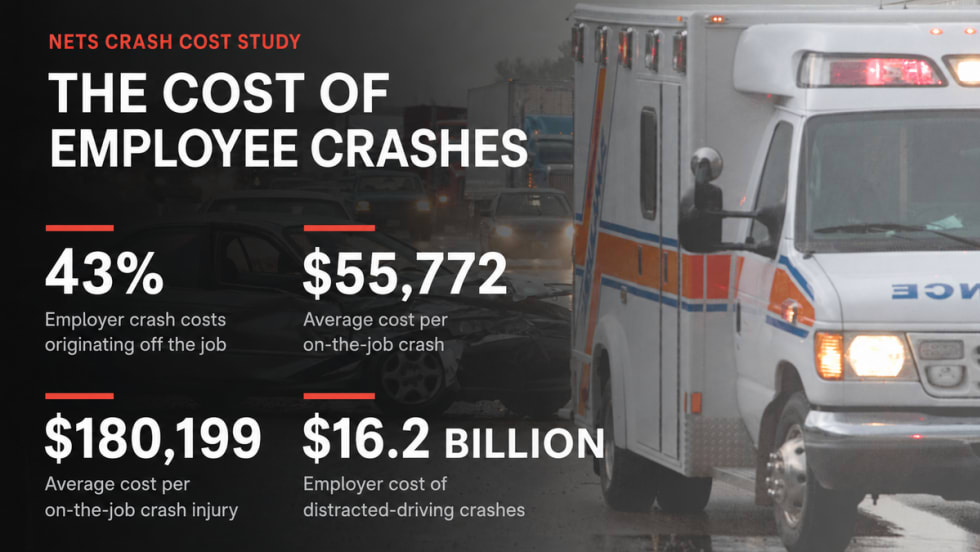
Off-the-Job Crashes Account for 43% of Employers’ $61.7 Billion Crash Burden
NETS quantifies costs dispersed across fleet, risk, HR, and other departments while providing new per-crash benchmarks for employers.
Read More →
Ram Recalls More Than 1.27 Million 1500 Pickups for Seat Belt Anchor Issue
The recall affects certain 2019-2026 Ram 1500 pickups that may have improperly attached second-row seat belt buckle anchors.
Read More →
How Better Visibility Cut Speeding Violations by 48%
Fleet leaders don't need more data, they need clearer visibility into what the data is saying. This case study explores how one utility replaced speeding-event counts with a single metric — miles driven in violation — to strengthen safety and significantly reduce speeding violations.
Read More →
Operation Safe Driver Week: Why the Industry's Oldest Safety Campaign Still Matters to Fleets
A look at how a 2007 enforcement initiative became one of the most consequential weeks on the fleet safety calendar, and what it means for your drivers in 2026.
Read More →
Nexar-Nauto Merger Aims to Give Fleets Better Safety Intelligence Through Larger Driving Dataset
Stefan Heck tells Automotive Fleet that combining more than 10 billion miles of driving history with Nexar's AI models will give fleets deeper insights into driver risk and roadway conditions than either company could provide independently.
Read More →
From Silos to Solutions: Relationship Management for Safer Fleets
From telematics adoption and driver accountability to policy consistency and risk mitigation, this episode breaks down what it really takes to build a safer fleet culture without slowing business down.
Read More →