




NICB Offers Senate Committee Policy Recommendations to Combat Auto Theft, Carjackings
With an alarming rise in auto thefts and many cities experiencing triple digit increases in carjackings, David Glawe of the National Insurance Crime Bureau, provided testimony on the topic before the U.S. Senate Committee on the Judiciary.


In 2021, auto thefts increased 16.5% as compared to 2019. States that saw the biggest spikes include Colorado, Wisconsin, New York, and Washington, D.C.
Source: NICB
Across the nation, auto thefts rose 16.5% in 2021 compared to 2019, and nearly 29% compared to 2017. Moreover, many large cities have experienced triple digit increases in carjackings in recent years.
In a move to help reverse the alarming trend, David Glawe, president and CEO of the National Insurance Crime Bureau (NICB) recently provided expert testimony before the U.S. Senate Committee on the Judiciary regarding this complex issue, while also offering some key policy recommendations.
He spoke on the rising number of crimes, the connection between auto thefts and carjackings and other serious violent crimes, and how NICB partners closely with federal and local law enforcement to resolve these cases.
Glawe also provided lawmakers with concrete policy recommendations to address the dual problems. His six policy recommendations included increasing community policing programs, revising well-intentioned criminal justice reform policies, enforcing existing laws as written, focusing attention on violent offenders, collecting national and state data on carjackings, and identifying and implementing successful early intervention programs.
The NICB collects data on both crimes — and the statistics are dire. Some states saw a huge increase in auto thefts. Colorado, for example, experienced 79% more auto thefts in 2021 compared to 2019, and Wisconsin had 74% more auto thefts over the same period.
Additionally, the total volume of thefts between 2019 and 2021 was staggering. California, for example, saw over 200,000 auto thefts in 2021 compared to 160,000 in 2019.
The carjacking trends are even more disturbing as a carjacking involves violent confrontation with an offender or the perceived threat of violence that could cause death or serious personal harm.
Between 2019 and 2021, New York experienced a 286% spike in carjackings — the biggest increase among major metropolitan areas. Philadelphia, which saw a 238% increase, came in second and Chicago followed that with 207%. Carjackings rose 200% in Washington, D.C., and 159% in New Orleans during the same period.
More Safety

What’s Next for Fleet? Safety, AI & Industry Recognition | AF News Recap
Could your company's culture be encouraging distracted driving? This week, we're exploring how workplace expectations affect driver safety, what AI, EVs, and autonomous vehicles could mean for the future of fleet management, and how fleet professionals can strengthen their award nominations.
Read More →
Does Your Fleet's Culture Encourage Distracted Driving?
What happens when the people responsible for enforcing safety rules are the ones setting the wrong example? The answer may reveal why some of the biggest risks to fleet drivers have little to do with what's written in the employee handbook.
Read More →
Fleet Manager’s Ultimate Playbook: Navigating the New Standard in OEM Connectivity
Rising operating costs, driver safety concerns, and unplanned downtime are putting unprecedented pressure on modern fleets. Discover how fleet managers use embedded OEM connectivity and real-time vehicle data to cut TCO, prevent downtime, and protect drivers without aftermarket telematics hardware.
Read More →
From Driver Well-Being to EV Charging | AF News Recap
Mental health belongs in the fleet safety conversation. This week, we’re looking at five ways fleets can support employee well-being before a crisis, plus Holman’s expansion in Mexico, new one-day Fleet Forward passes, and why EV charging demand is outpacing infrastructure growth.
Read More →
Nexar-Nauto Merger Aims to Give Fleets Better Safety Intelligence Through Larger Driving Dataset
Stefan Heck tells Automotive Fleet that combining more than 10 billion miles of driving history with Nexar's AI models will give fleets deeper insights into driver risk and roadway conditions than either company could provide independently.
Read More →
Don't Wait for a Crisis: 5 Ways to Build Mental Health Into Your Fleet Safety Program
For Suicide Prevention Month, fleet and safety leaders have an opportunity to put mental health where it belongs: at the center of workplace safety.
Read More →
How Camera Data Can Strengthen a Fleet’s Insurance Renewal
Insights from a commercial insurance carrier and a broker show how fleets can turn video telematic data, driver coaching, and improved claims results into a stronger case at insurance renewal.
Read More →
The Safest Fleets Aren’t the Ones with the Most Technology
You’ve made the telematics investment. Here’s how to capture the other half of its value and build the safest fleet on the road.
Read More →
Hidden in Plain Sight: Fleet Compliance Risks
Fleet compliance isn't just about having policies — it's about consistently enforcing them. This practical guide reveals six hidden compliance risks common in public sector and shared fleet operations and outlines proven strategies to improve visibility, accountability, and audit readiness
Read More →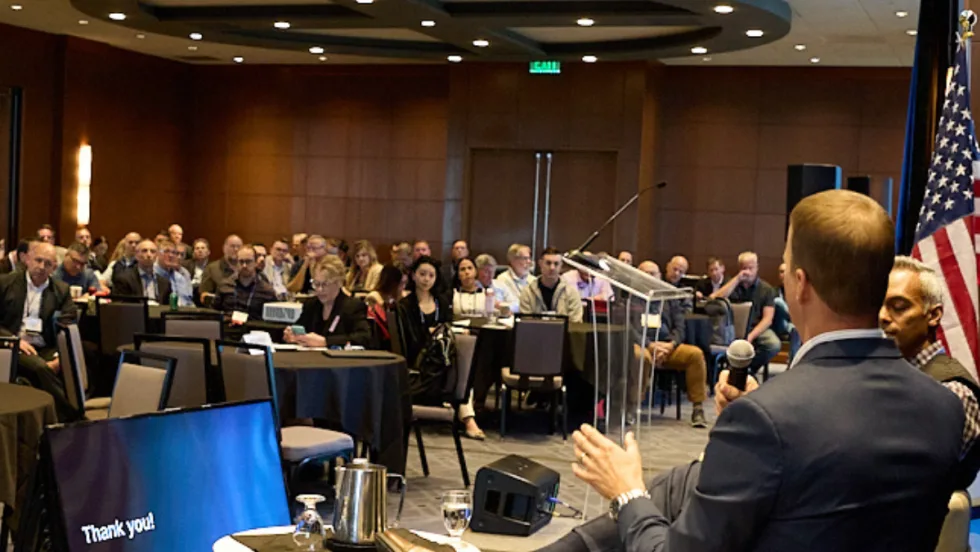
NETS Sets 2026 Fleet Safety Benchmark Conference for Indianapolis
The Sept. 15–17 program will feature fleet benchmarking data, case studies, emerging technologies, and implementation strategies while running alongside the NSC Safety Congress & Expo.
Read More →