




What Amazon Gets Right
With traffic fatalities and injuries on the rise despite a decline in driving during the pandemic, we need to look at the systemic issues affecting our roadways and get serious about safety.

Last year, the U.S. saw 38,680 traffic-related fatalities. As fleets look at ways in increase safety and reverse those numbers, video telematics is one solution that can help.
Photo by Pexels from Pixabay
1.35 million, 50 million, 4.4 million, 38,680, 1.37.
Those are some of the figures we discuss as members of the Together For Safer Roads coalition. 1.35 million traffic fatalities and 50 million debilitating injuries on the world’s roads. 4.4 million serious injuries in the United States and 38,680 traffic-related fatalities in 2020. And last but certainly not least ,1.37 represents the wonky, yet professional standard used to evaluate safety: the number of deaths per 100 million vehicle miles traveled in the United States during 2020, a 23% increase in the fatal crash rate despite an estimated 13% decline in driving as the pandemic took hold.
Most people I speak with are surprised to learn that the risk on our roads increased even as our lives have been curtailed by the coronavirus. One might conclude that drivers with more open space were taking more chances and causing serious crashes, injuries, and fatalities. That is partially correct. NHTSA’s analysis of the 2020 data shows that the main behaviors that drove this increase include: impaired driving, speeding, and failure to wear a seat belt. But, it’s equally true that we have systemic, chronic issues affecting our roadways that prevent us from ending the pandemic of road deaths and serious injuries.
What does this have to do with commercial vehicles and fleets? Let’s start with the fact that owners and operators of business-related vehicles make up a large portion of the miles traveled on our roads. Millions of commercial vehicles are traveling billions of miles on our roads. What’s also a fact is that we have an aging commercial vehicle fleet, one that is not equipped with safety technologies that are standard on modern production lines.
This leaves the drivers of these vehicles and the communities in which they operate exposed to an awful lot of crash risk – risk that is personal for sure – but that paradoxically can’t be boiled down to personal responsibility.
Don’t get me wrong. I do think people, especially professional drivers, want to be responsible. But we as humans are imperfect. We are prone to distraction, we get busy, we forget things, we literally don’t see things that are right under our noses (let alone things obscured in blind zones), we are emotional, we are… human. These reasons are why we need to accept our species’ shortcomings and take a more proactive, systematic approach to addressing risks when we are behind the wheel.
Amazon was recently taken to task for doing just this. Confidential documents revealed the company “has developed a point system for drivers using the cameras in its delivery trucks that can identify anything from a sneeze to whether a driver has their eyes on the road or is following another car too closely.” Whoa. That sounds pretty bad. Sneezing? Come on. Typical Amazon. That’s ridiculous.
How about eyes on the road? Phone use? Tailgating? Speeding? Drowsiness? Using video telematics to understand these things and ensure responsibility at scale is smart given human biology and susceptibility. In fact, when you are dealing with a supply chain as vast and evolving as quickly as Amazon’s, I would even say it is laudable. Too often supply chain champions decide to draw neat lines of responsibility, reinforced by legal agreements, that shift risk without putting in place any real risk mitigation measures. At least, in this case, Amazon is creating a system that measures and mediates risk across their massive network of delivery service partners (DSPs) and their self-managed fleet.
Of course, tech isn’t a universal panacea. None of this matters if video telematics does not deliver results as promised and help us humans to create safety cultures. Whether for performance management, fatigue, and distraction monitoring, advanced driver assistance or coaching and training purposes, video telematics is rapidly catching on. Market adoption rate data and early evidence make it look like it’s making a difference. Fleets are seeing double digit declines in risky driving behaviors and even improvements in fuel efficiency. More data and studies are needed, but I’m optimistic that this emerging best practice can have a far reaching, life-saving impact. But don’t just take my word for it. Now is the time to act.
About the author: David Braunstein is president of Together for Safer Roads, leading the global coalition's efforts to improve road safety and save lives, including implementing Vision Zero city partnerships and expanding TSR's work with large and small fleet operators.
Hear more from Braunstein at the 2021 Fleet Safety Experience closing keynote, "How Will the Truck of the Future Enhance Road Safety?" on Sept. 23 at 3:30 ET.
More Safety

Does Your Fleet's Culture Encourage Distracted Driving?
What happens when the people responsible for enforcing safety rules are the ones setting the wrong example? The answer may reveal why some of the biggest risks to fleet drivers have little to do with what's written in the employee handbook.
Read More →
Fleet Manager’s Ultimate Playbook: Navigating the New Standard in OEM Connectivity
Rising operating costs, driver safety concerns, and unplanned downtime are putting unprecedented pressure on modern fleets. Discover how fleet managers use embedded OEM connectivity and real-time vehicle data to cut TCO, prevent downtime, and protect drivers without aftermarket telematics hardware.
Read More →
From Driver Well-Being to EV Charging | AF News Recap
Mental health belongs in the fleet safety conversation. This week, we’re looking at five ways fleets can support employee well-being before a crisis, plus Holman’s expansion in Mexico, new one-day Fleet Forward passes, and why EV charging demand is outpacing infrastructure growth.
Read More →
Nexar-Nauto Merger Aims to Give Fleets Better Safety Intelligence Through Larger Driving Dataset
Stefan Heck tells Automotive Fleet that combining more than 10 billion miles of driving history with Nexar's AI models will give fleets deeper insights into driver risk and roadway conditions than either company could provide independently.
Read More →
Don't Wait for a Crisis: 5 Ways to Build Mental Health Into Your Fleet Safety Program
For Suicide Prevention Month, fleet and safety leaders have an opportunity to put mental health where it belongs: at the center of workplace safety.
Read More →
How Camera Data Can Strengthen a Fleet’s Insurance Renewal
Insights from a commercial insurance carrier and a broker show how fleets can turn video telematic data, driver coaching, and improved claims results into a stronger case at insurance renewal.
Read More →
The Safest Fleets Aren’t the Ones with the Most Technology
You’ve made the telematics investment. Here’s how to capture the other half of its value and build the safest fleet on the road.
Read More →
Hidden in Plain Sight: Fleet Compliance Risks
Fleet compliance isn't just about having policies — it's about consistently enforcing them. This practical guide reveals six hidden compliance risks common in public sector and shared fleet operations and outlines proven strategies to improve visibility, accountability, and audit readiness
Read More →
NETS Sets 2026 Fleet Safety Benchmark Conference for Indianapolis
The Sept. 15–17 program will feature fleet benchmarking data, case studies, emerging technologies, and implementation strategies while running alongside the NSC Safety Congress & Expo.
Read More →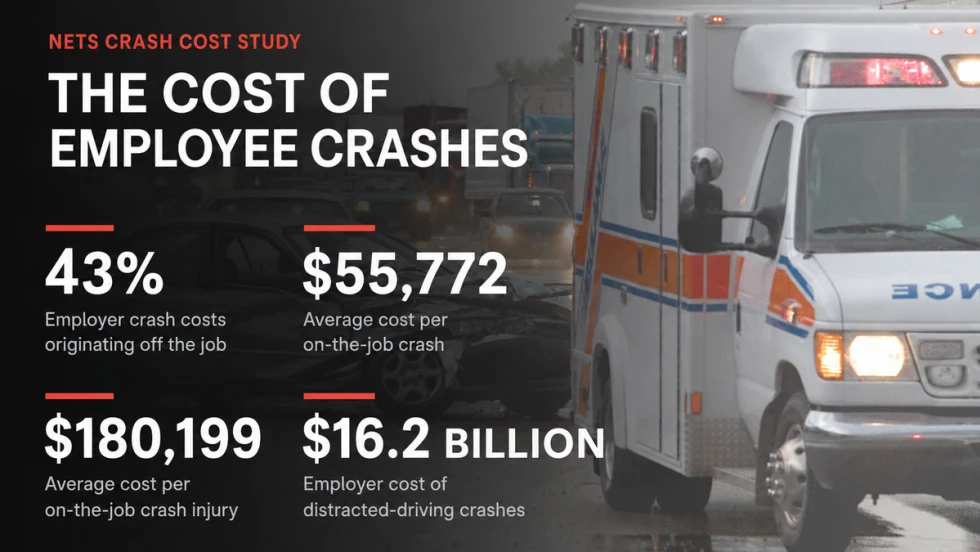
Off-the-Job Crashes Account for 43% of Employers’ $61.7 Billion Crash Burden
NETS quantifies costs dispersed across fleet, risk, HR, and other departments while providing new per-crash benchmarks for employers.
Read More →