





Related: COVID-19 Disruption: Fleet’s Greatest Challenge Ever
Average Business Mileage Reaches 65% of Pre-Pandemic Levels
Average business mileage across the U.S. has increased to 65% of pre-pandemic levels, and overall field activity is 85% higher than the week of April 5, the lowest level of business mileage in 2020, according to data from Motus.
October 22, 2020
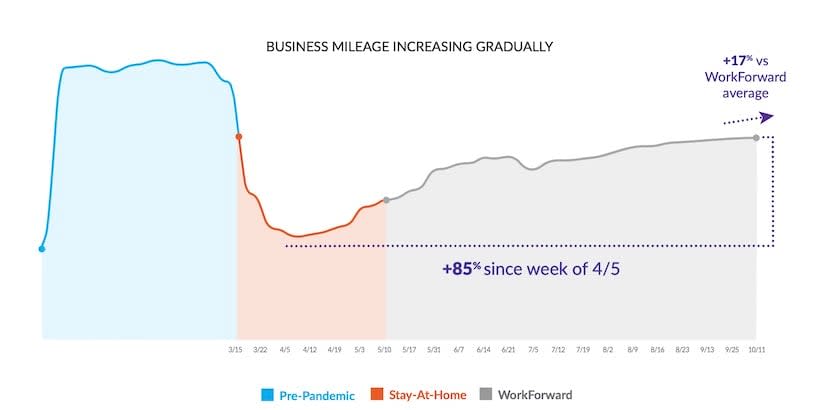
Photo: Motus
2 min to read
Average business mileage across the U.S. has increased to 65% of pre-pandemic levels, and overall field activity is 85% higher than the week of April 5, the lowest level of business mileage in 2020, according to a new mileage trends flash report from Motus.
The report covers business mileage – an indicator of field activity levels—and presents a current view of economic growth and recovery for different regions and industry sectors, according to Motus. The report measures business activity in three periods: pre-pandemic, stay-at-home (measuring activity from the start of COVID to May 2020), and WorkForward, the latter of which measured activity from the middle of May to now.
The food and beverage industry is at 79% of pre-pandemic levels.
The construction and building materials industries are at 73% of pre-pandemic levels.
Business services are at 60%, which is 24% above the average.
Hospitals and healthcare are at 60% of pre-pandemic levels, 7% above the average.
Pharmaceutical/Biotech & Medical Devices industries are at 56% of pre-pandemic levels, which is 29% above the average.
Retail is at 55% of pre-pandemic levels, 9% above the average.
Energy and environmental is at 45%, 22% above the average.
Manufacturing is at 44%, which is 36% above the average.
Mileage trended upward rapidly in most industries in May and June – most likely due to widespread reopening efforts and pent-up demand, according to data from Motus. Recent months have seen more volatility in mileage in different industry sectors—illustrating how business activity trends differ depending on where and how companies operate.
Regionally, meanwhile, the Western U.S. is trending at about 67% of pre-pandemic levels, business mileage in the South and Midwest has grown to 66% of pre-pandemic levels and Northeast mileage activity has grown to 60% of pre-pandemic levels.
More Operations

Sponsored•July 23, 2026
The Top 300 Commercial Fleets
The Top 300 Commercial Fleets: See the List
Read More →
Your Local Dealer Knows More Than You Think
Your local dealer can provide an information advantage that extends well beyond courtesy deliveries.
Read More →


Fleet Meets: Austin Schutte
Here are some industry insights, personal touches, and words of advice from the CEO and Founder of Anew Solutions.
Read More →
Soap Box Derby Challenge: What’s Powering Team Brown
The car is coming together, the students are solving real build problems, and the fleet industry is helping push Team Brown toward the starting line.
Read More →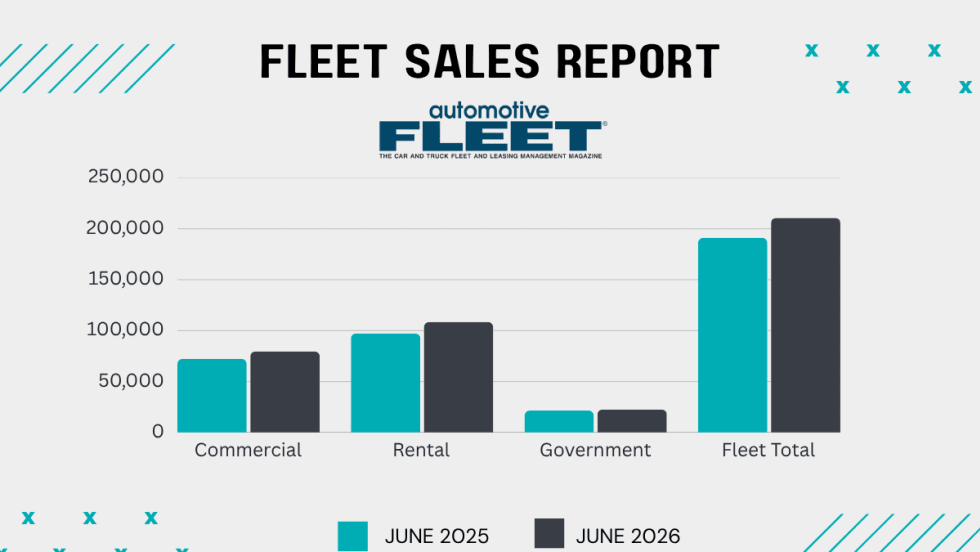
Commercial Fleet Sales Contribute To June, YTD Gains
The fleet sector has boosted its vehicle purchases at a reliable pace in the first half of this year compared with 1H 2025.
Read More →
Sponsored•July 2, 2026
What Fleet Managers Really Want From Vendors
From customer service frustrations and technology breakdowns to RFQs, change management, and the growing impact of turnover across the industry, this conversation pulls back the curtain on the real operational challenges fleet managers are navigating every day.
Read More →
Sponsored•July 2, 2026
Fleet Safety Masterclass: Industry Leaders on Storytelling, Strategy & Innovation
In this special masterclass episode, industry leaders break down what it really takes to build safer fleets in today’s increasingly distracted and data-driven world.
Read More →
Sponsored•July 2, 2026
Integrating Legacy Fleet Systems and Historical Data
In this episode, we bring together fleet and technology leaders to unpack the realities of data integration, system migrations, and the evolving role of AI in fleet management.
Read More →
Sponsored•July 2, 2026
From Resistance to Results: Change Management Strategies for Fleets
From new technologies and safety programs to evolving regulations, fleets are under constant pressure to adapt. But as Dr. Betz explains, success isn’t about the system you implement—it’s about whether your people actually use it.
Read More →