




Video: GM CEO Defends Chief Counsel in Senate Testimony
GM CEO Mary Barra testifies during a Senate subcommittee hearing about the automaker's actions since the ignition switch recall.
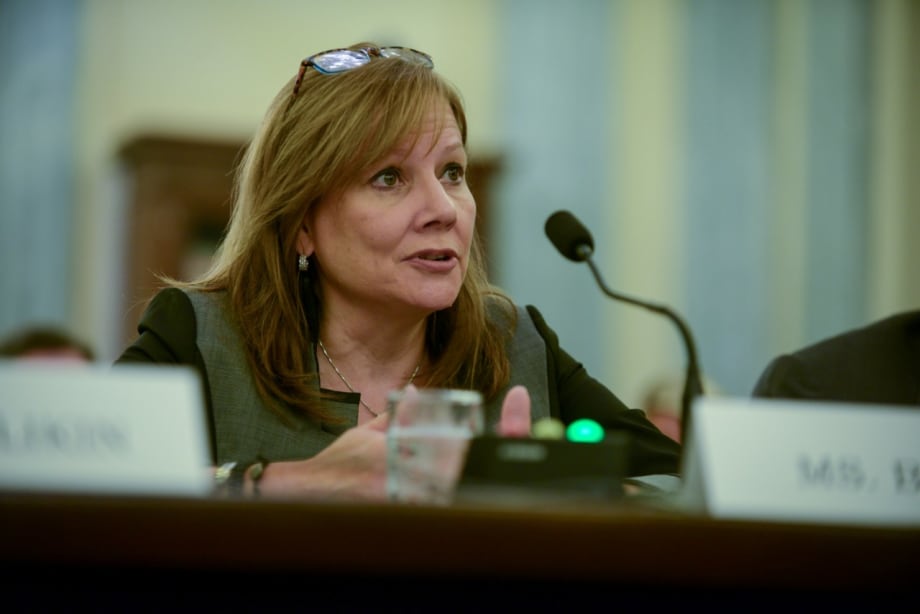
GM CEO Mary Barra testifies during a Senate subcommittee hearing on Thursday, July 17. Photo by Fred Watkins for General Motors.
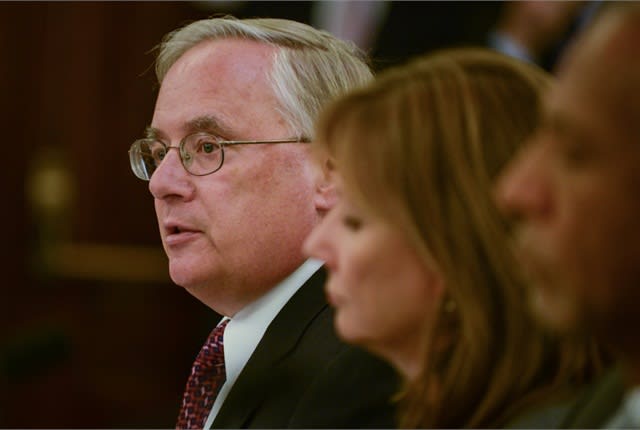
GM General Counsel Michael P. Millikin and GM CEO Mary Barra during hearing testimony. Photo by Fred Watkins for General Motors.
GM General Counsel Michael P. Millikin and GM CEO Mary Barra during hearing testimony. Photo by Fred Watkins for General Motors.
During a U.S. Senate subcommittee hearing on July 17, General Motors CEO Mary Barra vowed to act on all of the recommendations of the Valukas report. But when two senators suggested the report's findings justify the firing of GM General Counsel Michael Millikin, Barra vehemently disagreed.
While fielding questions from subcommittee members, Barra strongly defended the company's decision to retain Millikin, calling him a man of “tremendously high integrity.”
Millikin, who was seated next to Barra and also testified, drew harsh criticism from senators Claire McCaskill (D-Mo.) and Richard Blumenthal (D-Conn.). Both argued that Millikin should have been fired because of his staff's inaction once the defect was identified.
But Millikin said he only learned of the Cobalt ignition switch defect during the first week of February this year and took action immediately.
Millikin, who has worked for General Motors 37 years, assured subcommittee members that, like Barra, he’s committed to implementing recommendations of the Valukas report. In the future, he said, he will personally review all GM cases involving a fatality or serious physical injury prior to any legal settlement or trial.
The hearing was held by the Consumer Protection, Product Safety and Insurance subcommittee, which falls under the Senate Committee on Commerce, Science and Transportation.
During her testimony, Barra pledged to ensure the company “places customers and their safety at the center of every aspect of our business” going forward.
Barra again expressed sympathy for the accident victims and their families, and she reiterated the automaker’s commitment to Ken Feinberg’s role in independently administering the compensation fund. The ignition switch defect has been linked to 13 deaths.
Additionally, Barra updated the subcommittee on actions GM has taken since issuing the ignition switch recalls. Measures she cited included firing 15 employees for misconduct or incompetence, creating a new position of vice president of global safety, launching the Speak Up for Safety program, adding 35 safety investigators, and requiring greater transparency and information sharing within the legal staff and other business units.
To view video footage of Barra's prepared testimony, click on the photo or link below.
To view video footage of some of her responses to questions, click on the link or photo above.
VIDEO: Barra Provides Update on Ignition Switch Recall
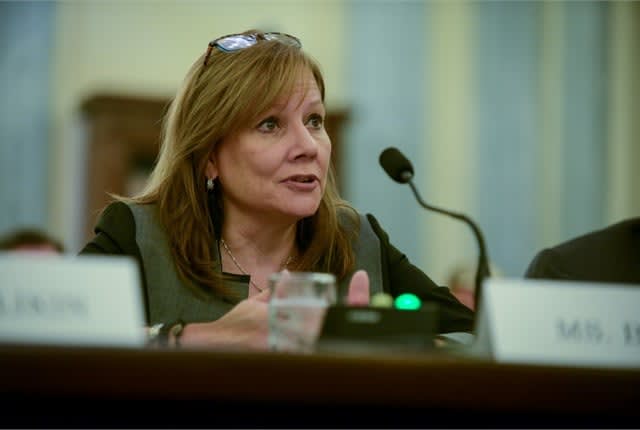
GM CEO Mary Barra testifies during a Senate subcommittee hearing on Thursday, July 17. Photo by Fred Watkins for General Motors.
GM CEO Mary Barra testifies about the ignition switch recall during a Senate subcommittee hearing on Thursday, July 17. Photo by Fred Watkins for General Motors.
To read Barra’s prepared testimony, click here.
To read Millikin’s prepared testimony, click here.
More Safety

Nexar-Nauto Merger Aims to Give Fleets Better Safety Intelligence Through Larger Driving Dataset
Stefan Heck tells Automotive Fleet that combining more than 10 billion miles of driving history with Nexar's AI models will give fleets deeper insights into driver risk and roadway conditions than either company could provide independently.
Read More →
Don't Wait for a Crisis: 5 Ways to Build Mental Health Into Your Fleet Safety Program
For Suicide Prevention Month, fleet and safety leaders have an opportunity to put mental health where it belongs: at the center of workplace safety.
Read More →
How Camera Data Can Strengthen a Fleet’s Insurance Renewal
Insights from a commercial insurance carrier and a broker show how fleets can turn video telematic data, driver coaching, and improved claims results into a stronger case at insurance renewal.
Read More →
The Safest Fleets Aren’t the Ones with the Most Technology
You’ve made the telematics investment. Here’s how to capture the other half of its value and build the safest fleet on the road.
Read More →
Hidden in Plain Sight: Fleet Compliance Risks
Fleet compliance isn't just about having policies — it's about consistently enforcing them. This practical guide reveals six hidden compliance risks common in public sector and shared fleet operations and outlines proven strategies to improve visibility, accountability, and audit readiness
Read More →
NETS Sets 2026 Fleet Safety Benchmark Conference for Indianapolis
The Sept. 15–17 program will feature fleet benchmarking data, case studies, emerging technologies, and implementation strategies while running alongside the NSC Safety Congress & Expo.
Read More →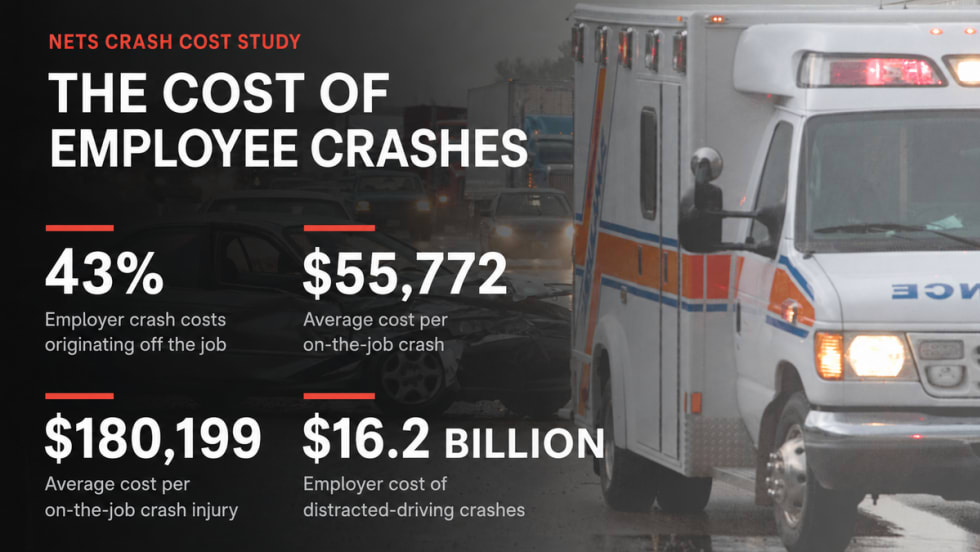
Off-the-Job Crashes Account for 43% of Employers’ $61.7 Billion Crash Burden
NETS quantifies costs dispersed across fleet, risk, HR, and other departments while providing new per-crash benchmarks for employers.
Read More →
Ram Recalls More Than 1.27 Million 1500 Pickups for Seat Belt Anchor Issue
The recall affects certain 2019-2026 Ram 1500 pickups that may have improperly attached second-row seat belt buckle anchors.
Read More →
How Better Visibility Cut Speeding Violations by 48%
Fleet leaders don't need more data, they need clearer visibility into what the data is saying. This case study explores how one utility replaced speeding-event counts with a single metric — miles driven in violation — to strengthen safety and significantly reduce speeding violations.
Read More →
Operation Safe Driver Week: Why the Industry's Oldest Safety Campaign Still Matters to Fleets
A look at how a 2007 enforcement initiative became one of the most consequential weeks on the fleet safety calendar, and what it means for your drivers in 2026.
Read More →