




Video: Automatic Braking to Become Standard by 2022
The agreement means that this safety technology will become widely available on passenger cars and Class 1-2 trucks without a protracted regulatory process.
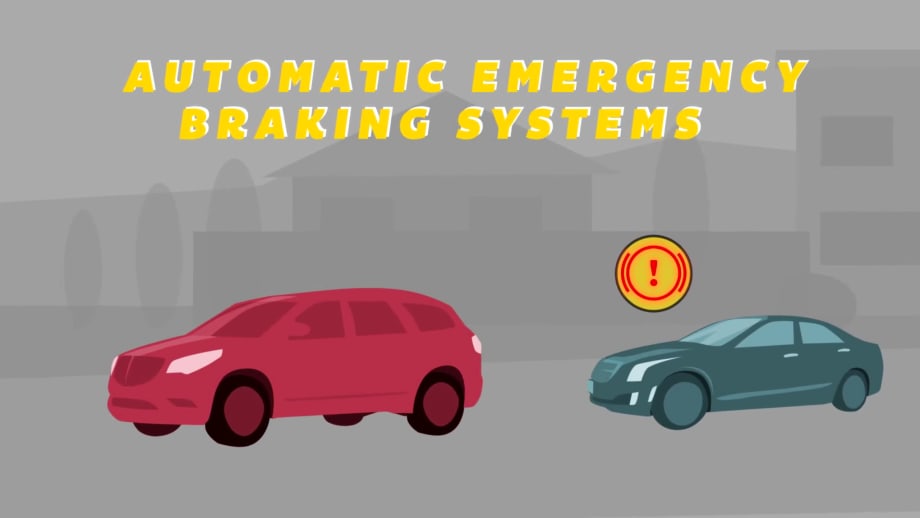
Twenty automakers representing nearly the entire U.S. auto industry have agreed to make automatic emergency braking a standard feature on virtually all new cars in about six years.
The agreement will make automatic braking standard on virtually all light-duty cars and trucks with a gross vehicle weight of 8,500 pounds or less beginning no later than September of 2022. Additionally, the systems will be standard on virtually all trucks with a gross vehicle weight between 8,501 pounds and 10,000 pounds beginning no later than September of 2025.
The automakers making the commitment are Audi, BMW, FCA US, Ford, General Motors, Honda, Hyundai, Jaguar Land Rover, Kia, Maserati, Mazda, Mercedes-Benz, Mitsubishi Motors, Nissan, Porsche, Subaru, Tesla Motors, Toyota, Volkswagen and Volvo Cars USA.
“With roadway fatalities on the rise, the commitment made today has the potential to save more lives than almost anything else we can accomplish in the next six years," said Deborah A.P. Hersman, president and CEO of the National Safety Council. "Including all models in the agreement ensures that safety isn't for just those who can afford it."
The agreement, announced jointly by the National HIghway Traffic Safety Administration and the Insurance Institute for Highway Safety, means that this safety technology will become widely available without a protracted regulatory process.
Automatic braking systems help prevent crashes or can reduce their severity by applying the brakes for the driver. The systems use on-vehicle sensors — such as radar, cameras or lasers — to detect an imminent crash, warn the driver and apply the brakes if the driver doesn't respond sufficiently or quickly enough. (To view a NHTSA video explaining what AEB systems do, click on the illustration or link below the headline.)
NHTSA estimates that the agreement will make the systems standard on new cars three years faster than could be achieved through the formal regulatory process. During those three years, the commitment will prevent 28,000 crashes and 12,000 injuries, according to IIHS estimates.
“It’s an exciting time for vehicle safety. By proactively making emergency braking systems standard equipment on their vehicles, these 20 automakers will help prevent thousands of crashes and save lives,” said U.S. Transportation Secretary Anthony Foxx.
NHTSA and IIHS issued a challenge to the industry in September to encourage automakers to voluntarily make automatic braking a standard feature. A series of meetings followed to establish details of the agreement.
“The benefits of this commitment are far reaching,” said David Zuby, IIHS executive vice president and chief research officer. “From injuries and deaths averted to the recovery of productivity that would otherwise be lost in traffic jams caused by the crashes prevented. It also assures that all Americans will benefit from this technology.”
NHTSA and IIHS also announced that Consumer Reports will assist in monitoring automaker progress toward meeting the commitment.
“We have been calling on automakers to make automatic emergency braking standard in all new vehicles, and today is an important step toward reaching that goal," said Jake Fisher, director of auto testing for Consumer Reports. "This proven technology is among the most promising safety advances we’ve seen since electronic stability control almost two decades ago. We look forward to working with NHTSA and IIHS to help put this plan into action and hold automakers accountable for their commitments.”
As NHTSA continues its regulatory work in this area, the agency will track the progress that industry is making towards its commitment.
The agreement takes into account the evolution of AEB technology, requiring a level of functionality that's in line with research and crash data demonstrating that such systems substantially reduce crashes. But the agreement won't stand in the way of improved capabilities that are just beginning to emerge, NHTSA said. The performance measures are based on real-world data showing that vehicles with this level of capability are avoiding crashes.
Many of the automakers already offer the technology as an option. Volvo noted it has been in compliance with the agreement since 2014.
“Automatic emergency braking is a critical part of our Vision 2020, which states that no one should be killed or seriously injured in a new Volvo by the year 2020,” said Lex Kerssemakers, president and CEO of Volvo Car USA. “Thousands of Volvo owners have already realized the benefits of this technology.”
In January, a report conducted by IIHS showed that City Safety, which includes Volvo’s automatic emergency braking function, reduced rear-end collisions by 41% and injuries to occupants by 47%.
To encourage further development of the technology throughout the industry, NHTSA will accelerate its research on more advanced automatic braking applications, including systems that reduce the risk of collisions with pedestrians. In December, NHTSA announced plans to rate these systems and other advanced technologies under its 5-Star Safety Ratings, beginning with the 2018 model year.
More Safety

Fleet Manager’s Ultimate Playbook: Navigating the New Standard in OEM Connectivity
Rising operating costs, driver safety concerns, and unplanned downtime are putting unprecedented pressure on modern fleets. Discover how fleet managers use embedded OEM connectivity and real-time vehicle data to cut TCO, prevent downtime, and protect drivers without aftermarket telematics hardware.
Read More →
From Driver Well-Being to EV Charging | AF News Recap
Mental health belongs in the fleet safety conversation. This week, we’re looking at five ways fleets can support employee well-being before a crisis, plus Holman’s expansion in Mexico, new one-day Fleet Forward passes, and why EV charging demand is outpacing infrastructure growth.
Read More →
Nexar-Nauto Merger Aims to Give Fleets Better Safety Intelligence Through Larger Driving Dataset
Stefan Heck tells Automotive Fleet that combining more than 10 billion miles of driving history with Nexar's AI models will give fleets deeper insights into driver risk and roadway conditions than either company could provide independently.
Read More →
Don't Wait for a Crisis: 5 Ways to Build Mental Health Into Your Fleet Safety Program
For Suicide Prevention Month, fleet and safety leaders have an opportunity to put mental health where it belongs: at the center of workplace safety.
Read More →
How Camera Data Can Strengthen a Fleet’s Insurance Renewal
Insights from a commercial insurance carrier and a broker show how fleets can turn video telematic data, driver coaching, and improved claims results into a stronger case at insurance renewal.
Read More →
The Safest Fleets Aren’t the Ones with the Most Technology
You’ve made the telematics investment. Here’s how to capture the other half of its value and build the safest fleet on the road.
Read More →
Hidden in Plain Sight: Fleet Compliance Risks
Fleet compliance isn't just about having policies — it's about consistently enforcing them. This practical guide reveals six hidden compliance risks common in public sector and shared fleet operations and outlines proven strategies to improve visibility, accountability, and audit readiness
Read More →
NETS Sets 2026 Fleet Safety Benchmark Conference for Indianapolis
The Sept. 15–17 program will feature fleet benchmarking data, case studies, emerging technologies, and implementation strategies while running alongside the NSC Safety Congress & Expo.
Read More →
Off-the-Job Crashes Account for 43% of Employers’ $61.7 Billion Crash Burden
NETS quantifies costs dispersed across fleet, risk, HR, and other departments while providing new per-crash benchmarks for employers.
Read More →
Ram Recalls More Than 1.27 Million 1500 Pickups for Seat Belt Anchor Issue
The recall affects certain 2019-2026 Ram 1500 pickups that may have improperly attached second-row seat belt buckle anchors.
Read More →