




Video: 2014 Nissan Rogue Earns Top IIHS Safety Score
The Insurance Institute for Highway Safety gives the newly redesigned crossover the highest possible overall ranking for crashworthiness.
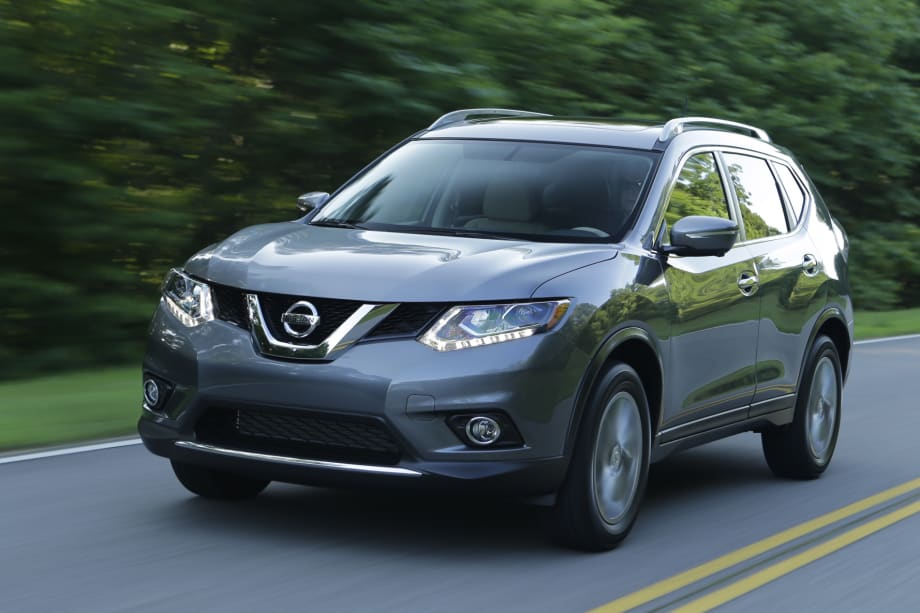
2014 Nissan Rogue photo courtesy of Nissan.
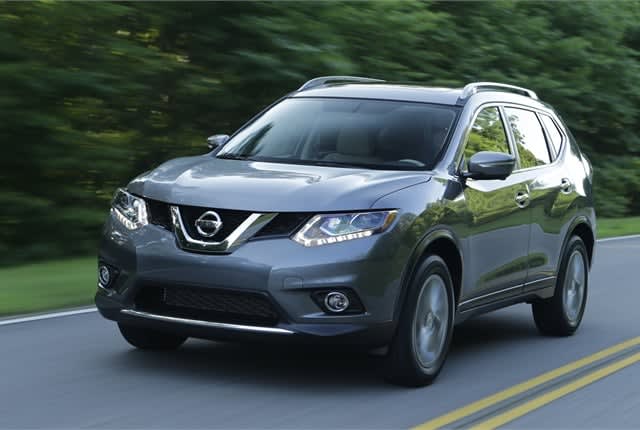
2014 Nissan Rogue photo courtesy of Nissan.
The Insurance Institute for Highway Safety (IIHS) has named the completely redesigned 2014 Nissan Rogue a “Top Safety Pick Plus” -- the highest available overall vehicle rating for crashworthiness.
The 2014 model-year Rogue scored “good” in all five “Top Safety Pick” categories and earned “Top Safety Pick Plus” status with a “basic” rating for front crash prevention in models equipped with optional Forward Collision Warning.
In 2013, IIHS introduced more stringent criteria and requirements for the “Top Safety Pick Plus” designation. The established “Top Safety Pick” award recognizes passenger vehicles that excel in protecting passengers in moderate overlap front, side, roof strength and head restraint tests and also attract a “good” or “acceptable” rating in the small overlap frontal test. For a “Top Safety Pick Plus” rating, a vehicle must meet “Top Safety Pick” criteria as well as earn a “basic,” “advanced” or “superior” rating for front crash prevention.
The newly redesigned Rogue is an improvement over the previous generation, which was rated “marginal” in the small overlap test and “acceptable” in the roof strength evaluation. This older version of the Rogue, manufactured since 2008, is still in production and sells as the Nissan Rogue Select.
“Nissan has a long-standing commitment to safety and innovation, and this IIHS rating is a very important milestone for the all-new 2014 Rogue,” said Fred Diaz, senior vice president of sales and marketing/parts and service in the U.S. for Nissan North America. “Rogue is the second best-selling vehicle in Nissan’s lineup, and with its standard and available safety features, we’re bringing a new level of affordable technologies and innovations to a growing segment looking for fresh ideas.”
Safety and security features standard on all 2014 Rogues include the Nissan Advanced Air Bag System (AABS) with dual-stage supplemental front air bags with seat belt and occupant classification sensors; front seat-mounted side impact supplemental air bags; roof-mounted curtain side impact supplemental air bags with rollover sensor for front and rear-seat outboard occupant head protection; three-point front and rear seatbelts, front seat belts with pre-tensioners and load limiters and adjustable upper anchors; and LATCH System (Lower Anchors and Tethers for CHildren).
Every Rogue also offers child safety rear door locks; Zone Body construction featuring front and rear crumple zones and occupant zone; Nissan Immobilizer system and anti-theft alarm system; and Tire Pressure Monitoring System (TPMS) with position monitoring and Nissan’s Easy Fill Tire Alert, which sounds the car horn to notify a person filling a tire with air when the recommended tire pressure has been reached.
Also standard on the Rogue is a suite of technologies including Active Trace Control, Active Engine Braking and Active Ride Control. The Active Trace Control system uses Rogue’s standard Vehicle Dynamic Control (VDC) system to help improve cornering feel by automatically applying the brakes or smoothing engine torque characteristics while accelerating. Active Engine Braking uses the CVT to help slow the Rogue as the driver brakes, resulting in easier braking. Active Ride Control helps smooth out the drive by automatically applying the brakes and adjusting engine torque after the vehicle hits a bump, reducing the typical “head bobble” pitch.
Rogue’s available Around View Monitor (AVM) with Moving Object Detection (MOD) system features four small superwide-angle cameras mounted on the front, side and rear of the vehicle that provide a “bird’s eye” virtual 360-degree view of objects around the vehicle. It provides additional selectable split-screen close-ups of the front, rear and curb views, helping the driver maneuver the car in or out of tight spots.
Moving Object Detection builds on the capabilities of the AVM system, helping to enhance the driver’s situational awareness. This feature provides visual and audible warnings if the system detects moving objects -- such as another vehicle -- within the displayed image in situations such as pulling out of a parking space.
Using sophisticated image processing technology, the system detects moving objects within the “top view” when the vehicle is in “park.” When starting off or backing up, it detects moving objects crossing within the front or rear views, respectively.
Other available Rogue Safety Shield-inspired technologies include Blind Spot Warning (BSW), Lane Departure Warning (LDW) and Forward Collision Warning (FCW).
More Safety

Nexar-Nauto Merger Aims to Give Fleets Better Safety Intelligence Through Larger Driving Dataset
Stefan Heck tells Automotive Fleet that combining more than 10 billion miles of driving history with Nexar's AI models will give fleets deeper insights into driver risk and roadway conditions than either company could provide independently.
Read More →
Don't Wait for a Crisis: 5 Ways to Build Mental Health Into Your Fleet Safety Program
For Suicide Prevention Month, fleet and safety leaders have an opportunity to put mental health where it belongs: at the center of workplace safety.
Read More →
How Camera Data Can Strengthen a Fleet’s Insurance Renewal
Insights from a commercial insurance carrier and a broker show how fleets can turn video telematic data, driver coaching, and improved claims results into a stronger case at insurance renewal.
Read More →
The Safest Fleets Aren’t the Ones with the Most Technology
You’ve made the telematics investment. Here’s how to capture the other half of its value and build the safest fleet on the road.
Read More →
Hidden in Plain Sight: Fleet Compliance Risks
Fleet compliance isn't just about having policies — it's about consistently enforcing them. This practical guide reveals six hidden compliance risks common in public sector and shared fleet operations and outlines proven strategies to improve visibility, accountability, and audit readiness
Read More →
NETS Sets 2026 Fleet Safety Benchmark Conference for Indianapolis
The Sept. 15–17 program will feature fleet benchmarking data, case studies, emerging technologies, and implementation strategies while running alongside the NSC Safety Congress & Expo.
Read More →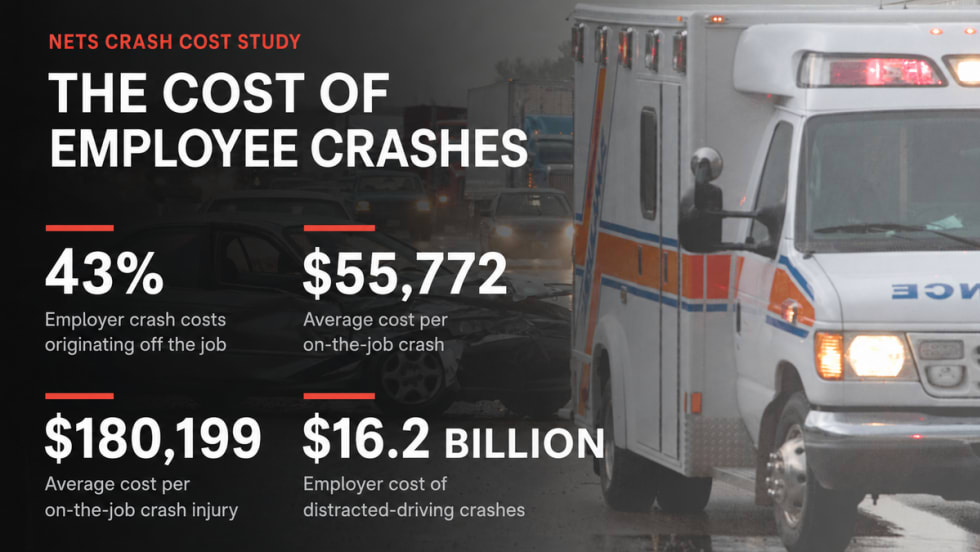
Off-the-Job Crashes Account for 43% of Employers’ $61.7 Billion Crash Burden
NETS quantifies costs dispersed across fleet, risk, HR, and other departments while providing new per-crash benchmarks for employers.
Read More →
Ram Recalls More Than 1.27 Million 1500 Pickups for Seat Belt Anchor Issue
The recall affects certain 2019-2026 Ram 1500 pickups that may have improperly attached second-row seat belt buckle anchors.
Read More →
How Better Visibility Cut Speeding Violations by 48%
Fleet leaders don't need more data, they need clearer visibility into what the data is saying. This case study explores how one utility replaced speeding-event counts with a single metric — miles driven in violation — to strengthen safety and significantly reduce speeding violations.
Read More →
Operation Safe Driver Week: Why the Industry's Oldest Safety Campaign Still Matters to Fleets
A look at how a 2007 enforcement initiative became one of the most consequential weeks on the fleet safety calendar, and what it means for your drivers in 2026.
Read More →