




Vehicle Safety Features Often Confuse Drivers
A new study from the University of Iowa underscores the need for more education to help drivers take advantage of such advanced safety features as lane-departure warning and adaptive cruise control.
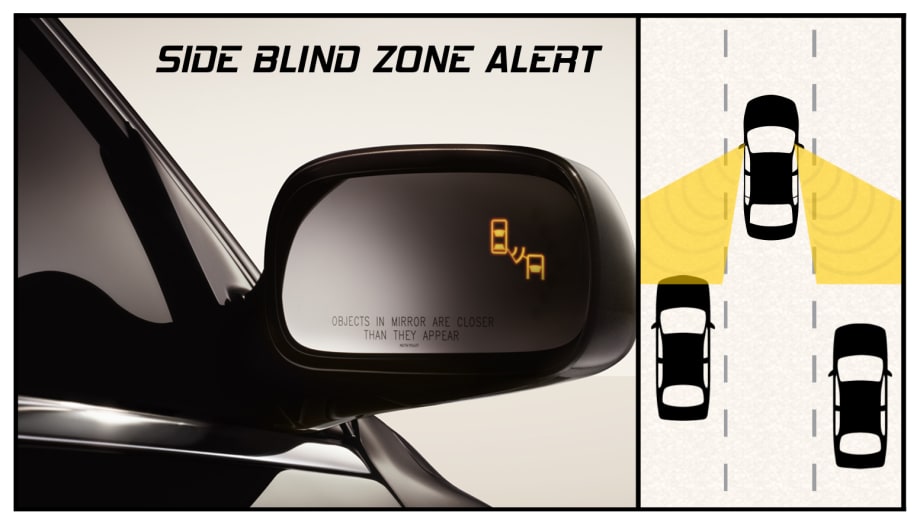
A new study examines the driving public's knowledge of such technologies as blind spot monitoring. Image courtesy of General Motors.
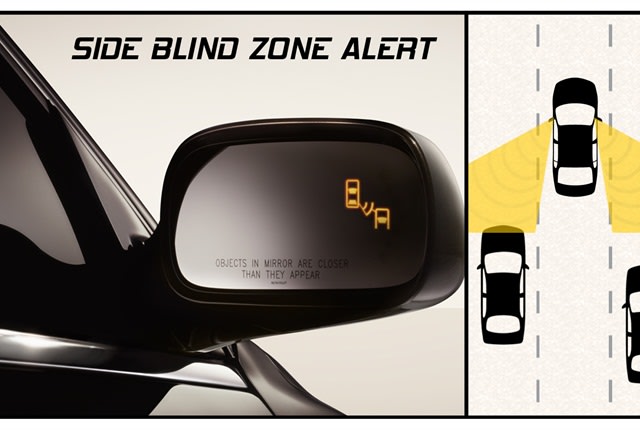
A new study examines the driving public's knowledge of such technologies as blind spot monitoring. Image courtesy of General Motors.
Are all your fleet drivers taking full advantage of any company investments in new collision-avoidance or driver-assistance technologies?
Perhaps not, if such advanced safety technology isn’t part of a driver training program. According to a new study from the University of Iowa, a majority of drivers express uncertainty about how some of today’s vehicle safety technologies work. The survey also indicated that 40 percent of drivers report that their vehicles have acted or behaved in unexpected ways.
The study, conducted by the University of Iowa Transportation and Vehicle Safety Research Division, examined drivers’ knowledge of vehicle safety systems, as well as their understanding and use of defensive driving techniques. The study combined a literature review, the input of industry and academic experts in human factors research, and an in-depth survey of more than 2,000 adult drivers across the U.S.
Researchers learned that a majority of respondents had heard of, been exposed to, or interacted with at least one of the nine vehicle safety features studied. However, drivers expressed uncertainty about all of the technologies.
“As technologies like rear-view cameras and lane departure warning systems advance and become more prevalent in the cars we’re driving, there is a tremendous need to improve consumer understanding of these critical safety features,” said Daniel McGehee, director of the Transportation and Vehicle Safety Research Division at the UI Public Policy Center.
Consumers reported they least understood adaptive cruise control (65 percent) and lane-departure warning systems (36 percent). They were also uncertain about features that have been standard in American cars for years – such as anti-lock braking systems and tire pressure-monitoring systems, according to the survey.
“The level of confusion about features that have been standard in American cars for quite awhile was really surprising,” McGehee said. “The little details about how some of these systems work are really important when we’re talking about safety. We need to do a better job of making sure consumers are comfortable with them.”
To address that need, the University of Iowa recently partnered with the National Safety Council to launch MyCarDoesWhat, a national campaign aimed at educating consumers about new safety technologies and how they work. The campaign website, MyCarDoesWhat.org, includes educational videos and a range of information about safety features that help drivers avoid or reduce the severity of a crash.
The website is part of a larger national education campaign set to launch this fall. The data-driven campaign includes academic and consumer research, videos, graphics, animation, social media, a game, an app and advertising to educate drivers.
The safety technologies included in the study were:
Back-up camera – provides a view of the area directly behind the car when the vehicle is in reverse.
Blind spot monitor – alerts drivers when there may be something located in their blind spot.
Forward collision warning – warns drivers when they’re closing in on the vehicle ahead too quickly.
Anti-lock braking systems – prevents wheels from locking up, helps avoid uncontrolled skidding and provides some steering control in slippery conditions such as snow.
Rear cross traffic alert – provides an alert to the driver that traffic is approaching from the left or right when the vehicle is in reverse.
Adaptive cruise control – maintains the speed set by the driver and a pre-set following distance.
Automatic emergency braking systems – automatically applies moderate to hard braking when the system detects that a collision is imminent.
Lane-departure warning – alerts drivers when they drift into another lane when the turn signal is not activated.
Traction control – Works in the background to help accelerate and prevent wheel slippage (or “over-spinning”) when driving on slippery surfaces.
To download the full study, click here.
More Safety

Nexar-Nauto Merger Aims to Give Fleets Better Safety Intelligence Through Larger Driving Dataset
Stefan Heck tells Automotive Fleet that combining more than 10 billion miles of driving history with Nexar's AI models will give fleets deeper insights into driver risk and roadway conditions than either company could provide independently.
Read More →
Don't Wait for a Crisis: 5 Ways to Build Mental Health Into Your Fleet Safety Program
For Suicide Prevention Month, fleet and safety leaders have an opportunity to put mental health where it belongs: at the center of workplace safety.
Read More →
How Camera Data Can Strengthen a Fleet’s Insurance Renewal
Insights from a commercial insurance carrier and a broker show how fleets can turn video telematic data, driver coaching, and improved claims results into a stronger case at insurance renewal.
Read More →
The Safest Fleets Aren’t the Ones with the Most Technology
You’ve made the telematics investment. Here’s how to capture the other half of its value and build the safest fleet on the road.
Read More →
Hidden in Plain Sight: Fleet Compliance Risks
Fleet compliance isn't just about having policies — it's about consistently enforcing them. This practical guide reveals six hidden compliance risks common in public sector and shared fleet operations and outlines proven strategies to improve visibility, accountability, and audit readiness
Read More →
NETS Sets 2026 Fleet Safety Benchmark Conference for Indianapolis
The Sept. 15–17 program will feature fleet benchmarking data, case studies, emerging technologies, and implementation strategies while running alongside the NSC Safety Congress & Expo.
Read More →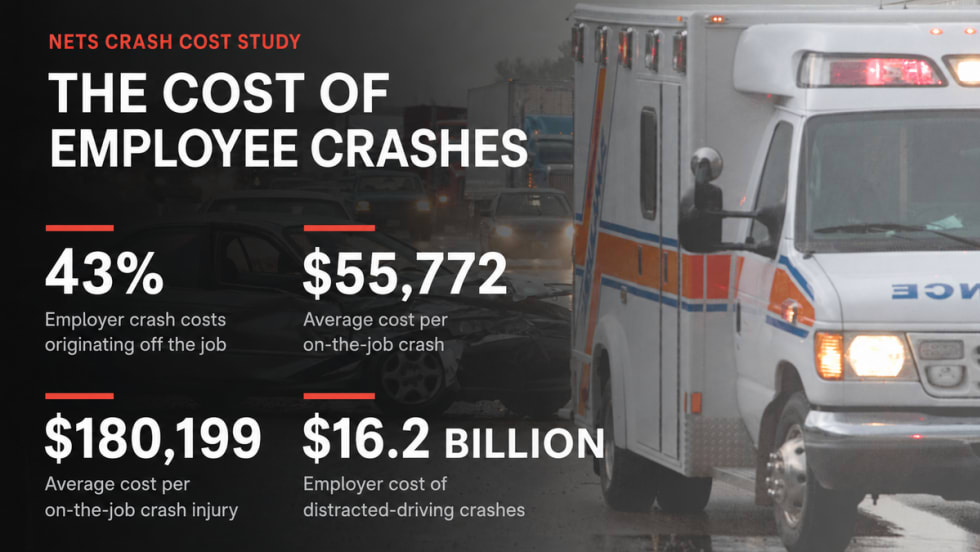
Off-the-Job Crashes Account for 43% of Employers’ $61.7 Billion Crash Burden
NETS quantifies costs dispersed across fleet, risk, HR, and other departments while providing new per-crash benchmarks for employers.
Read More →
Ram Recalls More Than 1.27 Million 1500 Pickups for Seat Belt Anchor Issue
The recall affects certain 2019-2026 Ram 1500 pickups that may have improperly attached second-row seat belt buckle anchors.
Read More →
How Better Visibility Cut Speeding Violations by 48%
Fleet leaders don't need more data, they need clearer visibility into what the data is saying. This case study explores how one utility replaced speeding-event counts with a single metric — miles driven in violation — to strengthen safety and significantly reduce speeding violations.
Read More →
Operation Safe Driver Week: Why the Industry's Oldest Safety Campaign Still Matters to Fleets
A look at how a 2007 enforcement initiative became one of the most consequential weeks on the fleet safety calendar, and what it means for your drivers in 2026.
Read More →