




Vanderbilt University Medical Center Receives EV Charging Stations
NASHVILLE, TN - Vanderbilt University Medical Center (VUMC) announced it will participate in a pilot rollout that will install more than 15,000 electric vehicle (EV) charging stations by June 2011 as part of The EV Project, the largest deployment of EV charging infrastructure in history.
NASHVILLE, TN - Vanderbilt University Medical Center (VUMC) has announced it will participate in a pilot rollout that will install more than 15,000 electric vehicle (EV) charging stations by June 2011 as part of The EV Project, the largest deployment of EV charging infrastructure in history. The rollout will take place in 16 cities and metropolitan areas in six states, as well as Washington, D.C.
ECOtality, a clean electric transportation and storage technologies provider, will serve as project manager of The EV Project, overseeing the $230 million public-private initiative. The initiative is funded with a $114.8 million grant from the U.S. Department of Energy through the American Recovery and Reinvestment Act (ARRA).
VUMC will receive six to 10 of ECOtality's Blink EV charging stations free of charge to be used in public parking areas. The majority will be Blink Level 2 commercial charging stations, which use 240 volts and take four to six hours to charge a vehicle. VUMC will also receive one or two Blink DC fast chargers, which use 480 volts and can charge a vehicle in under 30 minutes.
ECOtality also offers the opportunity to purchase additional chargers for private parking areas. VUMC plans to install several charging stations in staff parking areas, and will monitor their use and add more stations as needed.
Each station will also have a LAN line so that ECOtality can collect and analyze EV Project data on charging station use. The LAN connection will also allow access to the Blink Network, a system of connected charging stations through which consumers can access information about their charging use, and receive benefits for using commercial charging stations in locations across the country. Integrated within this system is the Blink Network smartphone application, providing charge station locations and GPS navigation, charge status, and notifications of interruption or completion of a charge.
"Being one of the first participants in an initiative like this is always a good place to be because we can help with the evolution," said Gary Streaty, director of Medical Center Parking and Transportation Services. "People look to Vanderbilt for that kind of leadership and we want to be pioneers in the push for cleaner air."
The estimated installation date for the charging stations is February 2011, and the timing coincides with the release of two electric vehicles - the Chevrolet Volt and the Nissan LEAF. Streaty said he has already received calls from VUMC staff who are on the waiting list for a vehicle and want to know if charging will be available on campus.
"We're not sure how long it will be before this technology takes off, but it will be interesting to watch it evolve," Streaty said. "As one of the largest employers in Tennessee and with over 400,000 cars valet parked each year and 1.2 million patient visits, we know someone will show up in an electric vehicle and need to charge."
Streaty stressed that this was a pilot project and there would be many issues to resolve in the process. Current unknowns include the cost to use the charging stations, whether a special permit will be required for staff, the logistics of moving a vehicle once it is fully charged to allow others to use the station, and where the best locations for the stations will be.
The ultimate goal of The EV Project is to take the lessons learned from the deployment of these first 8,300 EVs, and the charging infrastructure supporting them, to enable the streamlined deployment of the next 5,000,000 EVs. Additional information is available at www.theevproject.com.
More Fuel

Turning Fleet Payment Data into Executive Insights
Ramel Lindsay of U.S. Bank Voyager discusses how fleets can transform payment and transaction data into actionable intelligence to reduce costs, improve oversight, and support executive decision-making.
Read More →
Why the IRS Raised Its Mileage Rate in the Middle of 2026
Fuel-price volatility drove the rare increase to 76 cents per mile, the fifth midyear adjustment since 2000.
Read More →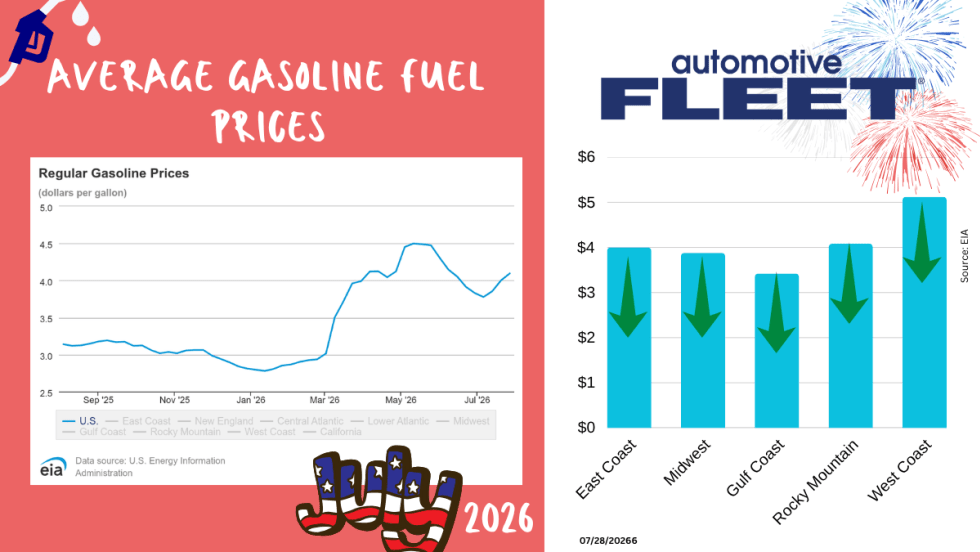
July Fuel Update: Prices Keep Rising in Light of More Conflict
Gas prices continue to rise as more and more conflicts do, too.
Read More →
Bob Adamsky on Fuel Volatility: "Don't Panic, Have a Plan."
When it comes to up and down fuel prices, Adamsky has a message for fleets: “Don’t panic.”
Read More →
How Fleets Can Gain Control of Non-Fuel Spend
Fuel often gets the spotlight, but non-fuel expenses can have a major impact on fleet costs. Ramel Lindsay of U.S. Bank Voyager discusses how fleets can gain better visibility and control over these often-overlooked expenditures.
Read More →
Fuel is Just the Start: How Middle East Tensions are Driving Up Fleet Maintenance Costs
The Middle East conflict is doing more than pushing up fuel prices. It’s also raising the cost of key maintenance products your fleet depends on, from motor oil to tires to windshield wipers. Here’s what you need to know about this budget-busting situation.
Read More →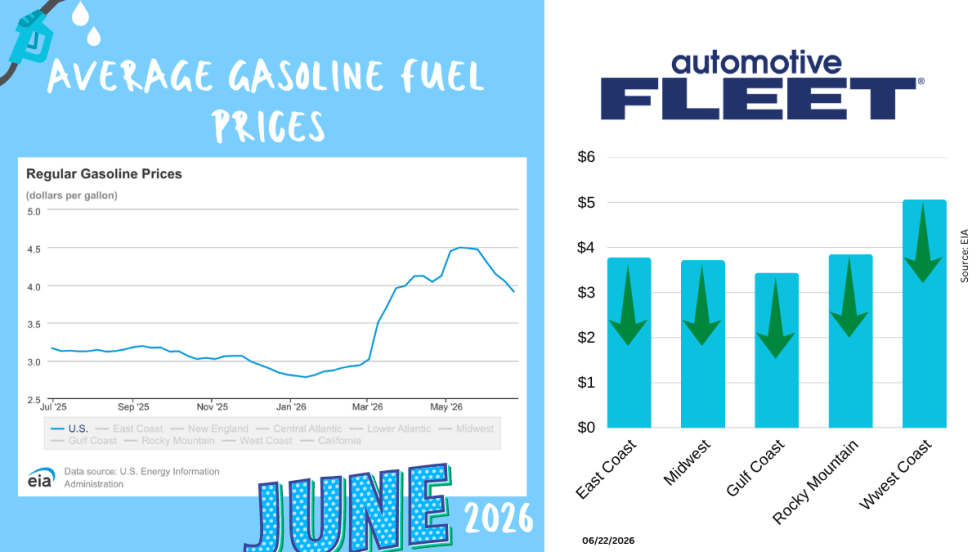
June Fuel Update: Prices Fall Below $4
Drivers are finally getting some relief at the pump. The national average gas price has dropped below $4 a gallon for the first time in months, with prices falling in 47 states as oil markets react to developments in U.S.-Iran negotiations.
Read More →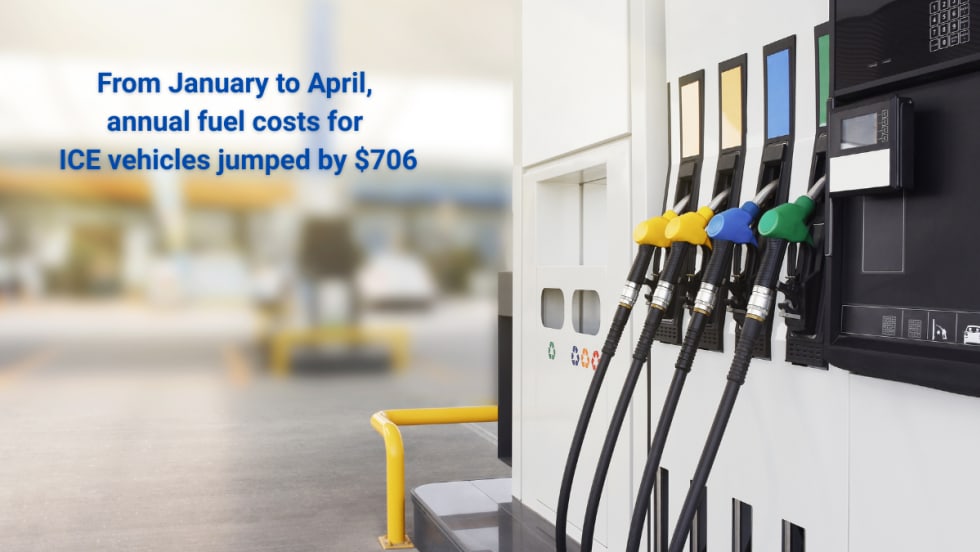
Study: How 2026's Gas Price Hikes Affect Different Vehicle Types
New data from iSeeCars reveals how rising fuel costs have affected different vehicle segments as gasoline prices climbed nearly 46% over the past four months.
Read More →
Are You Tracking Your Fleet's True Total Cost of Ownership?
Bobit Business Media surveyed 190 fleet professionals and found that while most fleets are tracking costs, fragmented systems and data gaps are keeping true TCO visibility out of reach. With rising pressure to control spend in an increasingly volatile environment, the gap between what fleets think they know and what the data actually shows is wider than you might expect. See how your peers are managing costs today and where the industry still has room to improve.
Read More →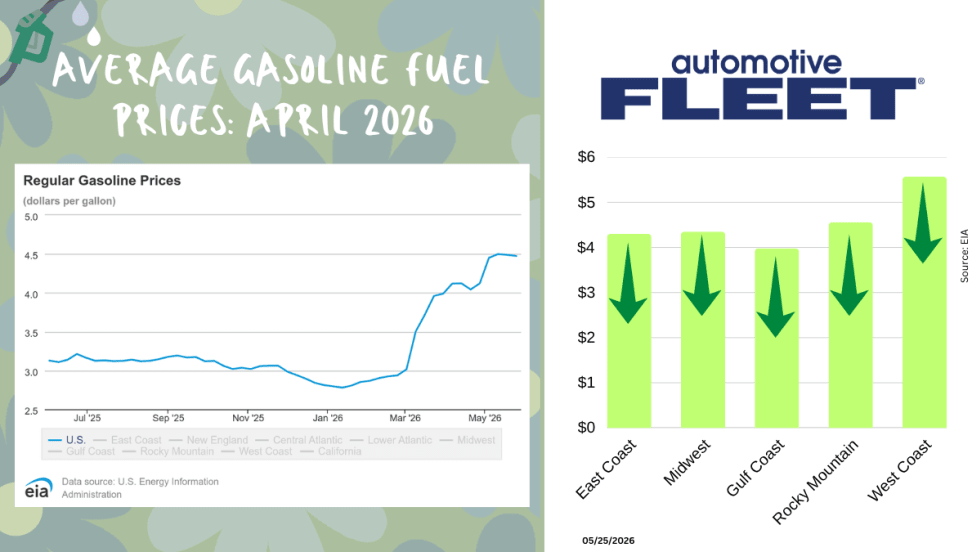
May Fuel Update: All Regions Experience Declines
Gas prices are finally easing in much of the country, but experts warn global tensions could quickly reverse the trend as the national average remains well above last month’s levels.
Read More →