




U.S. Corporations Retool Car Fleets to Go Green
NEW YORK CITY -- Corporate America is starting to look at the millions of cars it owns or leases for traveling salesmen, executives, and technicians as an area where it can cut down on greenhouse gases and save money on increasingly expensive gasoline.
NEW YORK CITY -- Corporate America is starting to look at the millions of cars it owns or leases for traveling salesmen, executives, and technicians as an area where it can cut down on greenhouse gases and save money on increasingly expensive gasoline, according to the Christian Science Monitor.
• Abbott, a large pharmaceutical company, has shifted 20 percent of its fleet to green status – more fuel-efficient vehicles. In analyzing its carbon footprint, the company found 4.5 percent of its emissions in the US came from its 6,500 vehicles.
• Last month at an expo of the National Association of Fleet Administrators (NAFA) in Houston, managers of corporate fleets waited in line for test rides in hybrid vehicles and cars that use alternative fuels. It was the first time in the 46 years of the expo that NAFA has featured a "green zone."
• Hertz Corp., owner of one of the largest automobile fleets in the nation, said it would buy 3,400 hybrids, an investment of $68 million, over the next two years. Enterprise, with the largest U.S. rental-car fleet, will have more than 3,000 hybrids this year.
According to the Christian Science Monitor article, this shift in corporate thinking is relatively new but has the potential to make an impact. Automobiles that are part of the corporate fleet have double the miles of the family vehicle. In the case of rental-car companies and executive car services, the mileage can be even higher.
Whether the shift in thinking is for the public-relations value or because it saves money, companies are suddenly trying to change their ways.
"In January, we tried to do a story on what companies are doing to turn their fleet green, but we couldn't find many who were willing or able to talk about it," says Phil Russo, executive director of NAFA, as quoted in the Christian Science Monitor article. "But at our meeting in May, we asked people what had happened, and they said, 'This is part of our corporate mandate: We're trying to turn green.' "
In a survey earlier this month by PHH Arval, one of the largest fleet-management services in the United States and Canada, 45 percent of fleet managers said their interest in the environment had grown significantly in the past year.
"One of the things that came out of the survey is that companies are struggling. They feel like there are not a good variety of vehicles that meets their needs and is available," says Karen Healey, who is in charge of PHH's green initiatives.
This is certainly what some car-rental companies have found. Over the past several years, Hertz has had only 50 to 100 hybrids in its fleet. "We are Toyota's largest customer in the world…. Basically, they didn't want to sell us any, and we just had to beg," says Frank Camacho, vice president for marketing at Hertz, as quoted by the Christian Science Monitor.
Indeed, hybrid orders have been difficult to fill, says Bill Kwong, a spokesman for Toyota in Torrance, Calif. "We have had very limited production," he says.
But with production of hybrids increasing, Toyota is now willing to sell Hertz 1,000 vehicles this year, with the fleet growing by another 2,400 in 2008, Mr. Camacho says.
Enterprise says that it, too, would buy more hybrids if it could get them. Instead, it has found it easier to acquire some 41,000 "flex fuel" vehicles that can run on various combinations of ethanol and gasoline.
"If we find a station selling E85 (85 percent ethanol), we will group the cars close to the fueling station," says Pat Farrell, the vice president responsible for the company's environmental platform.
At Abbott, the impetus was a challenge from Miles White, the company's CEO, to improve its environmental performance. As part of this effort, says Bob Accarino, director of global environmental affairs, the company asked for employees to volunteer for a more fuel-efficient vehicle.
More Fuel
October Fuel Trends Show Diverging Gasoline and Diesel Prices
Get the latest fuel trends from October.
Read More →
Fuel Prices Surge in September | September Fuel Update
September brought major fuel price swings, including diesel crossing $6 a gallon. Here’s how gas and diesel prices changed throughout the month, and where they stood heading into October.
Read More →
Turning Fleet Payment Data into Executive Insights
Ramel Lindsay of U.S. Bank Voyager discusses how fleets can transform payment and transaction data into actionable intelligence to reduce costs, improve oversight, and support executive decision-making.
Read More →
Why the IRS Raised Its Mileage Rate in the Middle of 2026
Fuel-price volatility drove the rare increase to 76 cents per mile, the fifth midyear adjustment since 2000.
Read More →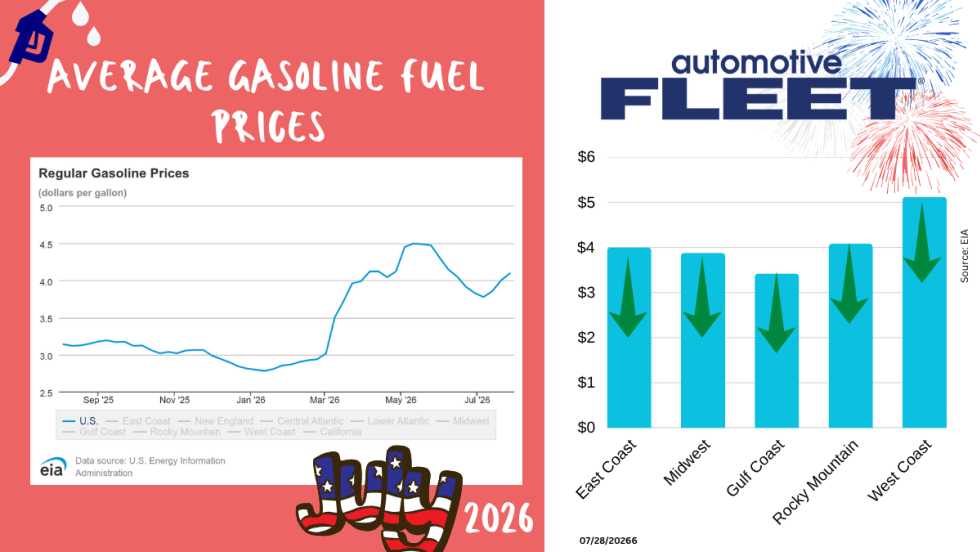
July Fuel Update: Prices Keep Rising in Light of More Conflict
Gas prices continue to rise as more and more conflicts do, too.
Read More →
Bob Adamsky on Fuel Volatility: "Don't Panic, Have a Plan."
When it comes to up and down fuel prices, Adamsky has a message for fleets: “Don’t panic.”
Read More →
How Fleets Can Gain Control of Non-Fuel Spend
Fuel often gets the spotlight, but non-fuel expenses can have a major impact on fleet costs. Ramel Lindsay of U.S. Bank Voyager discusses how fleets can gain better visibility and control over these often-overlooked expenditures.
Read More →
Fuel is Just the Start: How Middle East Tensions are Driving Up Fleet Maintenance Costs
The Middle East conflict is doing more than pushing up fuel prices. It’s also raising the cost of key maintenance products your fleet depends on, from motor oil to tires to windshield wipers. Here’s what you need to know about this budget-busting situation.
Read More →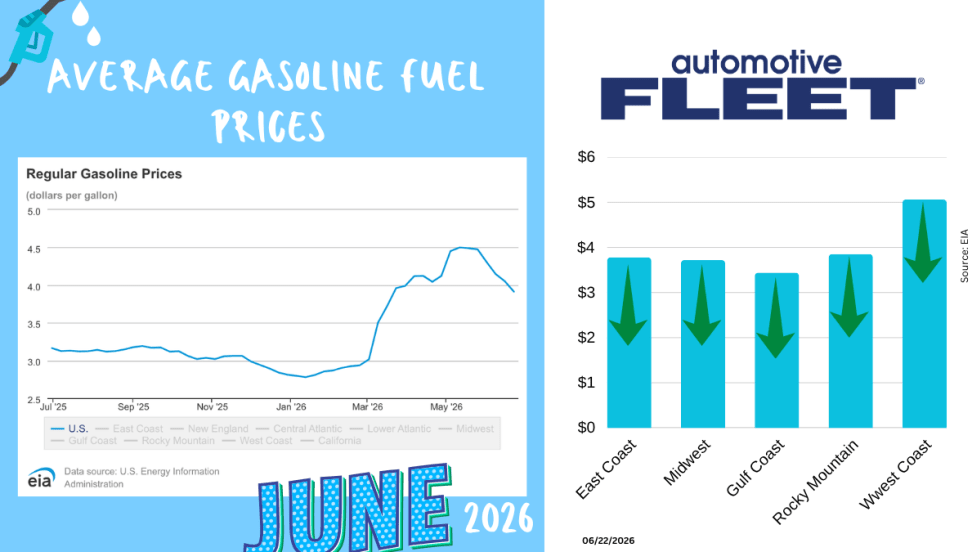
June Fuel Update: Prices Fall Below $4
Drivers are finally getting some relief at the pump. The national average gas price has dropped below $4 a gallon for the first time in months, with prices falling in 47 states as oil markets react to developments in U.S.-Iran negotiations.
Read More →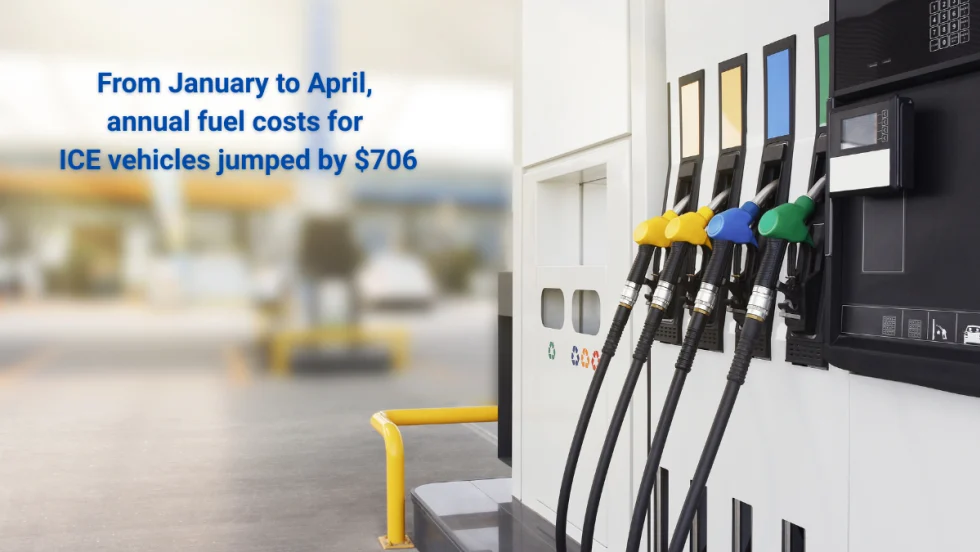
Study: How 2026's Gas Price Hikes Affect Different Vehicle Types
New data from iSeeCars reveals how rising fuel costs have affected different vehicle segments as gasoline prices climbed nearly 46% over the past four months.
Read More →