




Traffic Fatalities Up in First Half of 2015
The disturbing trend prompts federal Department of Transportation officials to step up efforts to change risky behavior among the driving public.
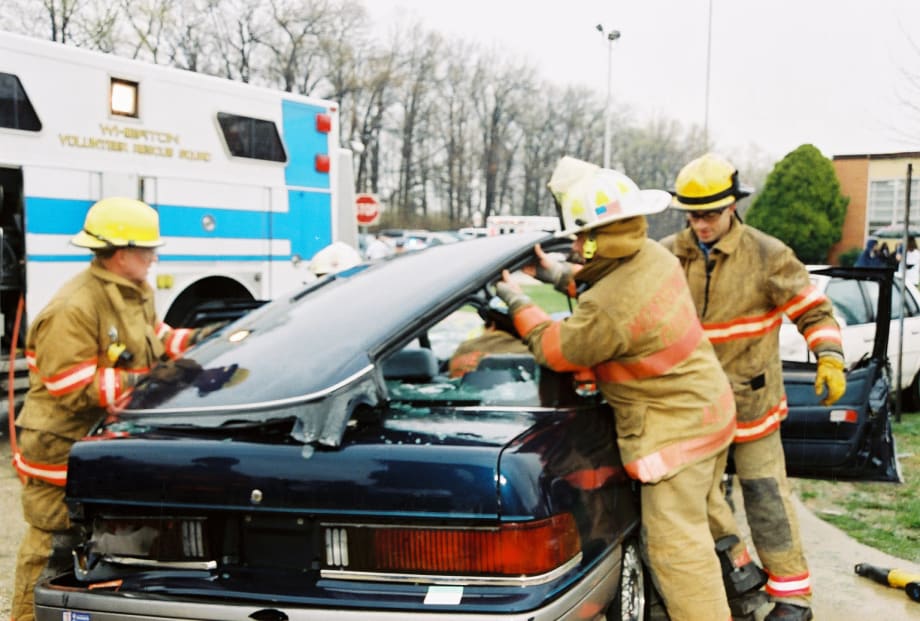
Photo of crash scene courtesy of NHTSA.
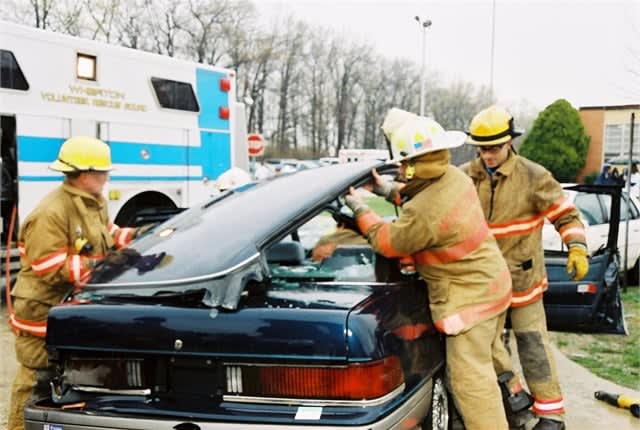
Photo of crash scene courtesy of NHTSA.
Federal safety regulators, citing a rise in estimated fatalities during the first half of 2015, are ramping up efforts to educate and inspire American drivers to break bad habits and drive more safely.
The preliminary data for 2015 road deaths “reveals a need to reinvigorate the fight against deadly behavior on America’s roads,” the National Highway Traffic Safety Administration (NHTSA) said in a released statement. NHTSA is part of the U.S. Department of Transportation.
In contrast, the nation saw a slight decline in traffic deaths during 2014. NHTSA’s Fatal Analysis Reporting System (FARS) figures for 2014 show 32,675 people died in motor vehicle crashes that year, a 0.1-percent decrease from 2013. The fatality rate fell to a record-low of 1.07 deaths per million vehicle miles traveled.
The 2015 fatality estimate is up 8.1 percent from the same period in 2014, NHTSA said, and the fatality rate rose by 4.4 percent.
NHTSA officials cautioned that while partial-year estimates are more volatile and subject to revision, the estimated increase represents a troubling departure from a general downward trend.
“These numbers are a call to action,” said Transportation Secretary Anthony Foxx. “Everyone with a responsibility for road safety – the federal, state and local governments, law enforcement, vehicle manufacturers, safety advocates and road users – needs to reassess our efforts to combat threats to safety."
NHTSA also announced plans to hold a series of regional meetings early next year to generate new approaches to combating human behavior that contributes to road deaths. Meetings will address the four D’s of dangerous driving – drunk, drugged, distracted and drowsy – along with speeding and failure to use safety features such as seat belts and child seats. Traffic safety experts will also discuss new initiatives aimed at protecting pedestrians and cyclists.
“Behavioral safety programs are the heart of NHTSA's safety mission,” said NHTSA Administrator Mark Rosekind. “While great public attention is focused on safety defects and recalls, and rightfully so, it is time as a nation to reinvigorate the fight against drunk and drugged driving, distraction and other risks that kill thousands every year, and time for state and local governments to reassess whether they are making the right policy choices to improve highway safety.”
FARS data for 2014 show that while overall road deaths declined only slightly, the year was the safest one on record for passenger vehicle occupants. A total of 21,022 Americans died in vehicles in 2014, the lowest number since FARS began collecting data in 1975. While cyclist deaths also declined, the number of pedestrians killed rose by 3.1 percent from 2013.
Other trends remained stubbornly constant. Deaths in drunk driving crashes continued to represent roughly one-third of fatalities. Approximately half of all vehicle occupants killed were not wearing seat belts. Additionally, deaths of motorcyclists without helmets remained far higher in states without strong helmet laws, and speeding was a factor in more than one in four deaths.
NHTSA research shows that in an estimated 94 percent of crashes, the critical cause is a human factor. In contrast, vehicle-related factors are the critical reason in about 2 percent of crashes.
The renewed emphasis on changing risky driver behavior drew praise from the Governors Highway Safety Association (GHSA). Earlier this year, some safety advocates and Democratic leaders had pushed for legislation requiring state DMVs to ensure that vehicles with open safety recalls were ineligible for re-registration – a plan that GHSA criticized. The association expressed concerns that such legislation would divert resources away from efforts to change driver behavior.
“We are heartened by the National Highway Traffic Safety Administration’s plans to focus on human factors, the critical cause of 94 percent of traffic crashes,” GHSA said in a released statement.
GHSA also urged the Senate and House to “resolve their differences quickly and pass a final [highway] bill that will provide stability to states as they implement life-saving programs.”
The association blamed three driver behaviors – impaired driving, failure to buckle up and excessive speed – for the greatest proportion of preventable road deaths in 2015.
While final 2015 numbers and a breakdown of factors in the year’s fatalities will not be available until next year, NHTSA officials noted that job growth and low fuel prices could be a factor -- not only in increased driving overall but in increased leisure driving and driving by young people.
Newly released 2014 crash data show:
Drunk driving crashes continue to represent roughly one-third of fatalities, resulting in 9,967 deaths last year.
Nearly half (49%) of passenger vehicle occupants killed were not wearing seat belts.
The number of motorcyclists killed was far higher in states without strong helmet laws, resulting in 1,565 lives lost last year.
Cyclist deaths declined by 2.3 percent, but pedestrian deaths rose by 3.1 percent from 2013. In 2014, there were 726 cyclists and 4,884 pedestrians killed in motor vehicle crashes.
Distracted driving accounted for 10 percent of all crash fatalities, killing 3,179 people in 2014.
Drowsy driving accounted for 2.6 percent of all crash fatalities; at least 846 people died in these crashes in 2014.
“USDOT is moving on many fronts to speed technology innovations that can save lives, from connected automation to the DADSS system to fight drunk driving,” Foxx said. “NHTSA is accelerating its efforts to strengthen behavioral safety programs at the core of its mission, and state and local governments need to adopt strong laws and enforce them.”
More Safety

Nexar-Nauto Merger Aims to Give Fleets Better Safety Intelligence Through Larger Driving Dataset
Stefan Heck tells Automotive Fleet that combining more than 10 billion miles of driving history with Nexar's AI models will give fleets deeper insights into driver risk and roadway conditions than either company could provide independently.
Read More →
Don't Wait for a Crisis: 5 Ways to Build Mental Health Into Your Fleet Safety Program
For Suicide Prevention Month, fleet and safety leaders have an opportunity to put mental health where it belongs: at the center of workplace safety.
Read More →
How Camera Data Can Strengthen a Fleet’s Insurance Renewal
Insights from a commercial insurance carrier and a broker show how fleets can turn video telematic data, driver coaching, and improved claims results into a stronger case at insurance renewal.
Read More →
The Safest Fleets Aren’t the Ones with the Most Technology
You’ve made the telematics investment. Here’s how to capture the other half of its value and build the safest fleet on the road.
Read More →
Hidden in Plain Sight: Fleet Compliance Risks
Fleet compliance isn't just about having policies — it's about consistently enforcing them. This practical guide reveals six hidden compliance risks common in public sector and shared fleet operations and outlines proven strategies to improve visibility, accountability, and audit readiness
Read More →
NETS Sets 2026 Fleet Safety Benchmark Conference for Indianapolis
The Sept. 15–17 program will feature fleet benchmarking data, case studies, emerging technologies, and implementation strategies while running alongside the NSC Safety Congress & Expo.
Read More →
Off-the-Job Crashes Account for 43% of Employers’ $61.7 Billion Crash Burden
NETS quantifies costs dispersed across fleet, risk, HR, and other departments while providing new per-crash benchmarks for employers.
Read More →
Ram Recalls More Than 1.27 Million 1500 Pickups for Seat Belt Anchor Issue
The recall affects certain 2019-2026 Ram 1500 pickups that may have improperly attached second-row seat belt buckle anchors.
Read More →
How Better Visibility Cut Speeding Violations by 48%
Fleet leaders don't need more data, they need clearer visibility into what the data is saying. This case study explores how one utility replaced speeding-event counts with a single metric — miles driven in violation — to strengthen safety and significantly reduce speeding violations.
Read More →
Operation Safe Driver Week: Why the Industry's Oldest Safety Campaign Still Matters to Fleets
A look at how a 2007 enforcement initiative became one of the most consequential weeks on the fleet safety calendar, and what it means for your drivers in 2026.
Read More →