





Read More: Toyota Announces 2023 Corolla Sedan, Hybrid
Toyota Premieres Fifth-Generation Prius
The completely redesigned Prius features Toyota’s first 2.0L Plug-in Hybrid System, combining the Dynamic Force Engine and lithium-ion batteries.
November 17, 2022
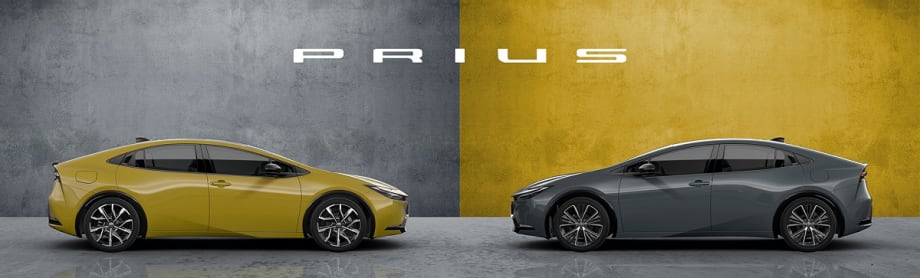
The all-new Prius features Toyota Safety Sense, the latest active safety package with advanced and improved functions, and Advanced Park, an advanced driving support system.
Photo: Toyota
3 min to read
Toyota has unveiled the all-new Prius, with Series Parallel Hybrid (HEV) models to launch in winter this year and Plug-in Hybrid (PHEV) models in spring 2023.
With second-generation TNGA platform, the new Prius comes with Toyota’s first 2.0L Plug-in Hybrid System. The combination of the Dynamic Force Engine and lithium-ion batteries achieves maximum system output of as much as 164 kW (223 PS) while maintaining the same level of fuel efficiency as the previous model.
EV driving range is about 50% higher than the previous model. With improved battery performance, the new Prius can operate on EV mode alone for most daily drives. It also comes with a “My Room Mode,” which allows the use of air conditioning and audio systems from the external power source by turning the power switch on during charging.
With the PHEV, the battery pack is located under the rear seat instead of in the cargo area, giving the new Prius a lower center of gravity and increased cargo capacity.
The latest Series Parallel Hybrid System provides a maximum system output of 144 kW (193 PS) for the 2.0L version, which is 1.6 times higher than the previous model. The HEV model comes with the latest E-Four system, which offers improved uphill performance on low-friction road surfaces, such as snow-covered roads, and greater stability when turning.
Toyota Safety Sense, the latest active safety package with advanced and improved functions, is standard on all new Prius models. The range of detectable objects has been expanded even further. The new Prius is equipped with a monocular camera at the front, a rear-facing camera for the digital inner mirror, and an in-vehicle drive recorder.
The new Prius features Advanced Park (with remote function), an advanced driving support system that enables easy automatic parking and exiting from parking spaces in various parking situations. With operation outside the car via a dedicated smartphone app, the car can also enter and exit parking spaces remotely.
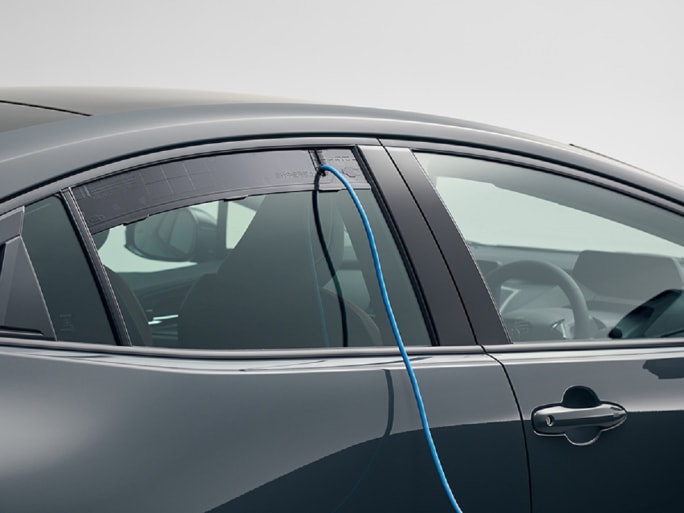
An external electric power supply attachment comes as standard so that external power supply is possible while the door windows are closed to prevent rain and insects from getting in the car.
Photo: Toyota
It is equipped with two 100 VAC/1,500 W accessory power outlets: one at the back of the center console and one in the cargo space. Drivers can select the BEV external power supply mode, which uses power from the battery only without starting the engine, or the HEV external power supply mode, which recharges the battery from the engine if the remaining power is too low. It also comes with an external electric power supply attachment as standard.
PHEV models are equipped with a second-generation solar charging system that achieves a more efficient conversion of solar energy into electricity. This generates power equivalent to driving up to approximately 776 miles per year. Electric power generated while parked is used to charge the drive battery, with the system not only supplying electricity for driving but also for air conditioning and other functions. Electric power generated during driving is used to supplement the auxiliary battery system.
The price and on-sale date of the 2023 Prius will be announced later this year.
More Vehicle Research
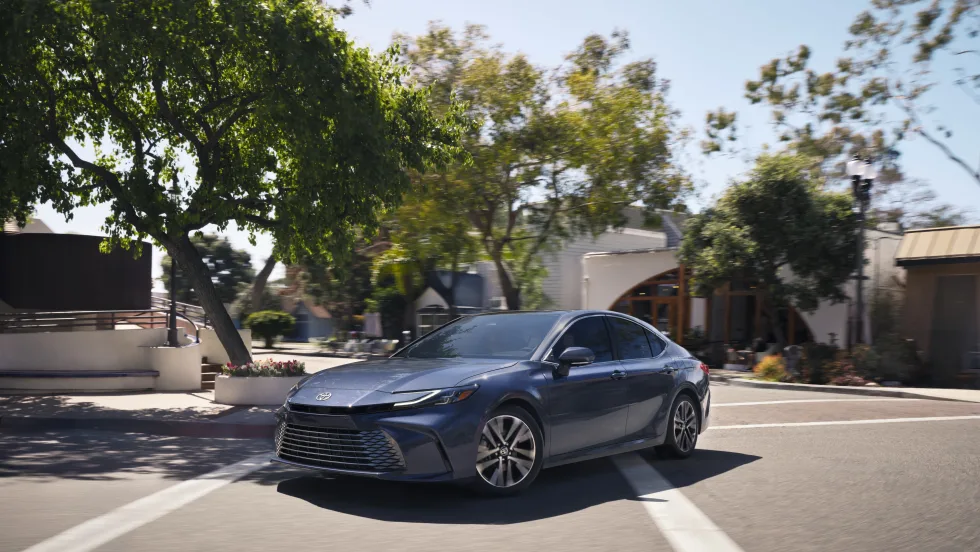
2027 Toyota Camry Offers Hybrid Powertrain Across Five Grades
The 2027 Toyota Camry is a carryover with new pricing.
Read More →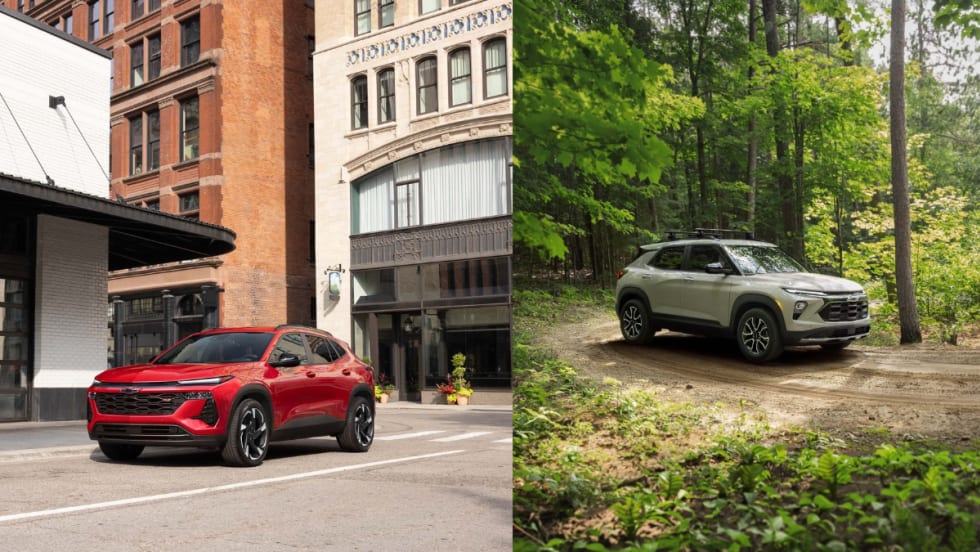
Chevrolet Updates 2027 Trax and Trailblazer with More Standard Safety Features
Chevrolet is updating two of its smallest SUVs with added driver-assistance technology, redesigned interiors, and revised trim options. The changes could add more safety equipment as standard for commercial fleets, while a new Trailblazer configuration adds another all-wheel-drive option.
Read More →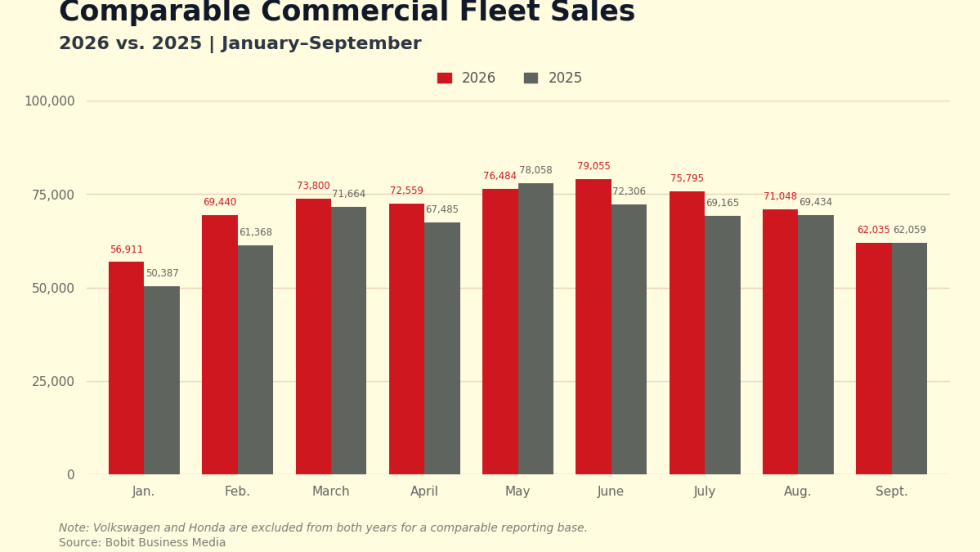
Commercial Fleet Sales Rise 5.8% Through September 2026
September commercial fleet sales were essentially unchanged from a year earlier, slowing year-to-date growth while keeping volume ahead of 2025.
Read More →
Hall of Fame Inductee: John Dmochowsky
The longtime Mondelēz International fleet executive joins the Automotive Fleet Hall of Fame.
Read More →
Hall of Fame Inductee: Lee Miller
After more than four decades at Boehringer Ingelheim, Lee Miller leaves a legacy built on fleet expertise.
Read More →
Hall of Fame Inductee: Mark F. Petersen
From managing fleets of thousands of vehicles to advancing safety and mentoring fellow professionals, Mark F. Petersen made his mark across both the corporate and supplier sides of fleet.
Read More →
When Charger Downtime Becomes a Fleet Availability Problem
As EV deployments move beyond pilot programs, charger reliability can directly affect vehicle readiness, driver productivity and route scheduling.
Read More →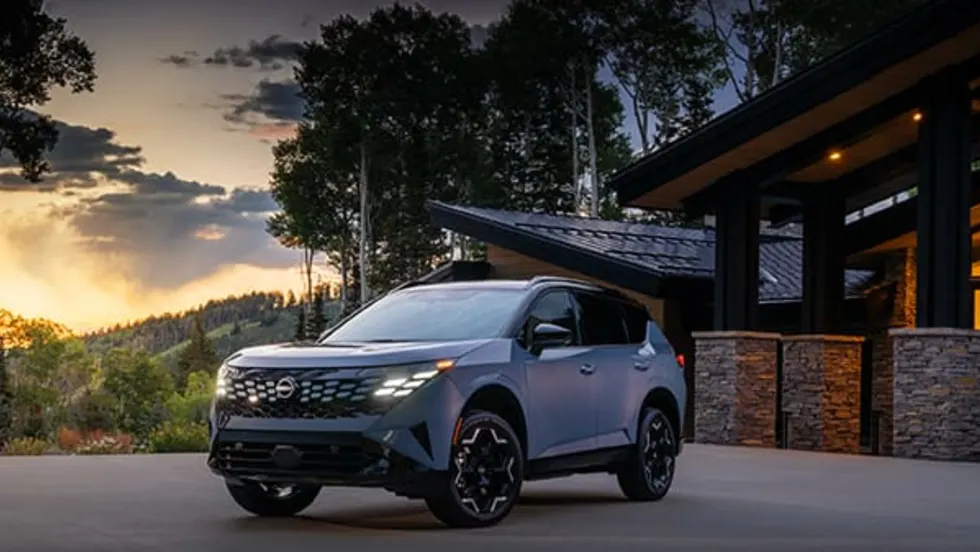
2027 Nissan Rogue Hybrid Adds e-POWER, Standard AWD
The new Rogue Hybrid uses Nissan’s e-POWER system with dual electric motors, offers an estimated 40 mpg and starts at $35,490.
Read More →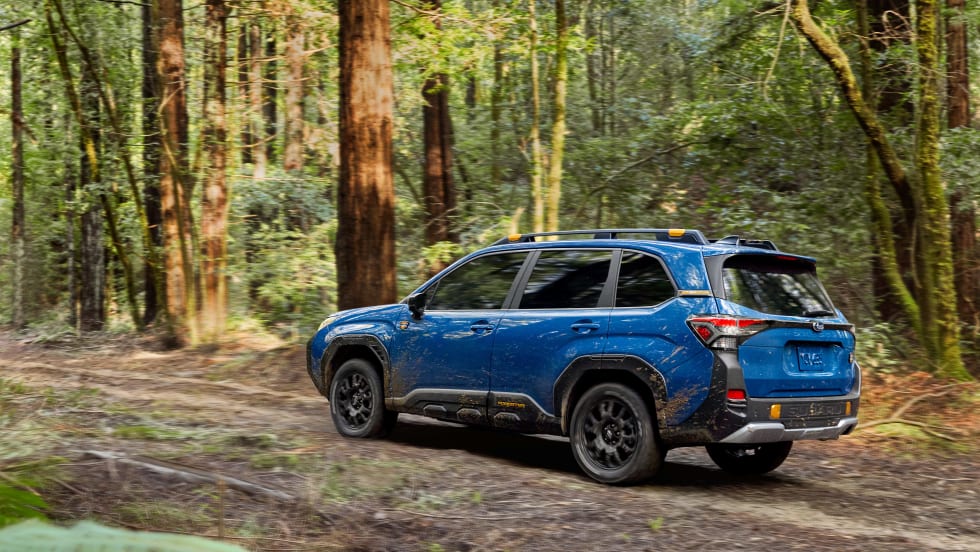
2027 Subaru Forester Adds First Wilderness Hybrid
The 2027 Forester lineup starts at $29,995 and adds a Wilderness Hybrid with 194 combined horsepower and 9.3 inches of ground clearance.
Read More →
EV Realty Names Henrik Holland President as Charging Platform Expands
The former Prologis Mobility and Shell executive will help expand EV Realty’s truck charging business and move its power-first infrastructure model into autonomous vehicle depots and other fleet sectors.
Read More →