




Tire Prices Climb as Oil Costs Soar
SAGINAW, MI – Increasing oil prices are not only causing financial problems at the pump, but also in tire stores.
SAGINAW, MI – Increasing oil prices are not only causing financial problems at the pump, but also in tire stores, according to the Saginaw News. "We're starting to see the prices go up already," said John Flanagan, fleet manager of Stevens Worldwide Van Lines corporate office in Buena Vista Township. More are coming, said Thomas E. Trier, manager of Northwest Tire and Service in Saginaw. "There's been two increases from the manufacturer this year already – one at the beginning of the year and another in early summer – and there will be another increase on September 1," Trier said, noting he got his information from the company's corporate office in Flint. "The new increases will average 2 to 3 percent, although some lines will go up as much as 5 percent." "These increases are reflective of oil prices," Trier said. "They're not as drastic as gas prices, and the inflation on tires is not as bad as housing (heating fuel) and gas, but oil is a product used in manufacturing tires. "We may hold the line on the increase, but it's too soon to answer that for sure." A 28-lb. truck tire contains about 15 lbs. of steel and 13 lbs. of rubber compound, industry sources say. Of the latter, roughly half is pure rubber and the rest is materials such as carbon black and various additives. The oil content of oil-extended synthetic rubber is 25 to 33 percent, so 2 to 3 lbs. of oil were used to make the rubber portion of the truck tire. Another way to figure it is that roughly 10 percent of the tire weight is oil. Tire manufacturer costs are roughly 30 percent for raw materials, 30 percent for labor and 30 percent for capital expenditures and overhead, leaving 10 percent for profit. So, if raw materials go up by 10 percent, the public can expect a 3 percent increase in selling price because labor and overhead costs remain roughly the same, reported Saginaw News. Large companies will have a few hundred to a thousand tires on their cars and trucks. An average grower will have more than 100. At Stevens Worldwide Van Lines, the company has more than 300 tractor-trailers with 18 wheels each and more than 300 street trucks with six tires each. That's more than 7,200 tires, each tire with an average lifespan of 100,000 miles. Each vehicle logs about 80,000 miles per year. Truck trailer tires cost between $200 to $300 each while truck tractor tires cost about $300 to $400 each depending on the size, he said. Even at a mid-range price of $300 each, the 7,200 tires would add up to $2.16 million. A 5 percent increase in tire prices would cost the company $108,000.
More Fuel
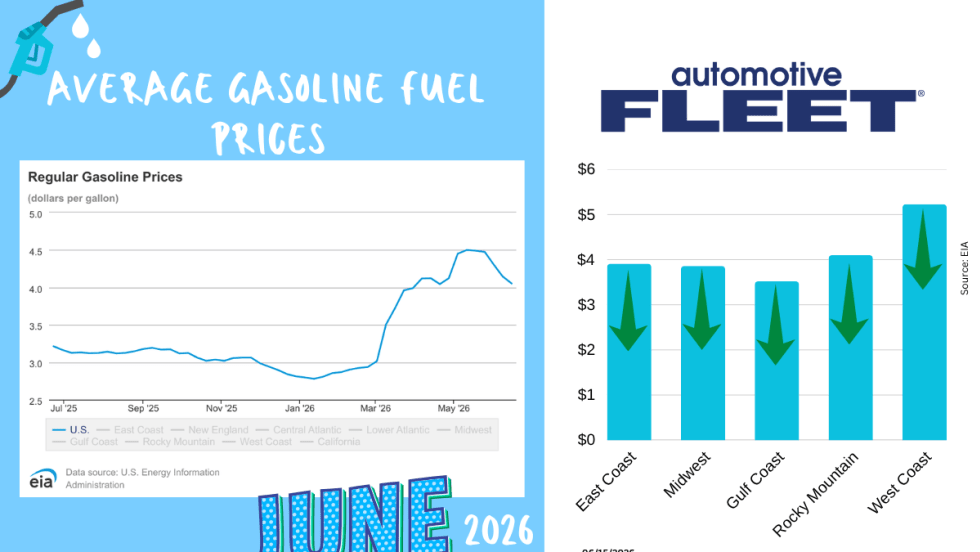
June Fuel Update: Prices Fall Below $4
Drivers are finally getting some relief at the pump. The national average gas price has dropped below $4 a gallon for the first time in months, with prices falling in 47 states as oil markets react to developments in U.S.-Iran negotiations.
Read More →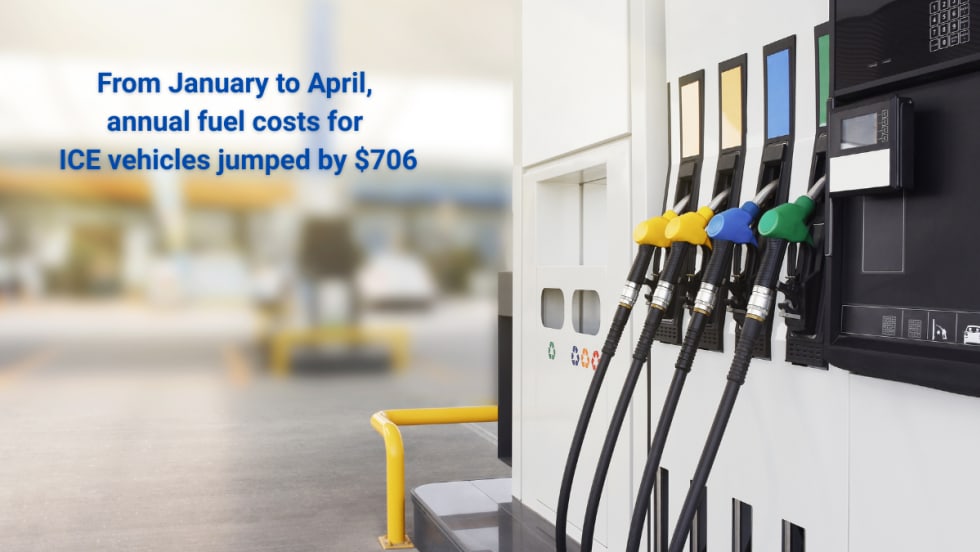
Study: How 2026's Gas Price Hikes Affect Different Vehicle Types
New data from iSeeCars reveals how rising fuel costs have affected different vehicle segments as gasoline prices climbed nearly 46% over the past four months.
Read More →
Are You Tracking Your Fleet's True Total Cost of Ownership?
Bobit Business Media surveyed 190 fleet professionals and found that while most fleets are tracking costs, fragmented systems and data gaps are keeping true TCO visibility out of reach. With rising pressure to control spend in an increasingly volatile environment, the gap between what fleets think they know and what the data actually shows is wider than you might expect. See how your peers are managing costs today and where the industry still has room to improve.
Read More →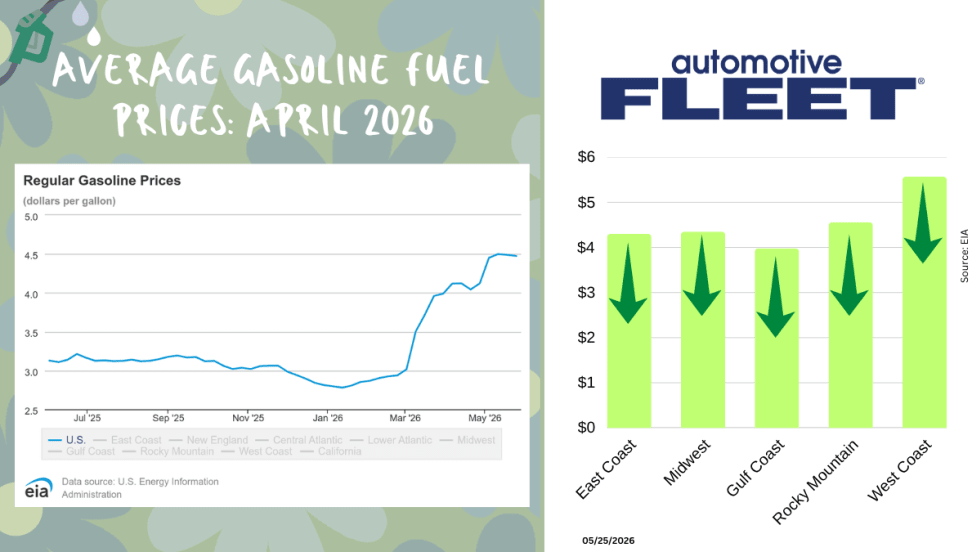
May Fuel Update: All Regions Experience Declines
Gas prices are finally easing in much of the country, but experts warn global tensions could quickly reverse the trend as the national average remains well above last month’s levels.
Read More →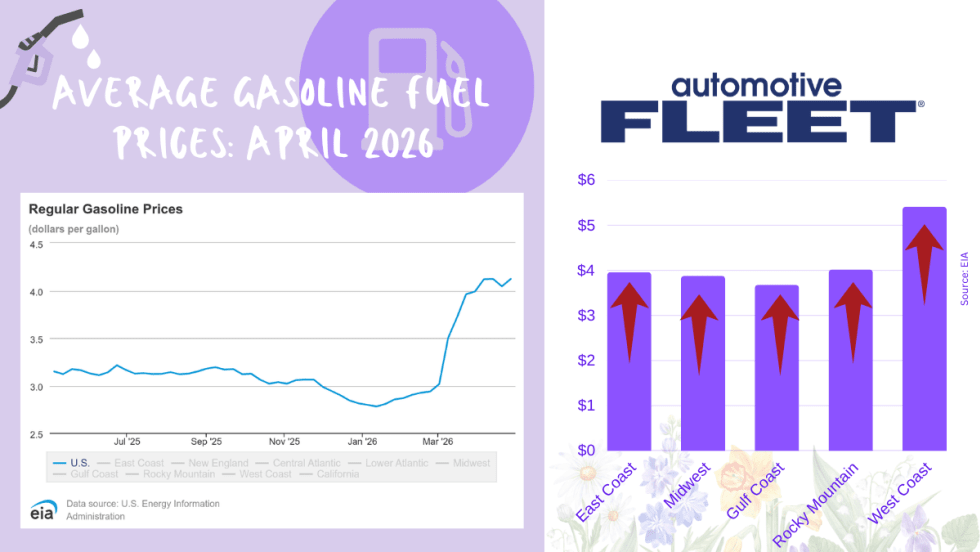
April Fuel Update: Prices Climb Above $4 as Spring Surge Accelerates
National average jumps to $4.04 per gallon, up sharply from last year, with West Coast prices topping $5 and further increases expected amid rising oil tensions.
Read More →
Tips from Fleet Managers on Saving Fuel Costs
Fleet leaders share practical strategies to reduce fuel spend through smarter policy, routing, and driver guidance.
Read More →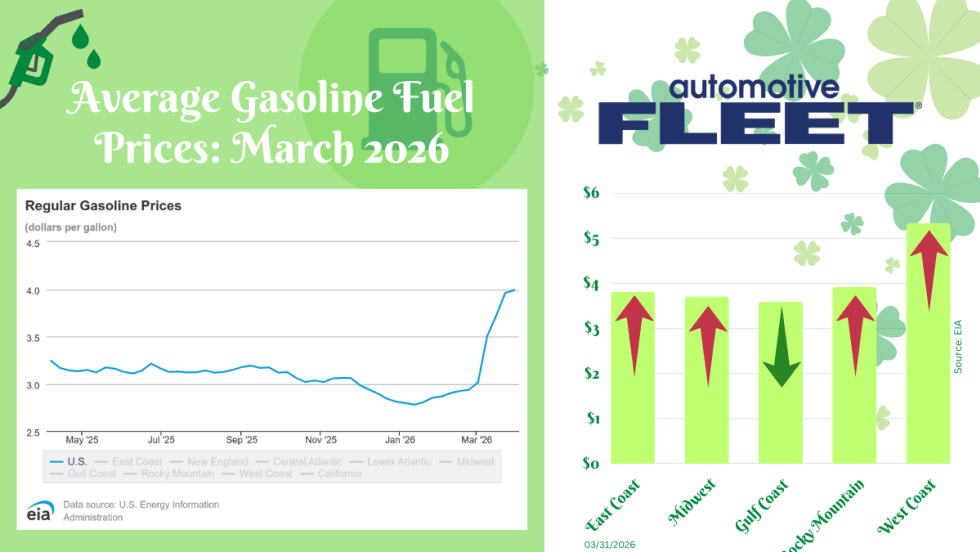
March Fuel Update: Prices Settle With a $4 Average
Fuel prices significantly slowed this week, but a $4 national average is still expected.
Read More →
Bob Adamsky on Fuel Volatility: “Don’t Panic — Have a Plan”
With oil prices rising again, AWP Safety’s fleet manager shares how to respond to rising fuel costs and how the right strategy can turn fuel spikes into cost-saving opportunities.
Read More →
Oil Market Turbulence Is Complicating Fleet Cost Planning
Rapid swings in crude oil prices driven by the conflict in the Middle East could create longer-term cost pressures for fleets, affecting fuel prices, supply chains, and vehicle strategy, says NTEA’s Andrew Wrobel.
Read More →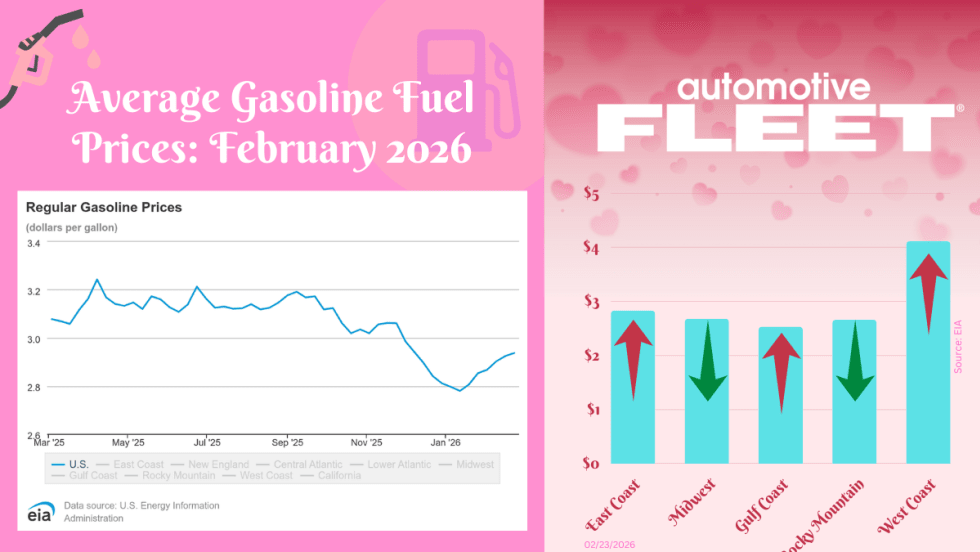
February Fuel Update: Prices Inch Higher for Third Week in a Row
The final February fuel update reveals prices continuing to inch higher for the third week in a row.
Read More →