




Teletrac Navman Expands Fleet Decarbonization Solutions
The mobility solutions developer revealed its Electric Vehicle Evaluator, an EV transition platform to support the reduction of carbon fleet emissions.

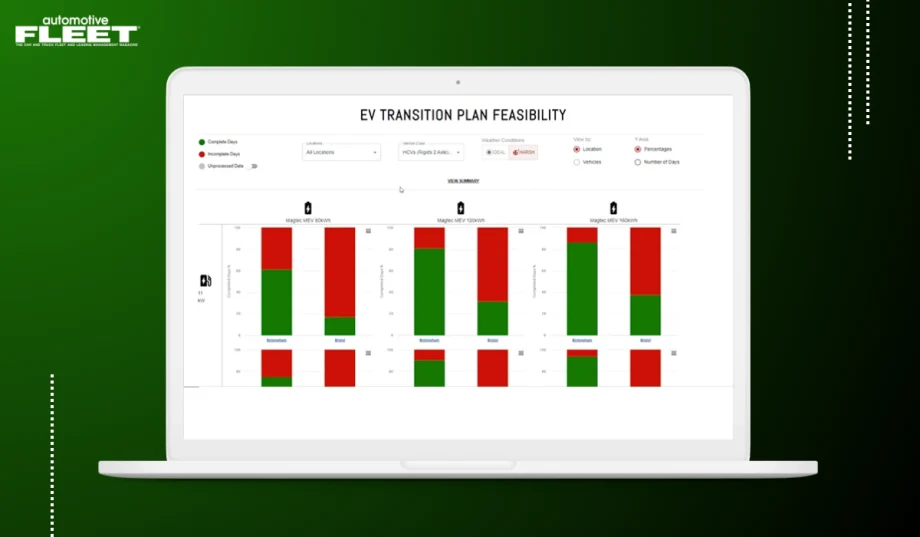
EVE provides intelligence for transition planning in three key areas: Feasibility Planning, Financial Planning, and Infrastructure Design.
Source: Teletrac Navman/AF
Teletrac Navman has revealed significant updates to its alternative energy product portfolio, with two offerings geared toward helping commercial fleet managers with their sustainability efforts:
Electric Vehicle Evaluator (EVE), an electric vehicle (EV) transition platform that uses telematics data and predictive analytics to build a plan that supports a fleet's decarbonization goals
Sustainability Dashboard, which enables fleet managers to monitor progress against their decarbonization targets once their energy transition has begun
These updates will enable fleets to strategically plan, implement, and track the transition from internal combustion engine (ICE) to multi-fuel capabilities.
Mayank Sharma, head of global product management and UX at Teletrac Navman, said, "Fleets all over the globe are facing pressures to change to low-carbon energy types in an efficient and cost-effective way without disrupting business operations—it can be overwhelming. We have designed EVE to help fleet managers navigate the journey to alternative energy by simplifying a complex process."
EVE provides intelligence for transition planning in three key areas to support informed strategic capital expenditure planning and conversations:
Feasibility Planning: This tool helps identify the vehicles suitable for transition to electric based on trip and cargo data and the optimum battery and charger types to use.
Financial Planning: This element provides a detailed cost analysis of EV and ICE vehicles' total cost of ownership (TCO), indicating which would be more cost-effective to transition.
Infrastructure Design: This tool models the most efficient charging infrastructure to support and sustain a transition plan. It can also factor in weather conditions, different charger powers, site charge fuse limits, and varying base loads, enabling fleets to build a custom infrastructure to keep their businesses moving.
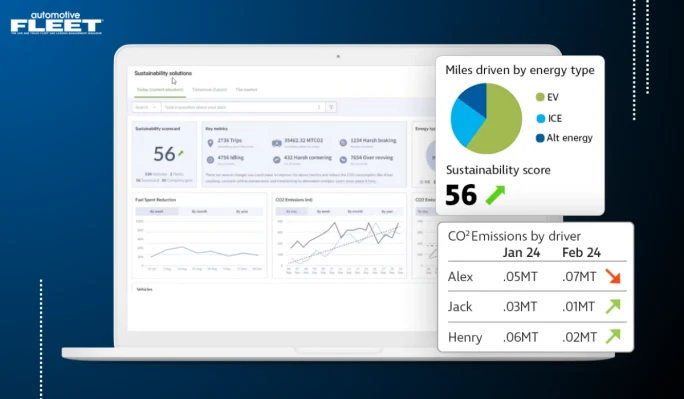
Teletrac Navman's AI-powered TN360 fleet management platform will become the single pane of glass from which to access the Sustainability Dashboard.
Source: Teletrac Navman/AF
The launch of EVE complements Teletrac Navman's new Sustainability Dashboard, which gives fleets a score up to 100, so fleet managers can see progress at a glance and simplify internal and external company reporting on their targets, particularly their emissions.
Not only does it provide a snapshot of fuel cost savings, but it also feeds in data from individual vehicles to help identify areas of improvement in driver performance that can impact emissions.
Moreover, Teletrac Navman's AI-powered TN360 fleet management platform will become the single pane of glass from which to access the Sustainability Dashboard and integrations with multiple business units, streamlining fleet operations further.
"Our recent TS24 telematics survey found fleets need trustworthy support when it comes to decarbonization. Our experts are always available to guide fleets through their transition and to ensure they're making the most of the solutions they've employed through ongoing support, tailored guidance, and data reviews," said Sharma.
More Green Fleet
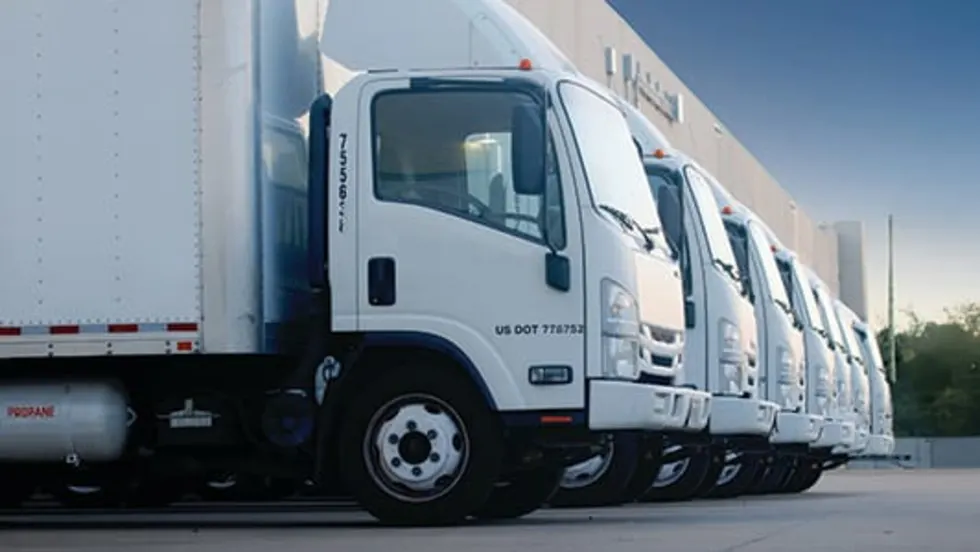
New Propane Autogas Program Offers Fleet Compensation
Qualified commercial fleets can receive $7,500 per eligible propane autogas vehicle and up to $10,000 for new refueling site prep. Learn how the program works and see whether your fleet qualifies.
Read More →
EV Charging Use Is Outpacing Infrastructure Growth
ChargePoint’s 2026 Charging Forward Report points to rising charger use, higher-powered charging, commercial vehicle electrification, and energy-management technology. Here’s what fleets should know.
Read More →
Merchants Fleet Reports 290M EV Miles as Fleets Navigate Changing Electrification Market
From millions in operating savings to hundreds of millions of EV miles, Merchants Fleet’s latest report reveals what’s working and what’s changing in fleet electrification.
Read More →
The EV Breakdown Nobody's Talking About: Why Most Electric Vehicle Roadside Calls Aren't Mechanical Failures
Here's why EV breakdowns are widely misunderstood.
Read More →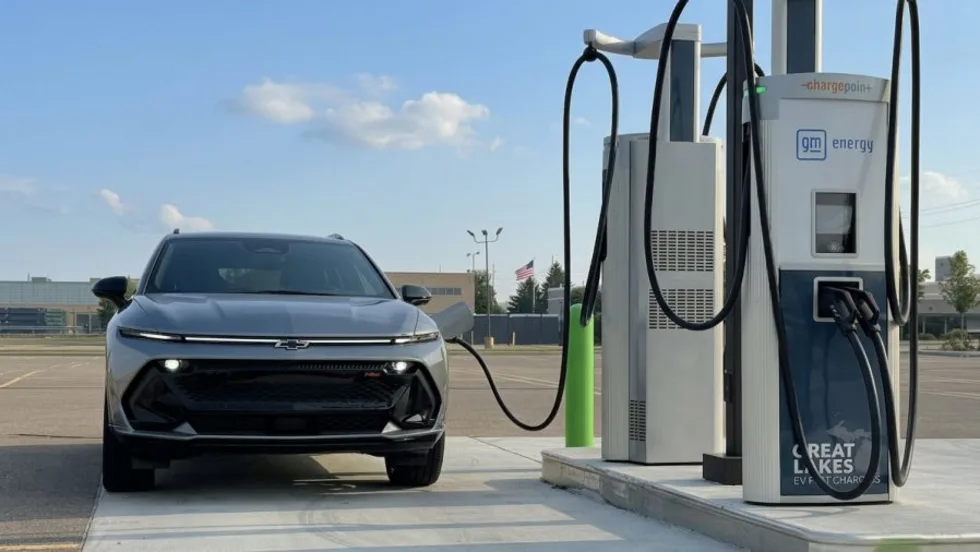
ChargePoint Now Available in Energy Pass
ChargePoint and additional planned charging network integrations were added to GM's Energy Pass.
Read More →

First Look: Slate Auto's Electric Fleet Pickup
Could an affordable, modular EV pickup make electrification more practical for fleets?
Read More →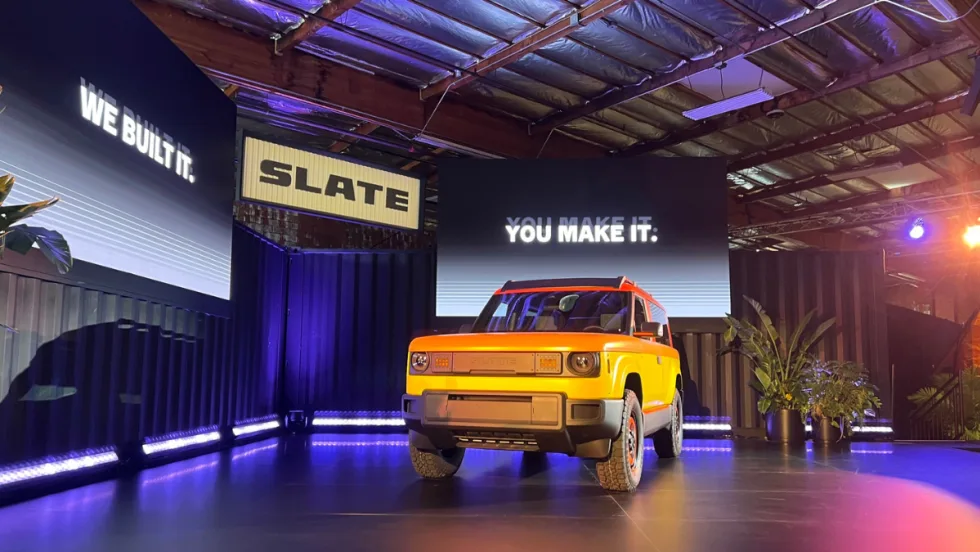
Slate Debuts Colorful, Unique EV Models
A recent media and client event, studded with electric vehicles dressed up on platforms, planted a new position for the manufacturer in the wider EV market. Fleets will find cost-saving advantages.
Read More →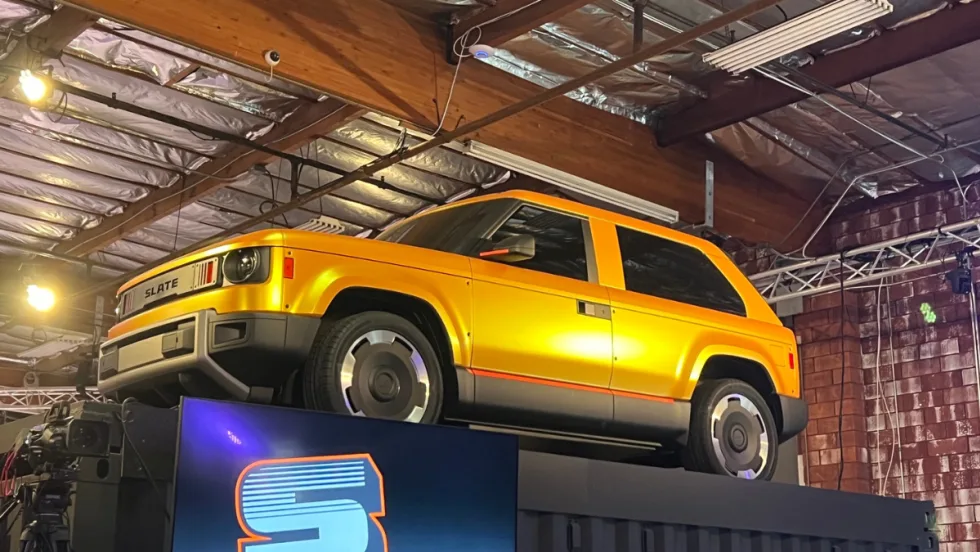
Slate Electric SUV, Pickup Switchable Model Aims For Light-Duty Fleets
Everything about this EV is counterintuitive and understated, making it stand out from the crowd.
Read More →
Inspiration Mobility Acquires Key Electrada Assets
Inspiration Mobility Group has acquired select assets of Electrada, adding the fleet electrification provider's team, technology, and charging infrastructure development capabilities to its energy management business.
Read More →