




Survey: Miami Is Leader in Road Rage
NORWALK, Conn. --- The third annual "In The Driver's Seat Road Rage Survey," commissioned by the AutoVantage auto club, found that the least courteous city in the country is Miami, followed by Boston and New York.
NORWALK, Conn. --- The third annual "In The Driver's Seat Road Rage Survey," commissioned by the AutoVantage auto club, found that the least courteous city in the country is Miami, followed by Boston and New York.
It's the third consecutive year that Miami takes the crown as road rage capital of America. The other two cities in the bottom five were Baltimore and Washington, D.C. The most courteous city is Pittsburgh, followed closely by Portland, Ore., Seattle, Minneapolis and Cleveland.
New trends and road rage triggers for 2008 include drivers talking on cell phones, eating, drinking, texting and e-mailing. The "In The Driver's Seat 2008 AutoVantage Road Rage Survey" was conducted to determine the driving habits and attitudes of commuters across the U.S. and to learn more about consumer views on the topic of road rage.
"Unfortunately, road rage is too often a way of life," said Brad Eggleston, vice president of AutoVantage. "More and more, in cities across America, people are acting out their frustrations with dangerous results. And with a gridlocked, fast-paced, multi-tasking society, the trend continues to increase. There are some very interesting results in this year's Road Rage survey, which shines the light on emerging driving trends."
The survey's best and worst cities are:
The least courteous cities (worst road rage) for 2008 are:
1. Miami
2. Boston
3. New York
4. Baltimore
5. Washington, D.C.
The most courteous cities (least road rage) for 2008 are:
1. Pittsburgh
2. Portland, Ore.
3. Seattle
4. Minneapolis
5. Cleveland
Other cities surveyed included Los Angeles, Chicago, Dallas, Philadelphia, Houston, Atlanta, Detroit, San Francisco, Phoenix, San Diego, St. Louis, Tampa, Denver, Cincinnati, and Sacramento, Calif.
Fleet managers, want to know how your drivers rate? They can check their road rage temperature by taking an online survey at www.gaugemyrage.com.
This new study focuses on important attitudes and habits of drivers on the open road nationwide and offers research and important trends to help educate and influence safer driving habits throughout the United States.
Capt. Mark Welch, chief of public affairs for the Florida Highway Patrol, witnesses the dangers of road rage firsthand, and his agency has developed a comprehensive program to keep the highways safe.
"When drivers let their emotions get the best of them, they take it out on other drivers, putting everyone on the road in danger," Welch said. The Florida Highway Patrol is on the lookout for road rage behaviors, and stepped-up measures include troopers in unmarked vehicles that track aggressive drivers, as well as aircraft and motorcycle units that patrol the skies and roadways for road rage.
To boost safety awareness, this year's survey sought to define road rage in America. Two important attributes emerged in defining road rage behavior:
* Angry or upset drivers, including out-of-control drivers and drivers who lose their tempers.
* Bad or aggressive driving, including bad/careless/crazy and/or rude driving, cutting into lanes, cutting people off, tailgating, speeding and/or honking.
When the survey asked participants to identify the major causes of road rage, the most frequent theme was people being in a hurry, running late, being impatient and/or speeding.
Direct quotes from the survey are:
* "Bad/careless/poor driving, such as cutting others off, speeding, making obscene gestures and not using proper signals"
* "People who are angry, stressed, frustrated, had a bad day/temper or are tired"
* "People being in a hurry, impatient or running late"
* "Inconsiderate, disrespectful, selfish drivers who think they own the road"
Behaviors by other drivers that cause stress for commuters and can lead to road rage, include:
* Drivers who talk on their cell phones (88 percent observe this happening every day)
* Driving too fast (59 percent)
* Tailgating (56 percent)
* Drivers eating or drinking while driving (49 percent)
Commuters also reported other drivers frequently:
* Cutting over without notice (44 percent see this every day)
* Texting, e-mailing or using BlackBerry while driving (38 percent)
* Doing other things -- putting on makeup, shaving or reading behind the wheel (29 percent)
* Slamming on the brakes (28 percent)
* Running red lights (26 percent)
As a reaction to rude or bad driving by others, people surveyed admitted that they:
* Honk their horn at the offending driver (43 percent)
* Curse at the other driver (36 percent)
* Wave their fist or arms (11 percent)
* Make an obscene gesture (9 percent)
* Call the police to report the driver (8 percent)
* Slam into the car in front of them (1 percent)
Drivers also weighed in on how to reduce rude driving and road rage:
* Limit cell phone usage to "hands free" only (59 percent)
* Make it illegal to use cell phones while driving (52 percent)
* Use automatic cameras to catch bad drivers (56 percent)
Other key findings of the study:
* Younger drivers and those who have the longest commutes are most likely to react to an aggressive or rude driver. Younger drivers are more likely to honk their horns, while those with the longest commutes are more likely to make an obscene gesture.
* There is no real difference between men and women when it comes to road rage.
* Commuters see such road rage inducing behaviors as talking on the cell phone (88 percent), driving too fast (59 percent), and tailgating (56 percent) every day.
* Talking on cell phone. Eighty-eight percent see this every day. New York drivers led this category (70 percent), and Pittsburgh motorists see it the least (39 percent).
* Driving too fast. Across the country, 59 percent see this aggressive behavior daily. Atlanta and Miami drivers have the biggest lead feet (73 percent), while Cincinnati drivers were least likely to see this every day (46 percent).
* Tailgating. Fifty-six percent of motorists see this every day. New Yorkers (70 percent) see this most often, and Pittsburgh drivers (39 percent) see this least.
* Eating and/or drinking, a common road rage trigger, is observed by 49 percent of drivers daily. Motorists in Baltimore, New York and Tampa (57 percent) see this daily, while only 36 percent of drivers in Pittsburgh witness this daily.
* Cutting over without notice. Nationally, 44 percent of drivers see this every day, and motorists in Miami (66 percent) were the most likely to observe this behavior daily. Pittsburgh drivers (28 percent) are least likely to see this daily.
* Texting and/or e-mailing, and other road rage inducers, scored high with 38 percent of commuters observing this behavior every day. Drivers in Denver, Houston, Miami, and Phoenix see the most text-happy drivers (46 percent), while it's sleepless in Seattle, with only 25 percent of commuters report seeing daily texting and e-mailing.
* Slamming on the brakes. Some 28 percent of drivers witness this daily, and those in Washington, D.C. (40 percent) are most likely to see this behavior daily. Drivers in Pittsburgh are least likely (19 percent) to witness this daily.
* Running red lights. More than one-fourth (26 percent) said they see drivers every day who run red lights. Drivers in Miami and Tampa are the most likely to witness this behavior (47 percent) daily, while Pittsburgh motorists (13 percent) were least likely to see this every day. Overall, nearly a third, or 29 percent, said they see drivers multi-tasking like putting on makeup, shaving or reading while driving. Tampa (40 percent) emerged as the city where this is most likely to be seen, while Cincinnati (20 percent) was the least likely place for the behaviors.
Survey Methodology Prince Market Research, an independent marketing research company, was commissioned to conduct a nationally representative telephone study with consumers in 25 major metropolitan areas in the U.S. to learn more about consumer views on road rage. All telephone calls were conducted between Feb. 4 and March 23, 2008. During that period, a total of 2,512 interviews, lasting an average of six to eight minutes, were completed. No incentive was offered and the sponsor of the research was not revealed. The margin of error is +/- 2 percent.
More Safety
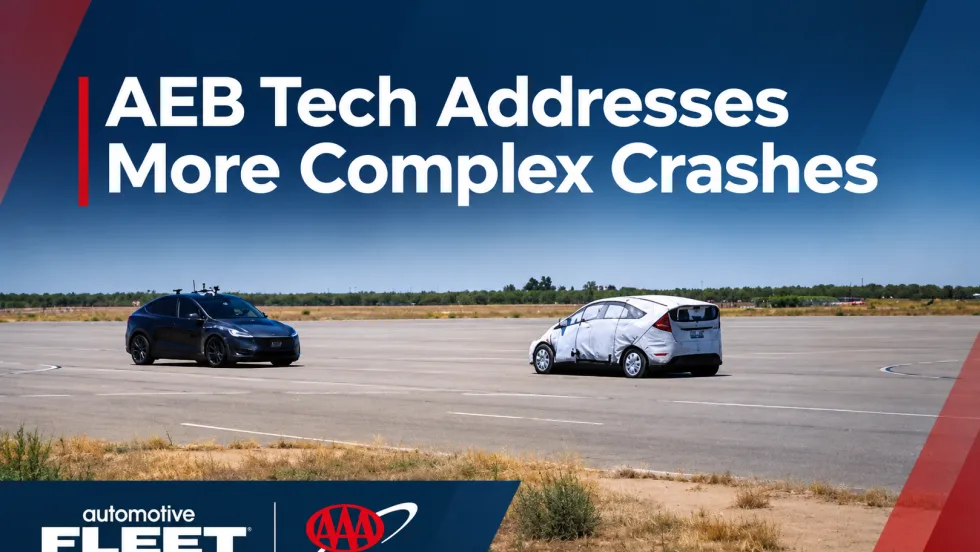
AAA Testing Finds Gaps in Intersection AEB Crash Prevention
Testing of four 2026 model-year vehicles found that automatic emergency braking prevented collisions in standardized intersection scenarios, but three vehicles failed to avoid crashes when another vehicle turned into their path.
Read More →
Which Fleet Types Have the Highest Severe Speeding Rates?
New research from SambaSafety finds significant differences in speeding rates across fleet industries, even as nearly 90% of surveyed fleets report using telematics.
Read More →
When a Cyberattack Hits Your Fleet: What Happens Next?
“You have two opportunities to test your plans: when you choose or when the threat actor chooses.” A cybersecurity expert reveals what fleet managers need to know before a cyberattack puts their operations at risk — and why the decisions made in the first moments can shape the entire recovery.
Read More →
Tips for Driving Safely on Halloween Night
This video features a reminder from the Connecticut Department of Transportation (DOT) and the Connecticut Police Chiefs Association, urging drivers to prioritize safety this Halloween.
Read More →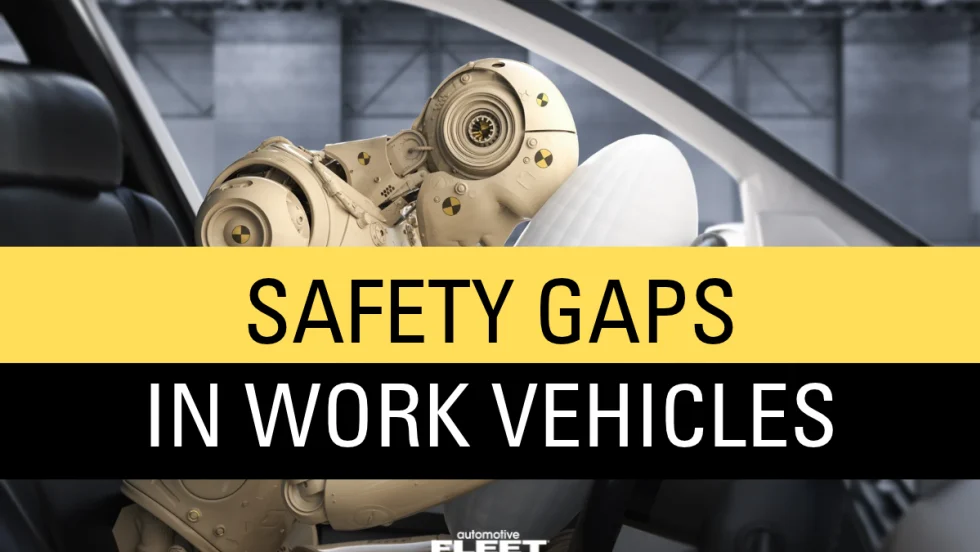
IIHS Crash Avoidance Tests Reveal Safety Gaps in Cargo Vans and Work Trucks
New IIHS crash avoidance ratings show uneven performance among cargo vans and heavy-duty pickups, with most struggling to avoid vehicle-to-vehicle collisions.
Read More →
What’s Next for Fleet? Safety, AI & Industry Recognition | AF News Recap
Could your company's culture be encouraging distracted driving? This week, we're exploring how workplace expectations affect driver safety, what AI, EVs, and autonomous vehicles could mean for the future of fleet management, and how fleet professionals can strengthen their award nominations.
Read More →
Does Your Fleet's Culture Encourage Distracted Driving?
What happens when the people responsible for enforcing safety rules are the ones setting the wrong example? The answer may reveal why some of the biggest risks to fleet drivers have little to do with what's written in the employee handbook.
Read More →
Fleet Manager’s Ultimate Playbook: Navigating the New Standard in OEM Connectivity
Rising operating costs, driver safety concerns, and unplanned downtime are putting unprecedented pressure on modern fleets. Discover how fleet managers use embedded OEM connectivity and real-time vehicle data to cut TCO, prevent downtime, and protect drivers without aftermarket telematics hardware.
Read More →
From Driver Well-Being to EV Charging | AF News Recap
Mental health belongs in the fleet safety conversation. This week, we’re looking at five ways fleets can support employee well-being before a crisis, plus Holman’s expansion in Mexico, new one-day Fleet Forward passes, and why EV charging demand is outpacing infrastructure growth.
Read More →
Nexar-Nauto Merger Aims to Give Fleets Better Safety Intelligence Through Larger Driving Dataset
Stefan Heck tells Automotive Fleet that combining more than 10 billion miles of driving history with Nexar's AI models will give fleets deeper insights into driver risk and roadway conditions than either company could provide independently.
Read More →