




Survey: 64% of Drivers Say It’s OK to Speed on Highways
Nearly half (48%) say they engage in the risky behavior to keep up with traffic flow and not be run over.

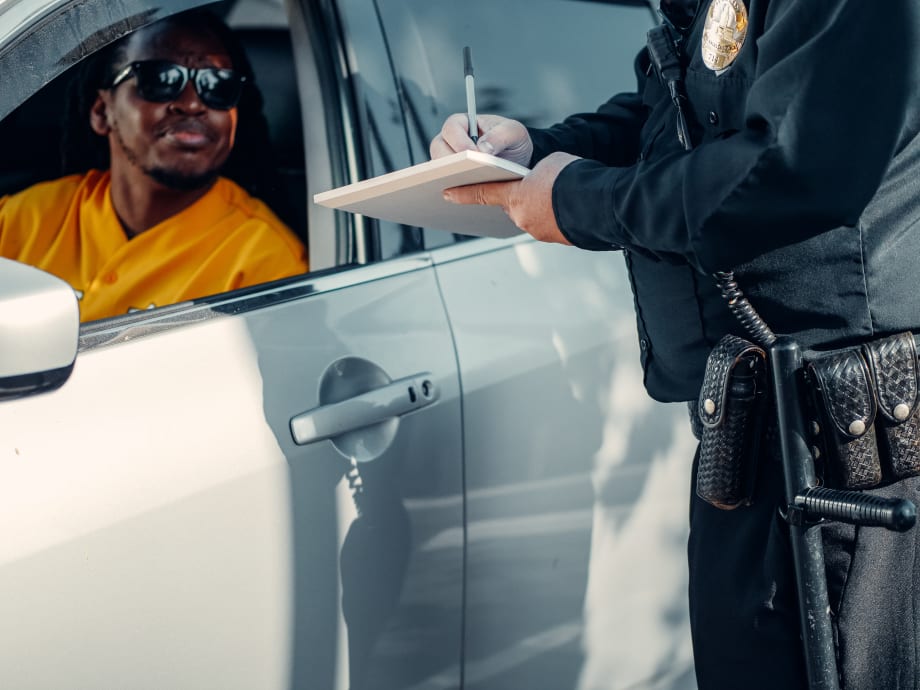
Nearly half (48%) say they engage in the risky behavior to keep up with traffic flow and not be run over. That’s the same percentage as the 2020 survey findings.
Photo via Pexels.com/Kindel Media.
While most drivers admit to occasional speeding, 79% say they drive within 10 mph of the speed limit, according to a new survey from CarInsurance.com.
However, the findings also indicate a disturbing trend: Most drivers believe there are places and instances where it’s OK to speed, such as on the highway.
As to how fast they go, 14% said they drive 11 to 15 mph over the limit, 4% said they travel 16 to 29 mph above the limit, and 3% admitted to driving 30 mph or more over the limit.
The third annual survey conducted by CarInsurance.com also looks at why, how often, and where people speed.
Nearly half (48%) say they engage in the risky behavior to keep up with traffic flow and not be run over. That’s the same percentage as the 2020 survey findings. Other top reasons for speeding include arriving on time, which was cited by 17% of respondents.
Finally, some 10% of drivers believe speed limits are generally too low, making speeding an acceptable option to them. That number is down by half from the 20% who cited the same rationale in 2020.
Most motorists who do speed say they don’t do it very often — with 31% saying rarely and 20% saying sometimes. Yet, over one-third (34%) of respondents said they almost always go 5 to 10 mph over the limit, while 15% said they almost always drive 11 mph or more over the limit.
Highways and freeways are the speeding place of choice for motorists — with 64% saying this is where they are most likely to put the pedal to the metal and where it’s OK to do so.
Other situations and places where drivers indicated it’s “ok to speed,” include when it’s sunny with dry roads (25%), on residential streets (8%), and when it’s rainy and the roads are wet (6%).
Drivers do realize there are consequences for speeding with about one-third acknowledging they were pulled over for the behavior in the past year.
However, most do what they can to get out of a speeding ticket. The most successful excuse this year for avoiding a ticket was, “I didn’t know I was speeding,” which 26% of respondents used effectively.
Other top effective excuses include “medical emergency” (25%), noting that “everyone else was going the same speed” (22%), and “late for work” (21%).
Speeding remains one of the riskiest driving behaviors on U.S. roadways. In 2019, 9,478 people lost their lives in speed-related crashes. That’s more than a quarter of all traffic fatalities. Research shows that higher speeds increase the likelihood and severity of collisions.
More Safety

Fleet Manager’s Ultimate Playbook: Navigating the New Standard in OEM Connectivity
Rising operating costs, driver safety concerns, and unplanned downtime are putting unprecedented pressure on modern fleets. Discover how fleet managers use embedded OEM connectivity and real-time vehicle data to cut TCO, prevent downtime, and protect drivers without aftermarket telematics hardware.
Read More →
From Driver Well-Being to EV Charging | AF News Recap
Mental health belongs in the fleet safety conversation. This week, we’re looking at five ways fleets can support employee well-being before a crisis, plus Holman’s expansion in Mexico, new one-day Fleet Forward passes, and why EV charging demand is outpacing infrastructure growth.
Read More →
Nexar-Nauto Merger Aims to Give Fleets Better Safety Intelligence Through Larger Driving Dataset
Stefan Heck tells Automotive Fleet that combining more than 10 billion miles of driving history with Nexar's AI models will give fleets deeper insights into driver risk and roadway conditions than either company could provide independently.
Read More →
Don't Wait for a Crisis: 5 Ways to Build Mental Health Into Your Fleet Safety Program
For Suicide Prevention Month, fleet and safety leaders have an opportunity to put mental health where it belongs: at the center of workplace safety.
Read More →
How Camera Data Can Strengthen a Fleet’s Insurance Renewal
Insights from a commercial insurance carrier and a broker show how fleets can turn video telematic data, driver coaching, and improved claims results into a stronger case at insurance renewal.
Read More →
The Safest Fleets Aren’t the Ones with the Most Technology
You’ve made the telematics investment. Here’s how to capture the other half of its value and build the safest fleet on the road.
Read More →
Hidden in Plain Sight: Fleet Compliance Risks
Fleet compliance isn't just about having policies — it's about consistently enforcing them. This practical guide reveals six hidden compliance risks common in public sector and shared fleet operations and outlines proven strategies to improve visibility, accountability, and audit readiness
Read More →
NETS Sets 2026 Fleet Safety Benchmark Conference for Indianapolis
The Sept. 15–17 program will feature fleet benchmarking data, case studies, emerging technologies, and implementation strategies while running alongside the NSC Safety Congress & Expo.
Read More →
Off-the-Job Crashes Account for 43% of Employers’ $61.7 Billion Crash Burden
NETS quantifies costs dispersed across fleet, risk, HR, and other departments while providing new per-crash benchmarks for employers.
Read More →
Ram Recalls More Than 1.27 Million 1500 Pickups for Seat Belt Anchor Issue
The recall affects certain 2019-2026 Ram 1500 pickups that may have improperly attached second-row seat belt buckle anchors.
Read More →