




Study Raises Questions About Booster Seat Safety
ARLINGTON, VA — A new study from the Insurance Institute for Highway Safety and the University of Michigan Transportation Research Institute evaluates booster seats.
ARLINGTON, VA — Booster seats are meant to do one thing -- elevate children so that safety belts designed for adults are in the right position to restrain kids during a crash. But a new study from the Insurance Institute for Highway Safety and the University of Michigan Transportation Research Institute raises questions about the safety of some models.
According to the institute, 13 of the 41 belt-positioning booster seats did "such a poor job of improving the fit of lap and shoulder belts for children" that the institute declined to recommend them at all. But the institute designated 10 models as "best bets" and five as "good bets." These evaluations are the group's first to advise consumers how well boosters sold by U.S. retailers improve belt fit for children in cars, minivans and SUVs. The institute said it plans to continue these assessments.
"We evaluated the safety belt fit boosters provide, not crash protection," said Institute President Adrian Lund. "This is because unlike child restraints, boosters don't restrain children in crashes. They simply position children so lap and shoulder belts are in the right place to restrain them." Good boosters route belts across a child's bony parts, not soft parts like the abdomen, which is more vulnerable to injury.
"We'd expect the 10 best bets to improve belt fit for children in almost any car, minivan or SUV," Lund said. "Likewise, it's clear that kids in the 13 boosters we don't recommend aren't getting the full benefit of improved lap belt fit. These boosters may increase restraint use by making children more comfortable, but they don't position belts for optimal protection."
Researchers at the University of Michigan Transportation Research Institute assessed two types of boosters, backless and highback, under conditions representing a range of 2001-06 model vehicles. Some highbacks convert to backless, and some boosters, called "combination seats," can be used as child restraints.
Highback and backless modes were evaluated separately because each mode affects how belts fit. More importance was assigned to lap belt fit. All of the best-bet boosters locate this belt on children's upper thighs.
"The main problem for the boosters that aren't recommended is they leave the lap belt partially or fully on the abdomen," the institute said. Fit is important because a correctly positioned lap belt loads pelvic bones during a crash, not the abdomen. A good booster also positions the shoulder belt at midshoulder, keeping the webbing away from the neck so it won't chafe and reducing the likelihood that kids will endanger themselves by putting the belt behind their back or under an arm.
"Our data show it's possible to design a booster with good lap and shoulder belt fit," said Matt Reed, the study's lead author and research associate professor at the University of Michigan Transportation Research Institute. "Boosters that can't do that should be redesigned."
Boosters the institute doesn't recommend are the highback Compass B505, Compass B510, Cosco/Dorel Traveler, and Evenflo Big Kid Confidence; backless Safety Angel Ride Ryte; combination Cosco/Dorel Alpha Omega, Cosco/Dorel (Eddie Bauer) Summit, Cosco Highback Booster, Dorel/Safety 1st (Eddie Bauer) Prospect, Evenflo Chase Comfort Touch, Evenflo Generations, Graco CarGo Zephyr, and Safety 1st/Dorel Intera.
At least two of these models have been discontinued. Booster makers sometimes reuse names and even model numbers for new seats, so manufacture dates and model numbers are important, the institute said.
The 10 best-bet boosters are the "most likely to position not only lap belts but also shoulder portions correctly on many children in many vehicles," the institute said. Best bets include three backless seats: Combi Kobuk, Fisher-Price Safe Voyage, and Graco TurboBooster. These may require plastic clips to correctly position shoulder belts.
Six highbacks are best bets: Britax Monarch, Britax Parkway, Fisher-Price Safe Voyage, LaRoche Bros. Teddy Bear, Recaro Young Style, and Volvo booster cushion. Another best bet is the combination seat Safeguard Go when it's used as a backless booster. Combination seats convert to boosters by removing their built-in harnesses. At least five of the best-bet boosters have been discontinued but still are sold.
The five good bets provide "acceptable belt fit in almost as many vehicle belt configurations," the institute said. They are highbacks Combi Kobuk, Graco TurboBooster, and Safety Angel Ride Ryte, and combinations Recaro Young Sport and Safety 1st/Dorel Apex 65, when used as highbacks.
"Boosters that provide better belt fit aren't necessarily the priciest," noted Anne McCartt, institute senior vice president for research. "Parents don't have to spend a lot of money for a best bet or good bet booster."
The highback Graco Turbo-Booster, for example, converts to a backless booster and retails for about $50. The backless-only version sells for about $20.
Child safety seat laws in 43 states and the District of Columbia include booster seat provisions, but until now there has been little information on how to pick one that provides proper belt fit. The government's dynamic tests of boosters don't measure belt fit.
Congress in 2002 told the National Highway Traffic Safety Administration to evaluate a belt fit test, but the agency decided to forgo testing. Instead, it only rates boosters by how easy they are to use. Manufacturers crash test boosters, but these simulated tests don't tell parents how boosters will fit kids in their vehicles.
The comparative ratings of boosters begin with lap belt fit. Researchers positioned a Hybrid III dummy representing a six-year-old, the average size of a booster-age child, in a booster in a second-row seat taken from a car. They assessed lap/shoulder belt fit under seven conditions spanning a range of belt positions measured in 31 vehicle rear seats. Backless boosters generally provide better lap belt fit. Only one of the 15 backless boosters evaluated, the Graco Turbo-Booster used with a belt-positioning clip, provides optimal fit for both the lap and shoulder belts across all the belt configurations, the institute said.
On other backless boosters, the belt often falls too close to the neck or too far off the shoulder, the institute said. McCartt said parents with kids in backless boosters should use the clips if they're needed to correctly position shoulder belts on their children. Because of built-in guides, highbacks generally do a better job of positioning shoulder belts across all vehicle configurations. However, 12 of the 26 evaluated fail to correctly position lap belts. Good boosters have belt-routing features that hold lap belts down and forward.
Six of the 12 highbacks in the not-recommended group are combination seats that can be used as forward-facing child restraints with five-point harnesses, and two highbacks, the Cosco/Dorel Alpha Omega and the Safety 1st/Dorel Intera, are three-in-one seats that can be used rear-facing for infants. The Intera also converts to a backless booster. The Safeguard Go, which converts to a backless booster but not a highback, is the only combination seat that's a best bet.
"Combination and three-in-one seats are marketed as the last child seat parents need to buy," Lund said, "but most of these seats aren't the best choice as boosters. Parents need to be careful. These seats should be fine when their harnesses restrain younger children, but many of these designs compromise the ability to provide children with good belt fit as booster seats."
The evaluations reflect the fit of lap/shoulder belts for an average size six-year-old in many belt configurations. Some boosters might fit bigger or smaller children better in vehicles with other belt setups. Unlike dummies, kids fidget and slouch in their seats, so the real-world fit boosters provide varies.
"No matter how a booster did in our evaluations, parents still need to see how it fits their child in their car," Lund advised. He urged them "not to rush to buy a new booster if theirs isn't among the top seats. Check how it fits and remember, it's better for children to ride restrained in any booster than to let them ride unbuckled."
When children outgrow child restraints, parents may wonder if boosters are necessary. They are, because safety belts are designed to fit adults and usually don't fit most kids properly until they're 4 feet 9 inches tall. About 350 children ages four to seven die in crashes each year in the United States. An additional 50,000 are injured. Because half of the fatally injured children in this age group ride unrestrained, the first step is to get them belted. Boosters help by improving the fit, effectiveness and comfort of adult belts.
There's convincing evidence that boosters, used with lap/shoulder belts, offer the safest way for kids to ride in cars once they outgrow child restraints, usually at age four. Using boosters lowers injury risk by 59 percent compared with belts alone, a 2003 study by the Center for Injury Research and Prevention at the Children's Hospital of Philadelphia found. A 2006 study by the same authors found that boosters reduce fatality risk among booster-age children by about 28 percent compared with belts alone.
Not Recommended:
-- Safety Angel Ride Ryte backless
-- Cosco/Dorel (Eddie Bauer) Summit
-- Graco CarGo Zephyr
-- Evenflo Big Kid Confidence
-- Cosco/Dorel Traveler
-- Compass B505
-- Compass B510
-- Evenflo Generations
-- Dorel/Safety 1st (Eddie Bauer) Prospect
-- Cosco Highback Booster
-- Cosco/Dorel Alpha Omega
-- Evenflo Chase Comfort Touch
-- Safety 1st/Dorel Intera
Best Bets
Graco TurboBooster backless with clip
Fisher-Price Safe Voyage backless with clip
Combi Kobuk backless with clip
Fisher-Price Safe Voyage
Britax Parkway
LaRoche Bros. Teddy Bear
Safeguard Go backless with clip
Volvo booster cushion
Recaro Young Style
Britax Monarch
Good Bets
Graco TurboBooster
Safety Angel Ride Ryte
Recaro Young Sport
Combi Kobuk
Safety 1st/Dorel Apex 65
Note: Unless the booster name indicates that it is a backless seat, all boosters are highbacks.
More Safety

Nexar-Nauto Merger Aims to Give Fleets Better Safety Intelligence Through Larger Driving Dataset
Stefan Heck tells Automotive Fleet that combining more than 10 billion miles of driving history with Nexar's AI models will give fleets deeper insights into driver risk and roadway conditions than either company could provide independently.
Read More →
Don't Wait for a Crisis: 5 Ways to Build Mental Health Into Your Fleet Safety Program
For Suicide Prevention Month, fleet and safety leaders have an opportunity to put mental health where it belongs: at the center of workplace safety.
Read More →
How Camera Data Can Strengthen a Fleet’s Insurance Renewal
Insights from a commercial insurance carrier and a broker show how fleets can turn video telematic data, driver coaching, and improved claims results into a stronger case at insurance renewal.
Read More →
The Safest Fleets Aren’t the Ones with the Most Technology
You’ve made the telematics investment. Here’s how to capture the other half of its value and build the safest fleet on the road.
Read More →
Hidden in Plain Sight: Fleet Compliance Risks
Fleet compliance isn't just about having policies — it's about consistently enforcing them. This practical guide reveals six hidden compliance risks common in public sector and shared fleet operations and outlines proven strategies to improve visibility, accountability, and audit readiness
Read More →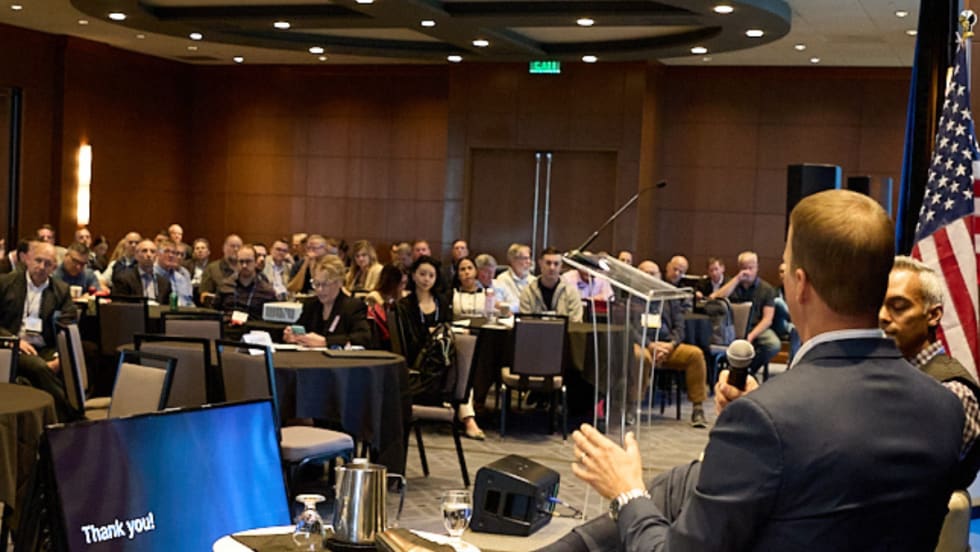
NETS Sets 2026 Fleet Safety Benchmark Conference for Indianapolis
The Sept. 15–17 program will feature fleet benchmarking data, case studies, emerging technologies, and implementation strategies while running alongside the NSC Safety Congress & Expo.
Read More →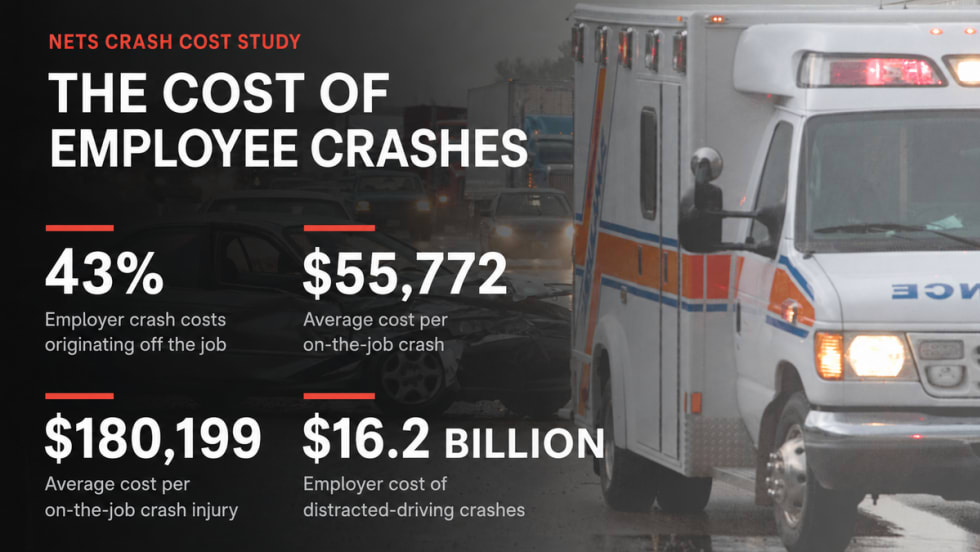
Off-the-Job Crashes Account for 43% of Employers’ $61.7 Billion Crash Burden
NETS quantifies costs dispersed across fleet, risk, HR, and other departments while providing new per-crash benchmarks for employers.
Read More →
Ram Recalls More Than 1.27 Million 1500 Pickups for Seat Belt Anchor Issue
The recall affects certain 2019-2026 Ram 1500 pickups that may have improperly attached second-row seat belt buckle anchors.
Read More →
How Better Visibility Cut Speeding Violations by 48%
Fleet leaders don't need more data, they need clearer visibility into what the data is saying. This case study explores how one utility replaced speeding-event counts with a single metric — miles driven in violation — to strengthen safety and significantly reduce speeding violations.
Read More →
Operation Safe Driver Week: Why the Industry's Oldest Safety Campaign Still Matters to Fleets
A look at how a 2007 enforcement initiative became one of the most consequential weeks on the fleet safety calendar, and what it means for your drivers in 2026.
Read More →