




Study: Cameras Reduce Fatal Red Light-Running Crashes
ARLINGTON, VA - Red-light cameras saved 159 lives in 2004-08 in 14 of the biggest U.S. cities, according to a new analysis by the Insurance Institute for Highway Safety (IIHS).
ARLINGTON, VA - Red-light cameras saved 159 lives in 2004-08 in 14 of the biggest U.S. cities, according to a new analysis by the Insurance Institute for Highway Safety (IIHS).
"The cities that have the courage to use red-light cameras despite the political backlash are saving lives," said IIHS President Adrian Lund.
Looking at the 99 U.S. cities with populations over 200,000, the researchers compared those with red-light camera programs to those without. Because they wanted to see how the rate of fatal crashes changed after the introduction of cameras, they compared two periods -- 2004-08 and 1992-96. Cities that had cameras during 1992-96 were excluded from the analysis, as were cities that had cameras for only part of the later study period.
The researchers found that in the 14 cities that had cameras during 2004-08, the combined per capita rate of fatal red light-running crashes fell 35 percent, compared with 1992-96. The rate also fell in the 48 cities without camera programs in either period, but only by 14 percent.
Based on that comparison, the researchers concluded that the rate of fatal red light-running crashes in cities with cameras in 2004-08 was 24 percent lower than it would have been without cameras. That adds up to 74 fewer fatal red light-running crashes or, given the average number of fatalities per red light-running crash, approximately 83 lives saved.
The actual benefit is even bigger, IIHS said. The rate of all fatal crashes at intersections with signals -- not just red light-running crashes -- fell 14 percent in the camera cities and crept up 2 percent in the non-camera cities. In the camera cities, there were 17 percent fewer fatal crashes per capita at intersections with signals in 2004-08 than would have been expected. That translates into 159 people who are alive because of the automated enforcement programs, IIHS said.
This result, researchers asserted, shows that red-light cameras reduce not only fatal red light-running crashes, but other types of fatal intersection crashes as well. One possible reason for this is that red light-running fatalities are undercounted due to a lack of witnesses to explain what happened in a crash. Drivers also may be more cautious in general when they know there are cameras around.
Based on these calculations, if red-light cameras had been in place for all five years in all 99 U.S. cities with populations over 200,000, a total of 815 deaths could have been avoided, IIHS said.
Since the 1990s, communities have used red-light cameras as a low-cost way to police intersections. The number of cities embracing the technology has swelled from just 25 in 2000 to about 500 today.
National surveys indicate widespread support for red-light cameras, IIHS said. At the same time, opponents of automated enforcement have become increasingly vocal, claiming that camera programs are revenue-generating schemes that violate drivers' privacy.
"Somehow, the people who get tickets because they have broken the law have been cast as the victims," Lund said. "We rarely hear about the real victims -- the people who are killed or injured by these lawbreakers."
Red light running killed 676 people and injured an estimated 113,000 in 2009. Nearly two-thirds of the deaths were people other than the red light-running drivers -- occupants of other vehicles, passengers in the red light runners' vehicles, bicyclists or pedestrians.
Without cameras, IIHS said, enforcement at intersections is difficult and often dangerous. In order to stop a red light runner, officers usually have to follow the vehicle through the red light, endangering themselves, as well as other motorists and pedestrians. Moreover, the manpower required to police intersections on a regular basis would make it prohibitively expensive.
In contrast, camera programs can pay for themselves by requiring people who break the law to shoulder the cost of enforcing it, IIHS said.
"Examining a large group of cities over several years allowed us to take a close look at the most serious crashes, the ones that claim people's lives," said Anne McCartt, IIHS senior vice president for research and a co-author of the study. "Our analysis shows that red-light cameras are making intersections safer."
Results in each of the 14 camera cities varied. The biggest drop in the rate of fatal red light-running crashes came in Chandler, Ariz., where the decline was 79 percent. Two cities, Raleigh, N.C., and Bakersfield, Calif., experienced an increase.
"We don't know exactly why the data from Raleigh and Bakersfield didn't line up with what we found elsewhere," McCartt said. "Both cities have expanded geographically over the past two decades, and that probably has a lot to do with it."
In response to the new IIHS study, Barbara Harsha, executive director of the Governors Highway Safety Association, echoed IIHS' call for more local governments to employ red-light cameras. "Utilization of this tool will help states meet the aggressive national highway safety goal of moving toward zero deaths by reducing fatalities by a 1,000 a year each year during the next 20 years," she said. "We view technology as absolutely critical if this goal is to be met or exceeded.
More Safety

Nexar-Nauto Merger Aims to Give Fleets Better Safety Intelligence Through Larger Driving Dataset
Stefan Heck tells Automotive Fleet that combining more than 10 billion miles of driving history with Nexar's AI models will give fleets deeper insights into driver risk and roadway conditions than either company could provide independently.
Read More →
Don't Wait for a Crisis: 5 Ways to Build Mental Health Into Your Fleet Safety Program
For Suicide Prevention Month, fleet and safety leaders have an opportunity to put mental health where it belongs: at the center of workplace safety.
Read More →
How Camera Data Can Strengthen a Fleet’s Insurance Renewal
Insights from a commercial insurance carrier and a broker show how fleets can turn video telematic data, driver coaching, and improved claims results into a stronger case at insurance renewal.
Read More →
The Safest Fleets Aren’t the Ones with the Most Technology
You’ve made the telematics investment. Here’s how to capture the other half of its value and build the safest fleet on the road.
Read More →
Hidden in Plain Sight: Fleet Compliance Risks
Fleet compliance isn't just about having policies — it's about consistently enforcing them. This practical guide reveals six hidden compliance risks common in public sector and shared fleet operations and outlines proven strategies to improve visibility, accountability, and audit readiness
Read More →
NETS Sets 2026 Fleet Safety Benchmark Conference for Indianapolis
The Sept. 15–17 program will feature fleet benchmarking data, case studies, emerging technologies, and implementation strategies while running alongside the NSC Safety Congress & Expo.
Read More →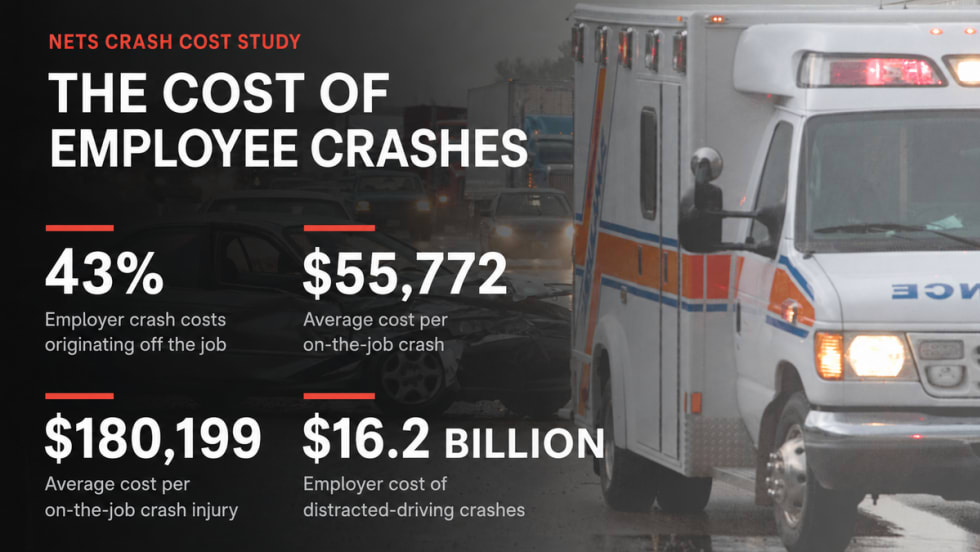
Off-the-Job Crashes Account for 43% of Employers’ $61.7 Billion Crash Burden
NETS quantifies costs dispersed across fleet, risk, HR, and other departments while providing new per-crash benchmarks for employers.
Read More →
Ram Recalls More Than 1.27 Million 1500 Pickups for Seat Belt Anchor Issue
The recall affects certain 2019-2026 Ram 1500 pickups that may have improperly attached second-row seat belt buckle anchors.
Read More →
How Better Visibility Cut Speeding Violations by 48%
Fleet leaders don't need more data, they need clearer visibility into what the data is saying. This case study explores how one utility replaced speeding-event counts with a single metric — miles driven in violation — to strengthen safety and significantly reduce speeding violations.
Read More →
Operation Safe Driver Week: Why the Industry's Oldest Safety Campaign Still Matters to Fleets
A look at how a 2007 enforcement initiative became one of the most consequential weeks on the fleet safety calendar, and what it means for your drivers in 2026.
Read More →