





Safety First: IIHS Challenges Automakers to Make Greater Safety Strides
Studies, Tests Shed Light on SUVs’ Blinding Problem
Some vehicles such as SUVs and pickups have struggled to find the right balance between effective illumination and glare thresholds — which can be dangerous for other road users.
April 24, 2023
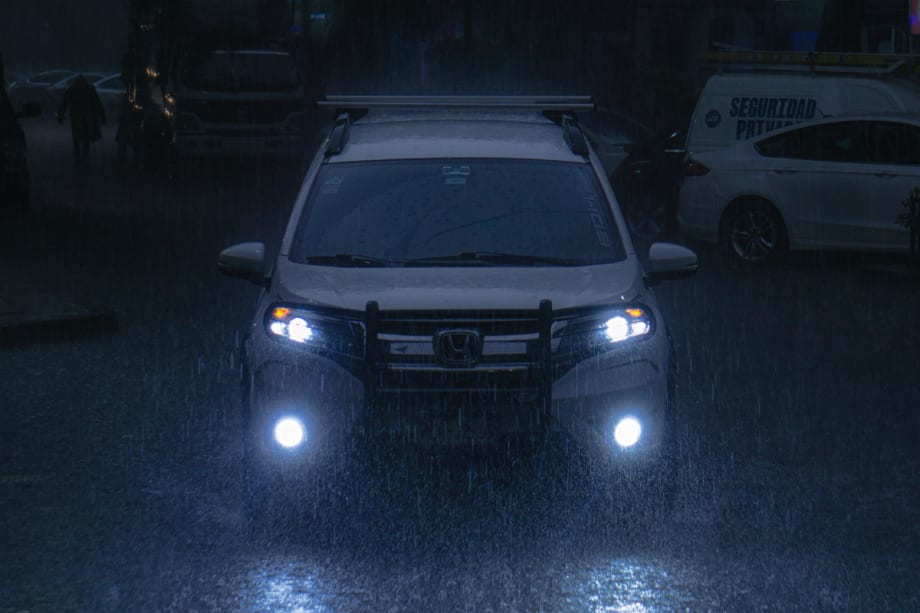
Because they are taller than most vehicles, the glare from SUV headlights can temporarily blind drivers in oncoming cars.
Photo: pexels.com/Victor Armas
4 min to read
One in 10 drivers said they were typically unable to see clearly for six seconds or more when faced with oncoming SUV headlights, according to a UK study, reports The Telegraph.
Things may even be worse here in America. While it has been the subject of little research, high-mounted headlights glaring straight into the eyes of other road users has become a safety concern on U.S. roads — where SUVs are very prevalent. .
For example, Streetsblog USA points to a 1993 study. It found that 12-15% of car crash deaths were "caused by glare from the high-beam headlights of oncoming traffic at night." The article notes: That was back when the bestselling Ford F150 sat five inches shorter than it does today.
Simply stated, people driving low cars — which are also very popular in the U.S. — have their eyes subjected directly to the blinding lamps mounted up high on the SUVs or pickup trucks.
Addressing Glare
Improving headlight performance has been a major focus for the Insurance Institute for Highway Safety (IIHS) in recent years, and addressing headlight glare is a big part of that.
“To do well in those tests, a vehicle needs to put light down the road effectively without exceeding glare thresholds. Some automakers have gotten the message quickly, while others have taken some time,” said Joseph Young, director of media relations, Insurance Institute for Highway Safety. “Some vehicle types, like SUVs and pickups, have struggled to find the right balance because they tend to sit higher.”
Even so, noted Young, manufacturers are consistently making improvement in terms of both visibility and glare, and more and more vehicles are earning the IIHS’ highest headlight rating of “good” each year.
Headlight aim is another concern. Aim is an important part of performance, and improper aim is often responsible for glare. Many vehicles have transitioned to LED headlights in recent years, which are brighter and have the potential to produce excessive glare if aimed incorrectly, so these can be particularly concerning. That said, the glare problem is getting better.
“When we launched the program in 2017, about one in five headlight systems tested produced excessive glare,” said Young. “We’ve seen improvements, and in 2023 only 5% of tested vehicles cause excessive glare. In some cases, vehicles have shifted a poor rating to a good rating solely by re-aiming headlights and reducing glare.”
Moreover, Young noted that the average age of a vehicle on U.S. roads is about 12 years. So like any safety challenge, it’s going to take time for improvements to be widespread. The IIHS expects to see real-world glare improve as older vehicles are replaced with newer ones.
Better Headlights Reduce Crashes
The bottom line is that better headlights — including those that cause less glare — are proving effective at preventing crashes. A recent study of vehicles that have been rated in IIHS evaluations found that good-rated headlights have nighttime crash rates about 19% lower than those with poor-rated headlights.
Moreover, an IIHS data evaluation of headlights from 2015 to 2020 found that compared with poor ones, good-rated headlights reduced the rate of crashes in which the driver was injured by 29% and the rates of tow-away crashes and pedestrian crashes by about a quarter each.
Why does headlight performance make such a difference in safety? The IIHS explains it this way: It takes 1.5 seconds for a driver to react to an unexpected event under ideal conditions. At a speed of 55 mph, a car travels about 120 feet during this brief period. Once the driver applies the brakes, it takes more than 144 feet, on average, to stop at this speed
The low beams of many headlight systems with poor ratings don't provide enough light for a driver going 55 mph on a straight road to stop in time after spotting an obstacle in his or her lane. They provide even less illumination on the left side of a straight road and when driving on a curve.
However, glare — like that coming from many of today’s SUV headlights — is an equally troubling problem. Properly aimed headlights can illuminate the road ahead without getting in other drivers' eyes. It's also possible to have headlights that provide poor visibility and also cause excessive glare.
As automakers continue to tackle the problem of excessive glare from headlights on taller vehicles like SUVs and pickups, drivers need to remain vigilant, That means sticking to the speed limits, slowing down especially on curvy roads, and staying focused on the road — particularly at night when blinding headlights can suddenly appear at any time.
More Safety

Sponsored•October 1, 2026
Fleet Manager’s Ultimate Playbook: Navigating the New Standard in OEM Connectivity
Rising operating costs, driver safety concerns, and unplanned downtime are putting unprecedented pressure on modern fleets. Discover how fleet managers use embedded OEM connectivity and real-time vehicle data to cut TCO, prevent downtime, and protect drivers without aftermarket telematics hardware.
Read More →
From Driver Well-Being to EV Charging | AF News Recap
Mental health belongs in the fleet safety conversation. This week, we’re looking at five ways fleets can support employee well-being before a crisis, plus Holman’s expansion in Mexico, new one-day Fleet Forward passes, and why EV charging demand is outpacing infrastructure growth.
Read More →
Nexar-Nauto Merger Aims to Give Fleets Better Safety Intelligence Through Larger Driving Dataset
Stefan Heck tells Automotive Fleet that combining more than 10 billion miles of driving history with Nexar's AI models will give fleets deeper insights into driver risk and roadway conditions than either company could provide independently.
Read More →
Don't Wait for a Crisis: 5 Ways to Build Mental Health Into Your Fleet Safety Program
For Suicide Prevention Month, fleet and safety leaders have an opportunity to put mental health where it belongs: at the center of workplace safety.
Read More →
How Camera Data Can Strengthen a Fleet’s Insurance Renewal
Insights from a commercial insurance carrier and a broker show how fleets can turn video telematic data, driver coaching, and improved claims results into a stronger case at insurance renewal.
Read More →
The Safest Fleets Aren’t the Ones with the Most Technology
You’ve made the telematics investment. Here’s how to capture the other half of its value and build the safest fleet on the road.
Read More →
Sponsored•August 7, 2026
Hidden in Plain Sight: Fleet Compliance Risks
Fleet compliance isn't just about having policies — it's about consistently enforcing them. This practical guide reveals six hidden compliance risks common in public sector and shared fleet operations and outlines proven strategies to improve visibility, accountability, and audit readiness
Read More →
NETS Sets 2026 Fleet Safety Benchmark Conference for Indianapolis
The Sept. 15–17 program will feature fleet benchmarking data, case studies, emerging technologies, and implementation strategies while running alongside the NSC Safety Congress & Expo.
Read More →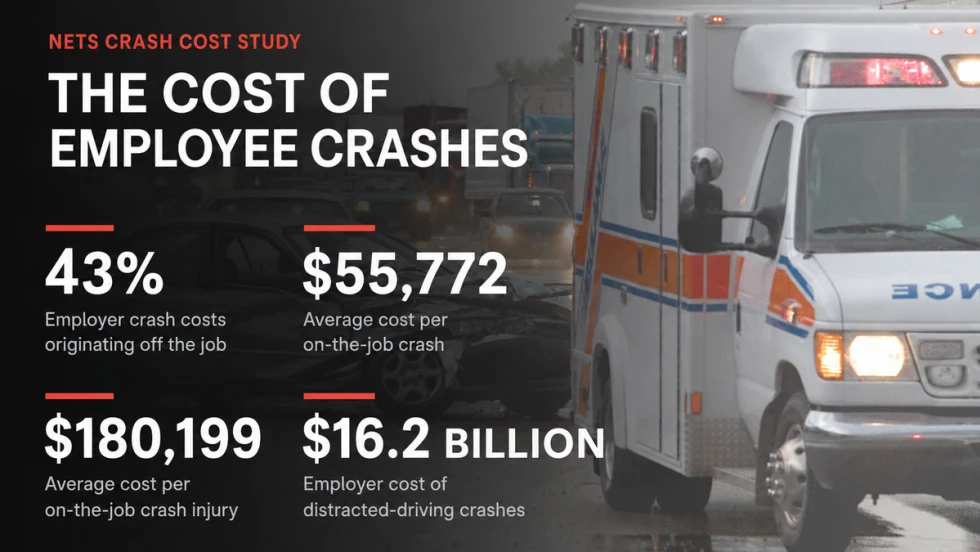
Off-the-Job Crashes Account for 43% of Employers’ $61.7 Billion Crash Burden
NETS quantifies costs dispersed across fleet, risk, HR, and other departments while providing new per-crash benchmarks for employers.
Read More →
Ram Recalls More Than 1.27 Million 1500 Pickups for Seat Belt Anchor Issue
The recall affects certain 2019-2026 Ram 1500 pickups that may have improperly attached second-row seat belt buckle anchors.
Read More →