




States Try to Toughen Penalties for Refusing Breath Test
COLUMBUS, OHIO – States are trying to toughen penalties for suspected drunken drivers who refuse to take a breath test, arguing that motorists too often get a milder penalty than if they had provided evidence that could convict them.
COLUMBUS, OHIO – States are trying to toughen penalties for suspected drunken drivers who refuse to take a breath test, arguing that motorists too often get a milder penalty than if they had provided evidence that could convict them, according to the Associated Press. Bills to lengthen license suspensions or make it a criminal offense to refuse a test are pending in four states, including Ohio and Massachusetts, where the percentages of people refusing are among the highest in the nation. In Rhode Island, where the rate is highest, lawmakers are to try again this month to increase punishment. Nationwide, an average of 25 percent of people pulled over on suspicion of drunken driving refuse to take a breath test, which is designed to estimate the amount of alcohol in the blood, according to the National Highway Traffic Safety Administration. In every state but Nevada, the punishment is a suspended driver's license. Still, people who refuse believing they would fail a test might avoid a drunken driving conviction and jail time. A proposal in Illinois would increase suspensions to one year from six months. Most drunken driving cases are handled within that six months, said Rep. Robert Molaro, chairman of the committee where the bill sits. A convicted driver would then get a more severe penalty: a revoked license. An acquitted motorist would still be punished by the suspension, which would be unfair, he said. In all, bills were introduced in 15 states in 2005. Some didn't make it to the debate stage. Maryland, Montana and Virginia approved stricter punishment, with Montana adding up to a $2,000 fine and two days to six months in jail if a person is caught driving with a license that was suspended for refusing a test, according to the National Conference of State Legislatures. In Ohio, a Senate-passed proposal to double the length of most license suspensions now goes to the House. About 40 percent of Ohio suspects refuse the test, the sixth highest among 41 states were data was available, according to a study by the NHTSA. That's despite the state being among 19 that already adds penalties such as jail time to the license suspension. Motorists refuse tests for many reasons. Maybe they have been drinking and fear failing. Some have heard stories that the machines record some diabetes symptoms as drunkenness. Those with previous drunken driving convictions might be trying to avoid a felony conviction from another arrest, according to the Associated Press. Defense attorneys and motorist groups say it's unfair to force someone to face a criminal conviction for a test that might be inaccurate. The machines are supposed to exclude results measuring artificially high alcohol levels if the person vomits or burps, increasing the amount of alcohol in the mouth. That alcohol hasn't yet reached the blood, and thus the brain, so it's not a fair test of impaired judgment. Attorneys say the mouth alcohol still gets measured, and they question the overall reliability of the machines. They say a direct blood test is the fairest and most accurate test. Prosecutors and law enforcement officers said they routinely test and calibrate their machines, and watch suspects closely for 20 minutes before testing to ensure no alcohol is brought up to the mouth, according to the Associated Press. The states with the lowest refusal rates have among the toughest penalties, with jail time in California and Nebraska and revoked vehicle registrations in Hawaii and Maine. In Massachusetts, which is third in the nation with a 47 percent refusal rate, additional penalties for refusing a breath test were removed from a drunken driving bill that passed in 2005.
More Safety

AAA Testing Finds Gaps in Intersection AEB Crash Prevention
Testing of four 2026 model-year vehicles found that automatic emergency braking prevented collisions in standardized intersection scenarios, but three vehicles failed to avoid crashes when another vehicle turned into their path.
Read More →
Which Fleet Types Have the Highest Severe Speeding Rates?
New research from SambaSafety finds significant differences in speeding rates across fleet industries, even as nearly 90% of surveyed fleets report using telematics.
Read More →
When a Cyberattack Hits Your Fleet: What Happens Next?
“You have two opportunities to test your plans: when you choose or when the threat actor chooses.” A cybersecurity expert reveals what fleet managers need to know before a cyberattack puts their operations at risk — and why the decisions made in the first moments can shape the entire recovery.
Read More →
Tips for Driving Safely on Halloween Night
This video features a reminder from the Connecticut Department of Transportation (DOT) and the Connecticut Police Chiefs Association, urging drivers to prioritize safety this Halloween.
Read More →
IIHS Crash Avoidance Tests Reveal Safety Gaps in Cargo Vans and Work Trucks
New IIHS crash avoidance ratings show uneven performance among cargo vans and heavy-duty pickups, with most struggling to avoid vehicle-to-vehicle collisions.
Read More →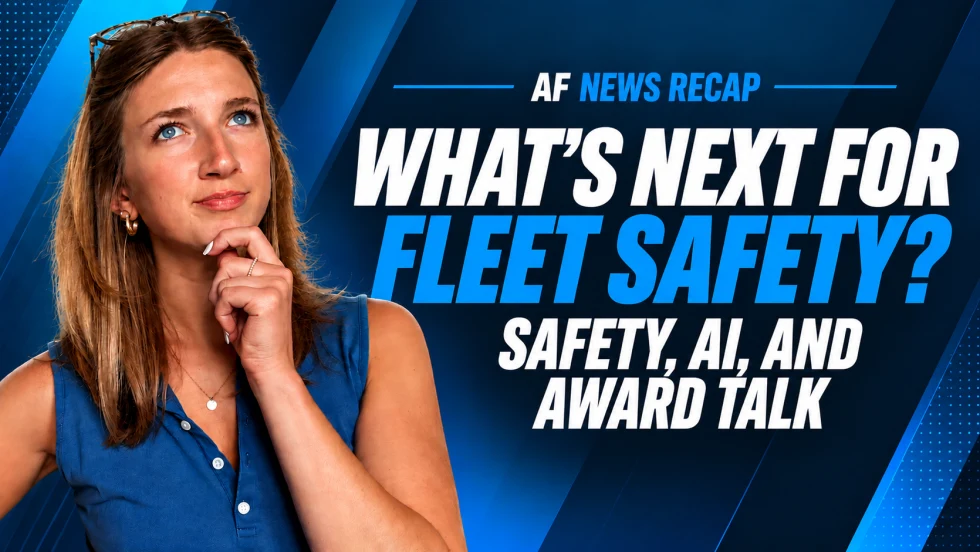
What’s Next for Fleet? Safety, AI & Industry Recognition | AF News Recap
Could your company's culture be encouraging distracted driving? This week, we're exploring how workplace expectations affect driver safety, what AI, EVs, and autonomous vehicles could mean for the future of fleet management, and how fleet professionals can strengthen their award nominations.
Read More →
Does Your Fleet's Culture Encourage Distracted Driving?
What happens when the people responsible for enforcing safety rules are the ones setting the wrong example? The answer may reveal why some of the biggest risks to fleet drivers have little to do with what's written in the employee handbook.
Read More →
Fleet Manager’s Ultimate Playbook: Navigating the New Standard in OEM Connectivity
Rising operating costs, driver safety concerns, and unplanned downtime are putting unprecedented pressure on modern fleets. Discover how fleet managers use embedded OEM connectivity and real-time vehicle data to cut TCO, prevent downtime, and protect drivers without aftermarket telematics hardware.
Read More →
From Driver Well-Being to EV Charging | AF News Recap
Mental health belongs in the fleet safety conversation. This week, we’re looking at five ways fleets can support employee well-being before a crisis, plus Holman’s expansion in Mexico, new one-day Fleet Forward passes, and why EV charging demand is outpacing infrastructure growth.
Read More →
Nexar-Nauto Merger Aims to Give Fleets Better Safety Intelligence Through Larger Driving Dataset
Stefan Heck tells Automotive Fleet that combining more than 10 billion miles of driving history with Nexar's AI models will give fleets deeper insights into driver risk and roadway conditions than either company could provide independently.
Read More →