




States Logistics' Truck Fleet Demonstrates Merits of Biodiesel
LOUISVILLE, KY --- The National Biodiesel Board on March 18 announced results of a lifecycle carbon dioxide (CO2) reduction demonstration. The six-month demonstration culminated in a report showing how the California-based fleet of States Logistics reduced CO2 by 72.9 tons by using biodiesel instead of straight petroleum diesel.
LOUISVILLE, KY --- The National Biodiesel Board on March 18 announced results of a lifecycle carbon dioxide (CO2) reduction demonstration. The six-month demonstration culminated in a report showing how the California-based fleet of States Logistics reduced CO2 by 72.9 tons by using biodiesel instead of straight petroleum diesel.
The NBB is the national trade association of the biodiesel industry and is the coordinating body for biodiesel research and development in the U.S.
"We were really pleased to see the quantified reduction of CO2 and other pollutants," said Ryan Donovan, vice president of operations and business development for States Logistics. "This is something that we can take to our customers, like Clif Bar & Co., and they can show their customers. We all benefit from having this information available to show the efforts being made to reduce carbon footprint throughout the supply chain."
States Logistics ran seven trucks: four on soy-based B5 (5 percent biodiesel and 95 percent petroleum diesel) and three on B99 (99 percent biodiesel and 1 percent petroleum diesel). The B99 trucks (three-axle International model 8600) ran 48,198 miles and consumed 8,770 gallons over the six-month period. The equivalent straight petroleum diesel output would have been 89.9 tons, but with B99 the output was 19.8 tons for a savings of 70.1 tons. The B5 fleet (two-axle flat bed) traveled 61,433 miles and consumed 7,090 gallons of B5. Equivalent petroleum CO2 output would have been 71.4, but with B5 the output was reduced to 68.6 for 2.8 tons of CO2 reduction.
In addition to CO2 reduction, an estimated 119 pounds of particulate matter were eliminated from the exhaust during the six-month period. Carbon monoxide (CO) was reduced by over 500 pounds, hydrocarbons (HC) by over 50 pounds, and sulfur dioxide (SO2) by close to 40 pounds.
"This information is valuable to any fleet using biodiesel," said Tom Verry, director of outreach and development for NBB. "We picture eventually offering this as a value-added report for BioTrucker Fuel Card holders."
On Friday, March 20, the NBB along with Chicago-based Indigenous Energy LLC, developers of emissions tracking systems, presented the demonstration results to truckers and fleet owners in a seminar at the Mid America Trucking Show in Louisville, KY.
Throughout the show the NBB and Kentucky Soybean Promotion Board ran an online survey of owner operators, independent, and company drivers. Of the 276 responses, 8 percent were not familiar with biodiesel, 75.8 percent have a positive impression of biodiesel, 57 percent have at least tried biodiesel and 94 percent would use biodiesel in the future. Supporting American farmers tops the list of reasons for using biodiesel, with 59 percent choosing this and 40 percent choosing energy independence.
More Green Fleet

EV Charging Use Is Outpacing Infrastructure Growth
ChargePoint’s 2026 Charging Forward Report points to rising charger use, higher-powered charging, commercial vehicle electrification, and energy-management technology. Here’s what fleets should know.
Read More →
Merchants Fleet Reports 290M EV Miles as Fleets Navigate Changing Electrification Market
From millions in operating savings to hundreds of millions of EV miles, Merchants Fleet’s latest report reveals what’s working and what’s changing in fleet electrification.
Read More →
The EV Breakdown Nobody's Talking About: Why Most Electric Vehicle Roadside Calls Aren't Mechanical Failures
Here's why EV breakdowns are widely misunderstood.
Read More →
ChargePoint Now Available in Energy Pass
ChargePoint and additional planned charging network integrations were added to GM's Energy Pass.
Read More →

First Look: Slate Auto's Electric Fleet Pickup
Could an affordable, modular EV pickup make electrification more practical for fleets?
Read More →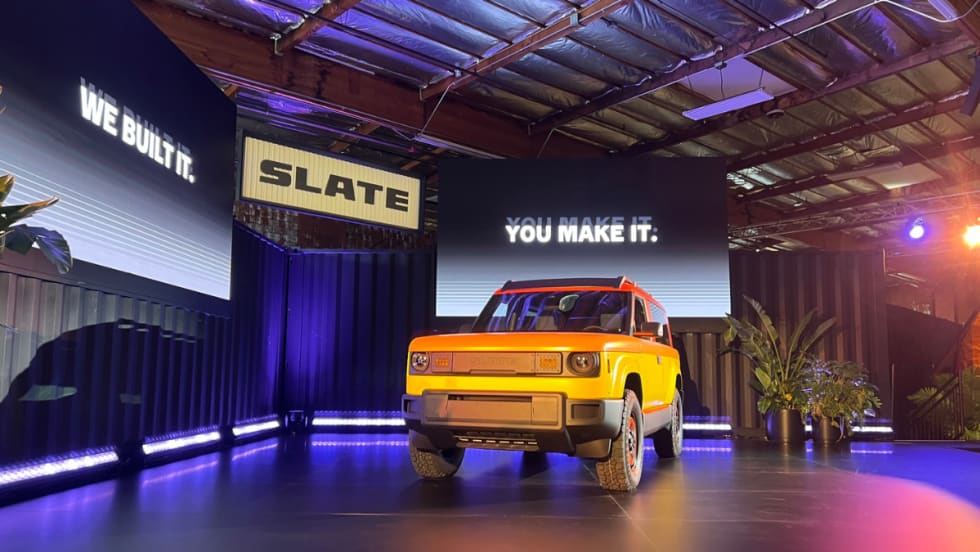
Slate Debuts Colorful, Unique EV Models
A recent media and client event, studded with electric vehicles dressed up on platforms, planted a new position for the manufacturer in the wider EV market. Fleets will find cost-saving advantages.
Read More →
Slate Electric SUV, Pickup Switchable Model Aims For Light-Duty Fleets
Everything about this EV is counterintuitive and understated, making it stand out from the crowd.
Read More →
Inspiration Mobility Acquires Key Electrada Assets
Inspiration Mobility Group has acquired select assets of Electrada, adding the fleet electrification provider's team, technology, and charging infrastructure development capabilities to its energy management business.
Read More →
Turning Connected Vehicle Data Into Decisions That Matter
Fleet leaders have more data than ever, but turning that data into clear, actionable decisions remains a challenge. This white paper shows how leading organizations are using connected vehicle data to improve safety, reduce costs, and optimize fleet performance. Learn how to turn insight into action across your fleet.
Read More →