




Stanford Study Concludes Ethanol Poses Health Risks
PALO ALTO, Calif. --- If every vehicle in the United States ran on fuel made primarily from ethanol instead of pure gasoline, the number of respiratory-related deaths and hospitalizations would likely increase, according to a new study by Stanford University atmospheric scientist Mark Z. Jacobson.
PALO ALTO, Calif. --- If every vehicle in the United States ran on fuel made primarily from ethanol instead of pure gasoline, the number of respiratory-related deaths and hospitalizations would likely increase, according to a new study by Stanford University atmospheric scientist Mark Z. Jacobson. His findings are published in the April 18 online edition of the journal Environmental Science & Technology (ES&T). "Ethanol is being promoted as a clean and renewable fuel that will reduce global warming and air pollution," said Jacobson, associate professor of civil and environmental engineering. "But our results show that a high blend of ethanol poses an equal or greater risk to public health than gasoline, which already causes significant health damage." For the study, Jacobson used a sophisticated computer model to simulate air quality in the year 2020, when ethanol-fueled vehicles are expected to be widely available in the United States. "The chemicals that come out of a tailpipe are affected by a variety of factors, including chemical reactions, temperatures, sunlight, clouds, wind and precipitation," he explained. "In addition, overall health effects depend on exposure to these airborne chemicals, which varies from region to region. Ours is the first ethanol study that takes into account population distribution and the complex environmental interactions." In the experiment, Jacobson ran a series of computer tests simulating atmospheric conditions throughout the United States in 2020, with a special focus on Los Angeles. "Since Los Angeles has historically been the most polluted airshed in the U.S., the testbed for nearly all U.S. air pollution regulation and home to about 6 percent of the U.S. population, it is also ideal for a more detailed study," he wrote. Jacobson programmed the computer to run air quality simulations comparing two future scenarios: A vehicle fleet (that is, all cars, trucks, motorcycles, etc., in the United States) fueled by gasoline, versus a fleet powered by E85, a popular blend of 85 percent ethanol and 15 percent gasoline. "We found that E85 vehicles reduce atmospheric levels of two carcinogens, benzene and butadiene, but increase two others ---formaldehyde and acetaldehyde," Jacobson said. "As a result, cancer rates for E85 are likely to be similar to those for gasoline. However, in some parts of the country, E85 significantly increased ozone, a prime ingredient of smog." Inhaling ozone --— even at low levels --- can decrease lung capacity, inflame lung tissue, worsen asthma and impair the body's immune system, according to the Environmental Protection Agency. The World Health Organization estimates that 800,000 people die each year from ozone and other chemicals in smog. "In our study, E85 increased ozone-related mortalities in the United States by about 200 deaths per year compared to gasoline, with about 120 of those deaths occurring in Los Angeles," Jacobson said. "These mortality rates represent an increase of about 4 percent in the U.S. and 9 percent in Los Angeles above the projected ozone-related death rates for gasoline-fueled vehicles in 2020." The study concluded that ozone increases in Los Angeles and the northeastern United States will be partially offset by decreases in the southeast. "However, we found that nationwide, E85 is likely to increase the annual number of asthma-related emergency room visits by 770 and the number of respiratory-related hospitalizations by 990," Jacobson said. "Los Angeles can expect 650 more hospitalizations in 2020, along with 1,200 additional asthma-related emergency visits." The deleterious health effects of E85 will be the same, whether the ethanol is made from corn, switchgrass or other plant products, Jacobson said. "Today, there is a lot of investment in ethanol," he said. "But we found that using E85 will cause at least as much health damage as gasoline, which already causes about 10,000 U.S. premature deaths annually from ozone and particulate matter. The question is, if we're not getting any health benefits, then why continue to promote ethanol and other biofuels? "There are alternatives, such as battery-electric, plug-in-hybrid and hydrogen-fuel cell vehicles, whose energy can be derived from wind or solar power," he added. "These vehicles produce virtually no toxic emissions or greenhouse gases and cause very little disruption to the land --- unlike ethanol made from corn or switchgrass, which will require millions of acres of farmland to mass-produce. It would seem prudent, therefore, to address climate, health and energy with technologies that have known benefits." This study was partially supported by NASA.
More Fuel

Bob Adamsky on Fuel Volatility: "Don't Panic, Have a Plan."
When it comes to up and down fuel prices, Adamsky has a message for fleets: “Don’t panic.”
Read More →
How Fleets Can Gain Control of Non-Fuel Spend
Fuel often gets the spotlight, but non-fuel expenses can have a major impact on fleet costs. Ramel Lindsay of U.S. Bank Voyager discusses how fleets can gain better visibility and control over these often-overlooked expenditures.
Read More →
Fuel is Just the Start: How Middle East Tensions are Driving Up Fleet Maintenance Costs
The Middle East conflict is doing more than pushing up fuel prices. It’s also raising the cost of key maintenance products your fleet depends on, from motor oil to tires to windshield wipers. Here’s what you need to know about this budget-busting situation.
Read More →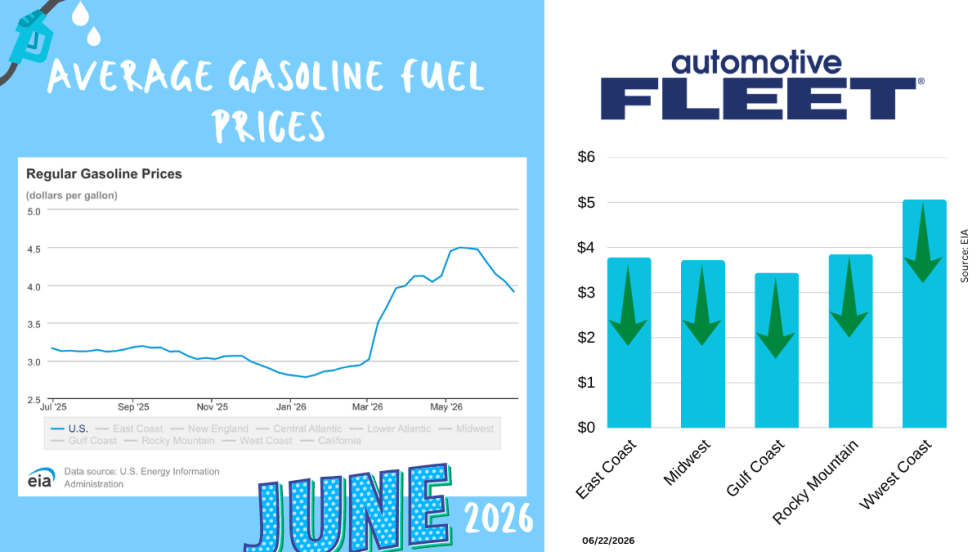
June Fuel Update: Prices Fall Below $4
Drivers are finally getting some relief at the pump. The national average gas price has dropped below $4 a gallon for the first time in months, with prices falling in 47 states as oil markets react to developments in U.S.-Iran negotiations.
Read More →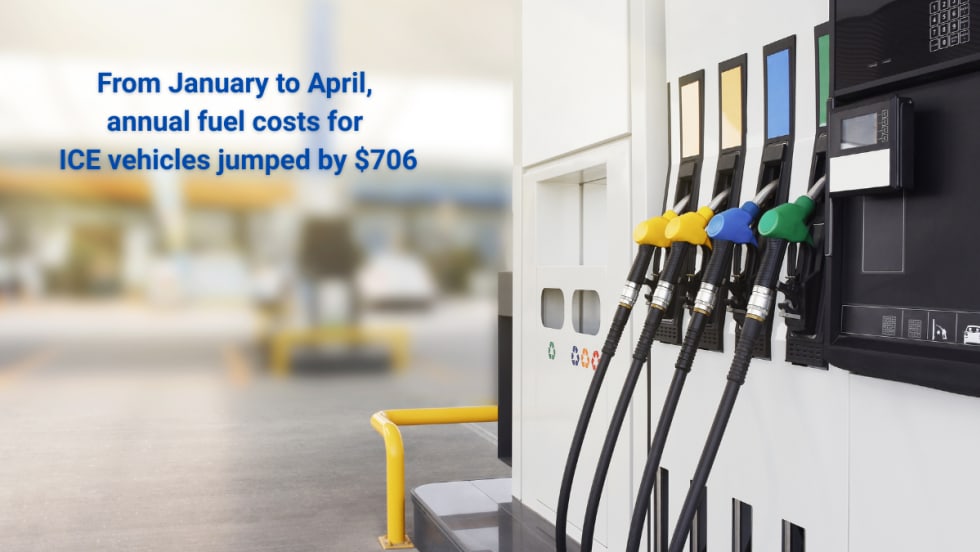
Study: How 2026's Gas Price Hikes Affect Different Vehicle Types
New data from iSeeCars reveals how rising fuel costs have affected different vehicle segments as gasoline prices climbed nearly 46% over the past four months.
Read More →
Are You Tracking Your Fleet's True Total Cost of Ownership?
Bobit Business Media surveyed 190 fleet professionals and found that while most fleets are tracking costs, fragmented systems and data gaps are keeping true TCO visibility out of reach. With rising pressure to control spend in an increasingly volatile environment, the gap between what fleets think they know and what the data actually shows is wider than you might expect. See how your peers are managing costs today and where the industry still has room to improve.
Read More →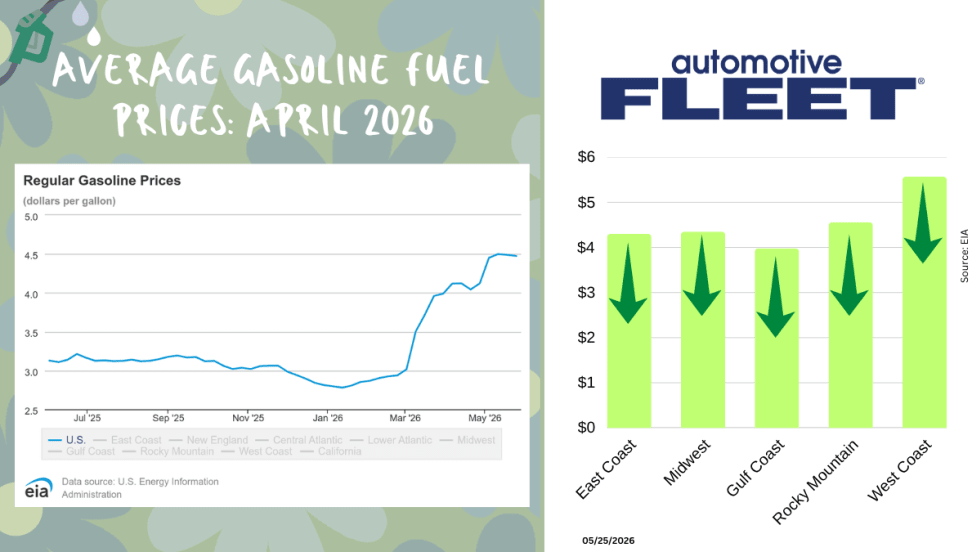
May Fuel Update: All Regions Experience Declines
Gas prices are finally easing in much of the country, but experts warn global tensions could quickly reverse the trend as the national average remains well above last month’s levels.
Read More →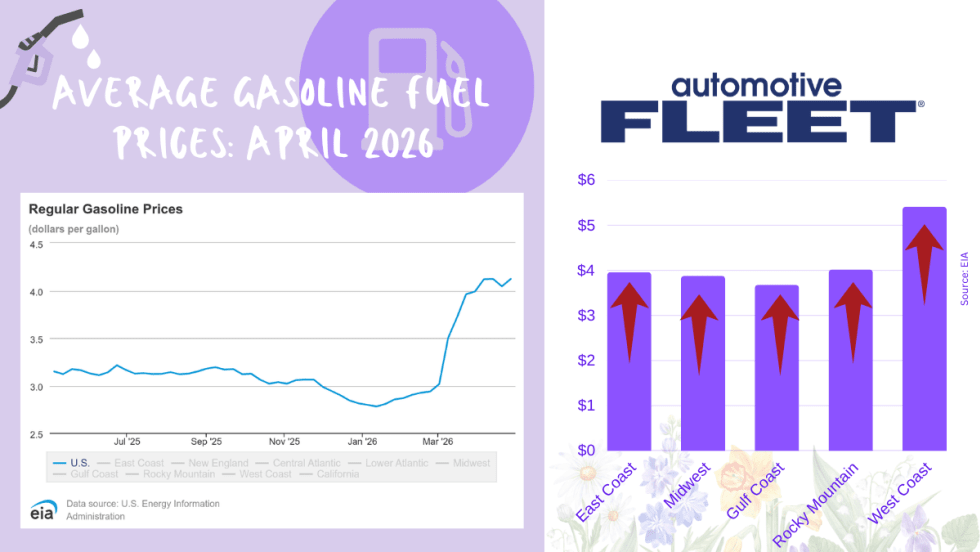
April Fuel Update: Prices Climb Above $4 as Spring Surge Accelerates
National average jumps to $4.04 per gallon, up sharply from last year, with West Coast prices topping $5 and further increases expected amid rising oil tensions.
Read More →
Tips from Fleet Managers on Saving Fuel Costs
Fleet leaders share practical strategies to reduce fuel spend through smarter policy, routing, and driver guidance.
Read More →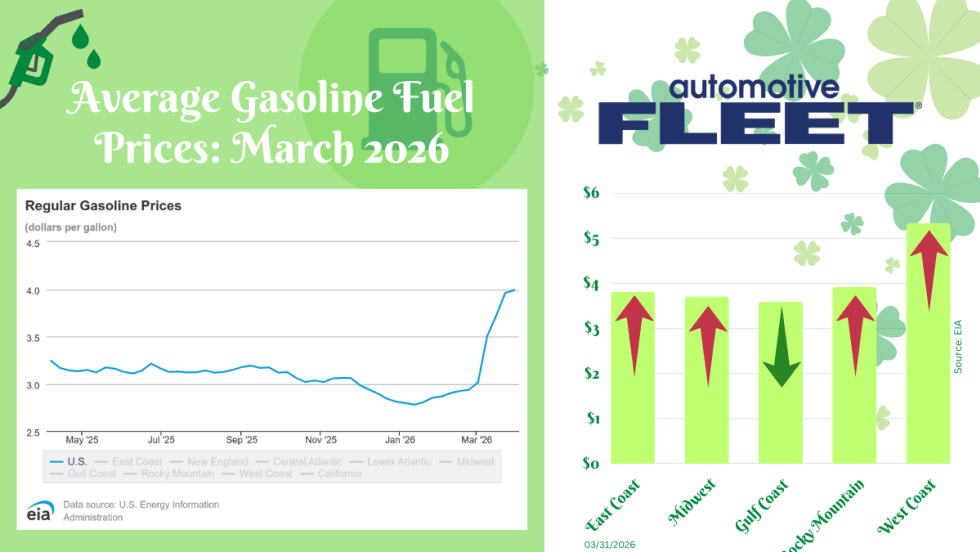
March Fuel Update: Prices Settle With a $4 Average
Fuel prices significantly slowed this week, but a $4 national average is still expected.
Read More →