




Scientist Honored for Drunk-Driving Prevention
The Governors Highway Safety Association presents its most prestigious award to James Fell, in recognition of his work to reduce alcohol-related crashes in the U.S.

JAMES FELL
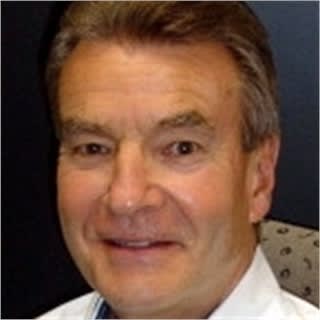
JAMES FELL
The Governors Highway Safety Association on Sept. 1 presented its most prestigious award to James Fell, a scientist who played an instrumental role in reducing alcohol-related fatal crashes in the U.S. by one-third between 1982 and 1995.
Fell, senior scientist at the Pacific Institute for Research and Evaluation, received GHSA’s James J. Howard Highway Safety Trailblazer Award during a luncheon ceremony in Nashville. The event was part of the association’s annual meeting.
“Over the course of his 45-year career, Fell has worked to help researchers, activists and policy makers design, implement and evaluate programs and policies to reduce drinking and driving in the United States,” GHSA said.
Fell has been with the Pacific Institute for Research and Evaluation in Maryland since 2001. He formerly worked at the National Highway Traffic Safety Administration, from 1969 to1999.
GHSA presented the Kathryn J.R. Swanson Public Service Award to Barbara Harsha, former GHSA executive director. She led the association’s headquarters office for 25 years, from 1988 until her retirement in 2013.
GHSA also handed out five Peter K. O’Rourke Special Achievement Awards to the following programs, in recognition of their highway safety achievements:
ADEPT Driver teenSMART Program, a computer-based training program that uses neurocognitive instruction to improve crash avoidance skills in teenage drivers.
California Highway Patrol Safety and Farm Labor Vehicle Education Program, an effort to reduce the number of injuries and fatalities attributed to farm labor vehicles in California.
Ocean City Police Department Walk Smart Program, a collaborative approach to reducing the number of pedestrian crashes in a Maryland beachfront community.
Be Responsible And Keep Everyone Safe (B.R.A.K.E.S.), a North Carolina organization founded by NHRA drag racing star Doug Herbert in the wake of the tragic loss of his two young sons in a highway crash in 2008. The group provides free advanced driver’s education through its Teen Pro-Active Driving Course program.
Virginia Highway Safety Office Traffic Records Electronic Data System Ignition Interlock Project, an effort to standardize and automate the statewide ignition-interlock workflow. The system provides for automated collection and tracking of interlock installs, system alerts at various levels of the case lifecycle, centralized data access for all 24 local alcohol safety action programs and the four interlock vendors, DUI offender data for analysis, and interlock vendor data downloads.
The awards ceremony was sponsored by the Allstate Foundation and the Foundation for Advancing Alcohol Responsibility.
More Safety

Nexar-Nauto Merger Aims to Give Fleets Better Safety Intelligence Through Larger Driving Dataset
Stefan Heck tells Automotive Fleet that combining more than 10 billion miles of driving history with Nexar's AI models will give fleets deeper insights into driver risk and roadway conditions than either company could provide independently.
Read More →
Don't Wait for a Crisis: 5 Ways to Build Mental Health Into Your Fleet Safety Program
For Suicide Prevention Month, fleet and safety leaders have an opportunity to put mental health where it belongs: at the center of workplace safety.
Read More →
How Camera Data Can Strengthen a Fleet’s Insurance Renewal
Insights from a commercial insurance carrier and a broker show how fleets can turn video telematic data, driver coaching, and improved claims results into a stronger case at insurance renewal.
Read More →
The Safest Fleets Aren’t the Ones with the Most Technology
You’ve made the telematics investment. Here’s how to capture the other half of its value and build the safest fleet on the road.
Read More →
Hidden in Plain Sight: Fleet Compliance Risks
Fleet compliance isn't just about having policies — it's about consistently enforcing them. This practical guide reveals six hidden compliance risks common in public sector and shared fleet operations and outlines proven strategies to improve visibility, accountability, and audit readiness
Read More →
NETS Sets 2026 Fleet Safety Benchmark Conference for Indianapolis
The Sept. 15–17 program will feature fleet benchmarking data, case studies, emerging technologies, and implementation strategies while running alongside the NSC Safety Congress & Expo.
Read More →
Off-the-Job Crashes Account for 43% of Employers’ $61.7 Billion Crash Burden
NETS quantifies costs dispersed across fleet, risk, HR, and other departments while providing new per-crash benchmarks for employers.
Read More →
Ram Recalls More Than 1.27 Million 1500 Pickups for Seat Belt Anchor Issue
The recall affects certain 2019-2026 Ram 1500 pickups that may have improperly attached second-row seat belt buckle anchors.
Read More →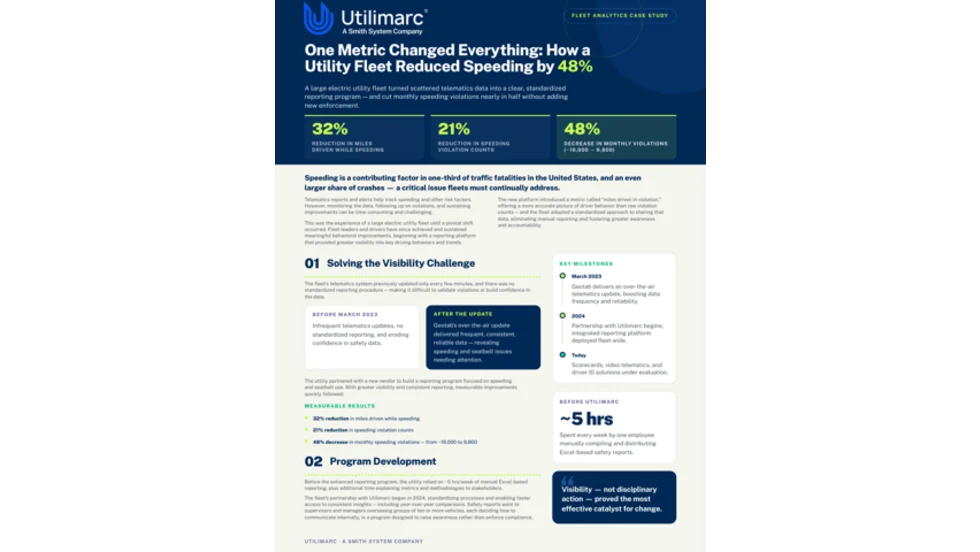
How Better Visibility Cut Speeding Violations by 48%
Fleet leaders don't need more data, they need clearer visibility into what the data is saying. This case study explores how one utility replaced speeding-event counts with a single metric — miles driven in violation — to strengthen safety and significantly reduce speeding violations.
Read More →
Operation Safe Driver Week: Why the Industry's Oldest Safety Campaign Still Matters to Fleets
A look at how a 2007 enforcement initiative became one of the most consequential weeks on the fleet safety calendar, and what it means for your drivers in 2026.
Read More →