





Stay Up to Date on Safety: Increasing Driver Safety & Insight [Video]
Safety First: New Proactive Driver Coaching to Empower Drivers
Samsara’s Proactive Driver Coaching solution takes a preventative approach to driver coaching, elevating the in-cab experience to help drivers build safe habits.
October 11, 2022
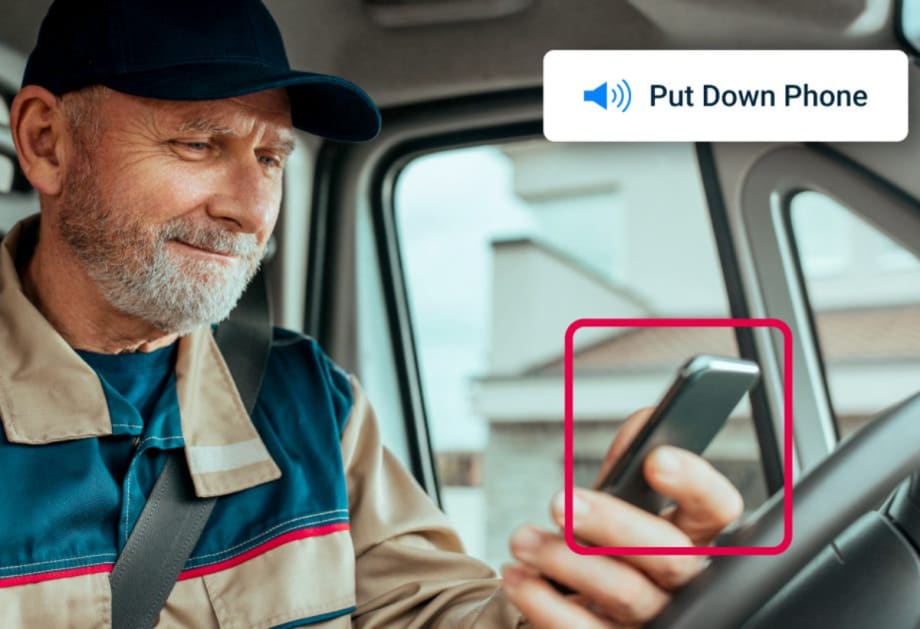
Proactive Driver Coaching protects drivers and the company.
Photo: Samsara
6 min to read
Driver safety is always a top priority — but in a tight labor market, a strong safety program is more important than ever for organizations seeking to attract and retain talent. The commercial driver shortage has increased safety concerns, as experienced drivers leave the industry and newer drivers take their place. This shift has brought even more attention to the importance of driver training and coaching.
However, driver coaching is often reactive, happening only after an incident occurs. This is already too late, as drivers are only made aware of risky habits after the fact and not in the moments when it’s most critical.
At this point, the damage is done, potentially leading to serious injuries, expensive litigation, increased insurance premiums, and other avoidable costs. Reactive coaching also increases the risk of employee turnover, since drivers can’t identify and change risky behavior in the moment—as a result, drivers may feel disengaged or unmotivated.
Modern organizations are looking for a way to proactively coach drivers on the road in real-time through technology — to improve safety, boost driver engagement, and increase retention for the long term. In fact, our recent State of Connected Operations Report revealed that 58% of leaders see technology as a key factor in recruiting and retaining employees. Early adopters of AI technology have also shown how impactful it can be; 95% of organizations we surveyed said that implementing AI and automation technology has led to increased retention.
That’s why today, Samsara is excited to announce Proactive Driver Coaching. This solution is the evolution of our existing in-cab coaching capabilities, designed to elevate the coaching experience in the cab and empower drivers while they’re on the road.
Bringing AI and Coaching Technology Directly Into the Cab
Samsara’s Proactive Driver Coaching solution takes a preventative approach to driver coaching, elevating the in-cab experience to help drivers build safe habits during the moments that matter — in real-time, before an incident occurs.
With In-Cab Nudges, Mobile Usage Detection, and No Seatbelt Detection now available, Proactive Driver Coaching makes it possible to:
Prevent incidents before they occur: Preventative AI technology automatically detects risky driving behaviors — such as using a cell phone or not wearing a seatbelt at the start of a trip — and delivers real-time voice coaching to help drivers improve these behaviors on the road
These AI In-Cab Alerts make it possible to shift from a reactive coaching approach after an incident has already occurred to coaching proactively before an incident occurs. By eliminating a delayed feedback loop, these In-Cab Alerts help drivers immediately identify and self-correct risky behaviors, and avoid near misses during the moments that matter.
Empower drivers to own their coaching experience in the cab: Immediate coaching is critical to changing behaviors. Drivers may not be aware of an issue (such as an unbuckled seatbelt) or receive feedback on a risky behavior (such as mobile usage) until they are pulled off the road to review event footage with a safety manager. For drivers, this may lead to the development of unsafe habits and a lack of autonomy over their own performance.
With new In-Cab Nudges, drivers are alerted to proactively self-correct risky behaviors on their own, in real-time, before a safety event is created and uploaded for manager-led coaching (and before Driver Safety Scores are impacted). Distributing the ownership for coaching provides drivers more transparency and control over their own experience, while also giving time back to safety managers for other safety priorities.
Motivate and incentivize drivers to build safe habits: Drivers want to know what they specifically need to focus on to build safe habits on the road, whether it's reducing speeding or increasing following distance.
Additionally, when drivers do improve, it's important for managers to recognize them so they don't feel discouraged, unrecognized, or disengaged. As part of our elevated in-cab experience, drivers can access safety insights directly within the Samsara Driver App, enabling them to compete with peers for potential rewards by building safe habits while on the road.
These include Driver Safety Scores — which empower drivers to see their safety score trends over time — and gamification through the Safety Leaderboard. By rewarding safe driving habits and celebrating positive progress, you can proactively recognize driver performance, increase engagement, and boost retention.
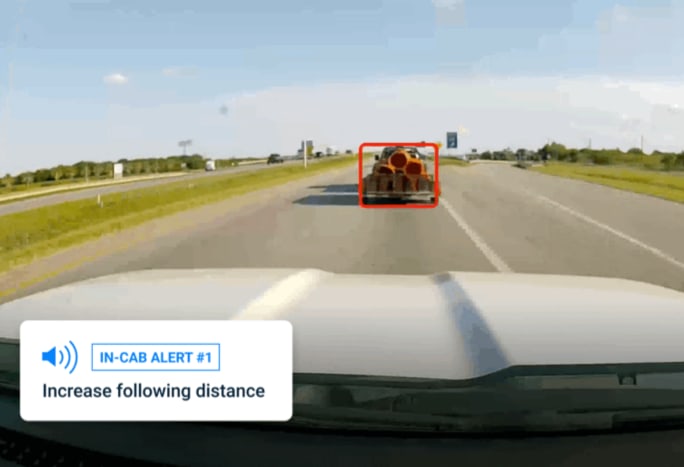
Proactive coaching has helped reduce risky behaviors on the road.
Photo: Samsara
Real-World Impact of Proactive Driver Coaching
Many Samsara customers are already using Proactive Driver Coaching and have seen firsthand how it empowers their drivers to self-correct risky behaviors in the moments that matter.
For example, Eurovia USA relies on Samsara’s AI technology to prevent incidents before they occur and help drivers self-correct a wide range of behaviors, including mobile usage and lack of seatbelt usage.
“Before, we could only speculate that unsafe activity inside the cab caused incidents,” said Ruby Dubay, Vice President of EHS and HR at Eurovia USA. “Now, AI Dash Cams give us visibility into the cab and provide our drivers with technology to help them self-correct and prevent incidents before they happen.”
30 days after turning on AI In-Cab Alerts for Mobile Usage Detection, Eurovia USA saw an 80% decrease in mobile usage events. Similarly, four months after turning on AI In-Cab Alerts for No Seatbelt Detection, they saw a 76% decrease in safety events that detected drivers not wearing seatbelts at the start of their trips.
As a result, Samsara enabled Eurovia USA to shift from a reactive approach to a proactive approach, building a world-class fleet safety program that empowers their drivers to take ownership of their coaching experience. “Samsara helped us with being transparent on the why,” said Dubay. “Why is safety so important? It’s about the drivers, first and foremost. The cameras improve our drivers’ safety and well-being so they can stay on the road.”
Similarly, Chalk Mountain Services — providing oilfield services for customers across the United States — relies on Samsara to empower drivers with real-time feedback.
“There were a few bad habits I didn't know I had, and Samsara was able to point them out to me so I could fix them,” said Vanessa Veloz, who has been a driver for Chalk Mountain Services for three and a half years. "My priority is safety, and Samsara helps me get home safe to my family."
Proactive coaching has helped reduce risky behaviors across Chalk Mountain's fleet, helping lead to an 86% decrease in preventable accident costs and a 43% decrease in worker’s compensation costs. Furthermore, safer driving can reduce wear and tear on their vehicles, reducing damage-related repair costs.
As a result, safety has become a competitive advantage for Chalk Mountain Services to retain its top drivers. By building a positive safety culture where they reward, celebrate, and protect their drivers from false claims, Chalk Mountain Services improved driver retention by 15%.
“Samsara truly helps our drivers be even better at their job — protecting them and the company at the end of the day,” said David Serach, Director of Safety at Chalk Mountain Services.
Samsara has had a busy year. Work Truck also reported in June that it will work with General Motors to help commercial fleets operate more efficiently. And in September Samsara announced that 200 partner integrations, including ThermoKing, Navistar, and RUBICONSmartCity are now available on the Samsara platform.
Originally posted on Work Truck Online
More Safety

What’s Next for Fleet? Safety, AI & Industry Recognition | AF News Recap
Could your company's culture be encouraging distracted driving? This week, we're exploring how workplace expectations affect driver safety, what AI, EVs, and autonomous vehicles could mean for the future of fleet management, and how fleet professionals can strengthen their award nominations.
Read More →
Does Your Fleet's Culture Encourage Distracted Driving?
What happens when the people responsible for enforcing safety rules are the ones setting the wrong example? The answer may reveal why some of the biggest risks to fleet drivers have little to do with what's written in the employee handbook.
Read More →
Sponsored•October 1, 2026
Fleet Manager’s Ultimate Playbook: Navigating the New Standard in OEM Connectivity
Rising operating costs, driver safety concerns, and unplanned downtime are putting unprecedented pressure on modern fleets. Discover how fleet managers use embedded OEM connectivity and real-time vehicle data to cut TCO, prevent downtime, and protect drivers without aftermarket telematics hardware.
Read More →
From Driver Well-Being to EV Charging | AF News Recap
Mental health belongs in the fleet safety conversation. This week, we’re looking at five ways fleets can support employee well-being before a crisis, plus Holman’s expansion in Mexico, new one-day Fleet Forward passes, and why EV charging demand is outpacing infrastructure growth.
Read More →
Nexar-Nauto Merger Aims to Give Fleets Better Safety Intelligence Through Larger Driving Dataset
Stefan Heck tells Automotive Fleet that combining more than 10 billion miles of driving history with Nexar's AI models will give fleets deeper insights into driver risk and roadway conditions than either company could provide independently.
Read More →
Don't Wait for a Crisis: 5 Ways to Build Mental Health Into Your Fleet Safety Program
For Suicide Prevention Month, fleet and safety leaders have an opportunity to put mental health where it belongs: at the center of workplace safety.
Read More →
How Camera Data Can Strengthen a Fleet’s Insurance Renewal
Insights from a commercial insurance carrier and a broker show how fleets can turn video telematic data, driver coaching, and improved claims results into a stronger case at insurance renewal.
Read More →
The Safest Fleets Aren’t the Ones with the Most Technology
You’ve made the telematics investment. Here’s how to capture the other half of its value and build the safest fleet on the road.
Read More →
Sponsored•August 7, 2026
Hidden in Plain Sight: Fleet Compliance Risks
Fleet compliance isn't just about having policies — it's about consistently enforcing them. This practical guide reveals six hidden compliance risks common in public sector and shared fleet operations and outlines proven strategies to improve visibility, accountability, and audit readiness
Read More →
NETS Sets 2026 Fleet Safety Benchmark Conference for Indianapolis
The Sept. 15–17 program will feature fleet benchmarking data, case studies, emerging technologies, and implementation strategies while running alongside the NSC Safety Congress & Expo.
Read More →