




Rural/Metro Shares 7 Steps to a Successful Fleet Safety Program at Recent Conference
LAS VEGAS - Thomas of the Lockton Companies and Narron of Rural/Metro Companies spoke at a recent conference on developing a highly effective fleet safety program for emergency response vehicle drivers.
LAS VEGAS– Ensuring the safety of employees who drive as part of their job responsibilities is often far more difficult to do than protect workers under direct supervision. Occupational vehicle accidents account for one of every four worker fatalities nationwide, according to the Department of Labor's Bureau of Labor Statistics.
However, according to Arthur "Skip" Thomas of the Lockton Companies and Kurt Narron of Rural/Metro Companies developed a highly effective fleet safety program for emergency response vehicle drivers. Both spoke at the recent American Society of Safety Engineers (ASSE) Safety 2008 conference held in Las Vegas.
Narron's company was able to reduce its vehicle accident rate from 58 incidents per 100 vehicles in 2002 to seven incidents per 100 vehicles in 2007 through implementation of an effective fleet safety program. As a result of the fleet safety program, the company also reduced its accident insurance costs from $45 million in 2002 to $22 million in 2007.
Steps to a Successful Fleet Safety Program
Here are the seven steps they took to create and implement the fleet safety program at Rural/Metro:
Step 1: Identify the costs of current conditions.
Step 2: Determine the criteria for making program implementation decisions.
Step 3: Form an Internal Fleet Safety and Health Advisory Group
Step 4: Develop a standardized fleet training program.
Step 5: Identify technology to monitor causes of accidents, monitor trends in accident rates before and after training, compile data for program ROI calculations, and help assess liability in collisions.
Step 6: Institute a refresher training program.
Step 7: Enhance the motor vehicle record (MVR) program.
More Safety
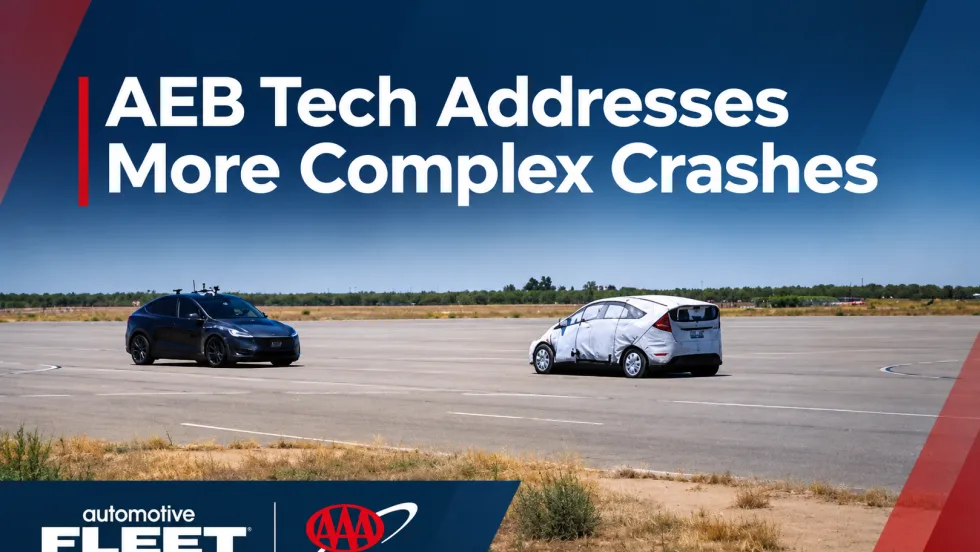
AAA Testing Finds Gaps in Intersection AEB Crash Prevention
Testing of four 2026 model-year vehicles found that automatic emergency braking prevented collisions in standardized intersection scenarios, but three vehicles failed to avoid crashes when another vehicle turned into their path.
Read More →
Which Fleet Types Have the Highest Severe Speeding Rates?
New research from SambaSafety finds significant differences in speeding rates across fleet industries, even as nearly 90% of surveyed fleets report using telematics.
Read More →
When a Cyberattack Hits Your Fleet: What Happens Next?
“You have two opportunities to test your plans: when you choose or when the threat actor chooses.” A cybersecurity expert reveals what fleet managers need to know before a cyberattack puts their operations at risk — and why the decisions made in the first moments can shape the entire recovery.
Read More →
Tips for Driving Safely on Halloween Night
This video features a reminder from the Connecticut Department of Transportation (DOT) and the Connecticut Police Chiefs Association, urging drivers to prioritize safety this Halloween.
Read More →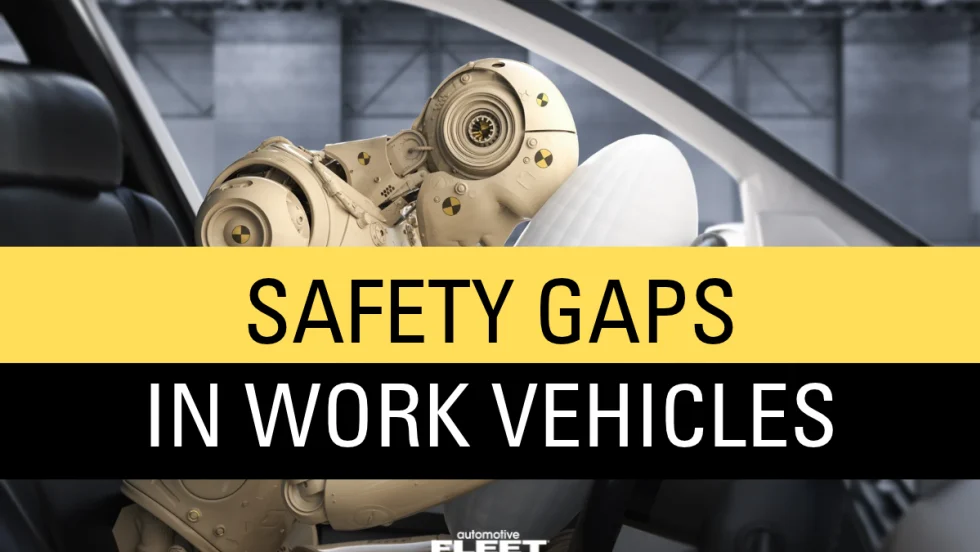
IIHS Crash Avoidance Tests Reveal Safety Gaps in Cargo Vans and Work Trucks
New IIHS crash avoidance ratings show uneven performance among cargo vans and heavy-duty pickups, with most struggling to avoid vehicle-to-vehicle collisions.
Read More →
What’s Next for Fleet? Safety, AI & Industry Recognition | AF News Recap
Could your company's culture be encouraging distracted driving? This week, we're exploring how workplace expectations affect driver safety, what AI, EVs, and autonomous vehicles could mean for the future of fleet management, and how fleet professionals can strengthen their award nominations.
Read More →
Does Your Fleet's Culture Encourage Distracted Driving?
What happens when the people responsible for enforcing safety rules are the ones setting the wrong example? The answer may reveal why some of the biggest risks to fleet drivers have little to do with what's written in the employee handbook.
Read More →
Fleet Manager’s Ultimate Playbook: Navigating the New Standard in OEM Connectivity
Rising operating costs, driver safety concerns, and unplanned downtime are putting unprecedented pressure on modern fleets. Discover how fleet managers use embedded OEM connectivity and real-time vehicle data to cut TCO, prevent downtime, and protect drivers without aftermarket telematics hardware.
Read More →
From Driver Well-Being to EV Charging | AF News Recap
Mental health belongs in the fleet safety conversation. This week, we’re looking at five ways fleets can support employee well-being before a crisis, plus Holman’s expansion in Mexico, new one-day Fleet Forward passes, and why EV charging demand is outpacing infrastructure growth.
Read More →
Nexar-Nauto Merger Aims to Give Fleets Better Safety Intelligence Through Larger Driving Dataset
Stefan Heck tells Automotive Fleet that combining more than 10 billion miles of driving history with Nexar's AI models will give fleets deeper insights into driver risk and roadway conditions than either company could provide independently.
Read More →