




Pennsylvania to Invest $3.7 Million in Alt-Fuel Technology Grants
YORK, Pa. --- Gov. Edward G. Rendell this week announced the investment of $3.7 million in alternative-fuel incentive grants.
YORK, Pa. --- Gov. Edward G. Rendell this week announced the investment of $3.7 million in alternative-fuel incentive grants to help reduce Pennsylvania's dependence on imported oil, improve environmental quality, and foster economic development through energy technologies. The grants are leveraging more than $16 million in private funds for projects ranging from early-stage research to commercial implementation of clean-fuel technologies and emerging Pennsylvania businesses. "These strategic investments will help us realize greater independence from imported oil, enhance our energy security at home and stabilize prices for clean fuels while we continue to build a dynamic new commercial sector that diversifies our energy supplies and puts people to work in Pennsylvania," Gov. Rendell said. The York County Transportation Authority has received $381,600 to cover the estimated incremental cost difference between a gallon of conventional diesel and a gallon of 20 percent blended biodiesel, commonly called B20. The funding will enable the authority to operate its entire diesel fleet of 20 buses and 33 vans on B20. In addition, the City of York Public Works received $17,035 in AFIG funds to power its fleet of 40 vehicles with B20. City and authority vehicles refuel from the same tank, which is supplied with B20 by United Biofuels of York. No mechanical changes are needed for the vehicle fleets to operate on the cleaner-burning fuel, which also reduces wear and tear on the engine and helps to cut down on maintenance expenses. Biodiesel also has a higher energy value per gallon than petroleum diesel, providing greater pickup for vans and buses. "York County Transportation Authority's purchase reaches up the economic ladder to the suppliers of biofuel and ultimately to the farmers whose crops were used to produce this clean fuel," said Environmental Protection Secretary Kathleen A. McGinty. "These investments create jobs for Pennsylvanians at the same time they reduce the emissions of soot and pollutants that form smog. Clean fuels produced in Pennsylvania will help us all breathe easier." At full fleet turnover, the two York projects will result in measurable reductions in sulfur and cut carbon dioxide emissions by 526.3 tons each year. Gov. Rendell recently signed into law (Act 178 of 2004) an expansion of the state's Alternative Fuels Incentive Grant (AFIG) Program. This enables the Department of Environmental Protection (DEP) to fund projects at higher percentages of the total cost. The new law also allows DEP to offer a rebate instead of a grant to commonwealth residents who purchase hybrid electric and alternative fuel vehicles. Hybrid vehicle purchasers in the state can now apply throughout the year and will be eligible for the rebate as long as funding is available and DEP receives the required information within six months of the purchase. Grants also are available to fund the construction of alternative refueling stations and advanced technology vehicle research and development. Act 178 of 2004 expanded AFIG to help school districts, transit authorities, local government agencies and nonprofit organizations buy down the added cost to use biodiesel fuel. Since its inception in 1992, DEP has awarded $28.7 million for 984 projects in 50 counties. DEP has also awarded $1.2 million since March 2005 to individuals who purchased hybrid electric vehicles. AFIG funds have leveraged more than $78 million from public and private fleet operators, fuel providers and the federal government. Among the grant recipients is Seneca Landfill Inc., which qualified for a $2 million grant to promote use of liquefied natural gas (LNG) produced from landfill methane gas. Seneca will construct a liquefaction facility --- capable of producing 6,000 gallons of LNG per day --- and an LNG refueling facility. The company will convert 10 waste-hauling vehicles to LNG engines and purchase five new LNG trucks.
More Fuel
October Fuel Trends Show Diverging Gasoline and Diesel Prices
Get the latest fuel trends from October.
Read More →
Fuel Prices Surge in September | September Fuel Update
September brought major fuel price swings, including diesel crossing $6 a gallon. Here’s how gas and diesel prices changed throughout the month, and where they stood heading into October.
Read More →
Turning Fleet Payment Data into Executive Insights
Ramel Lindsay of U.S. Bank Voyager discusses how fleets can transform payment and transaction data into actionable intelligence to reduce costs, improve oversight, and support executive decision-making.
Read More →
Why the IRS Raised Its Mileage Rate in the Middle of 2026
Fuel-price volatility drove the rare increase to 76 cents per mile, the fifth midyear adjustment since 2000.
Read More →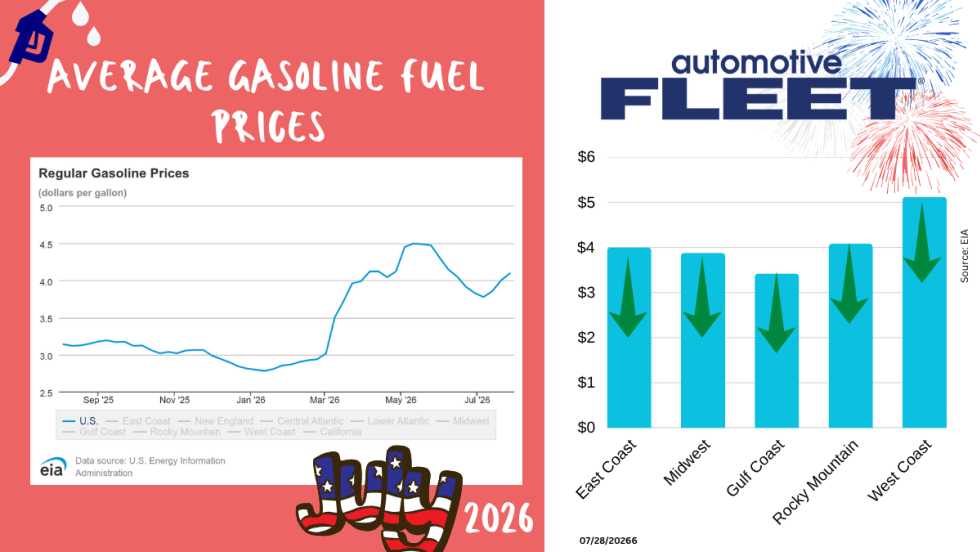
July Fuel Update: Prices Keep Rising in Light of More Conflict
Gas prices continue to rise as more and more conflicts do, too.
Read More →
Bob Adamsky on Fuel Volatility: "Don't Panic, Have a Plan."
When it comes to up and down fuel prices, Adamsky has a message for fleets: “Don’t panic.”
Read More →
How Fleets Can Gain Control of Non-Fuel Spend
Fuel often gets the spotlight, but non-fuel expenses can have a major impact on fleet costs. Ramel Lindsay of U.S. Bank Voyager discusses how fleets can gain better visibility and control over these often-overlooked expenditures.
Read More →
Fuel is Just the Start: How Middle East Tensions are Driving Up Fleet Maintenance Costs
The Middle East conflict is doing more than pushing up fuel prices. It’s also raising the cost of key maintenance products your fleet depends on, from motor oil to tires to windshield wipers. Here’s what you need to know about this budget-busting situation.
Read More →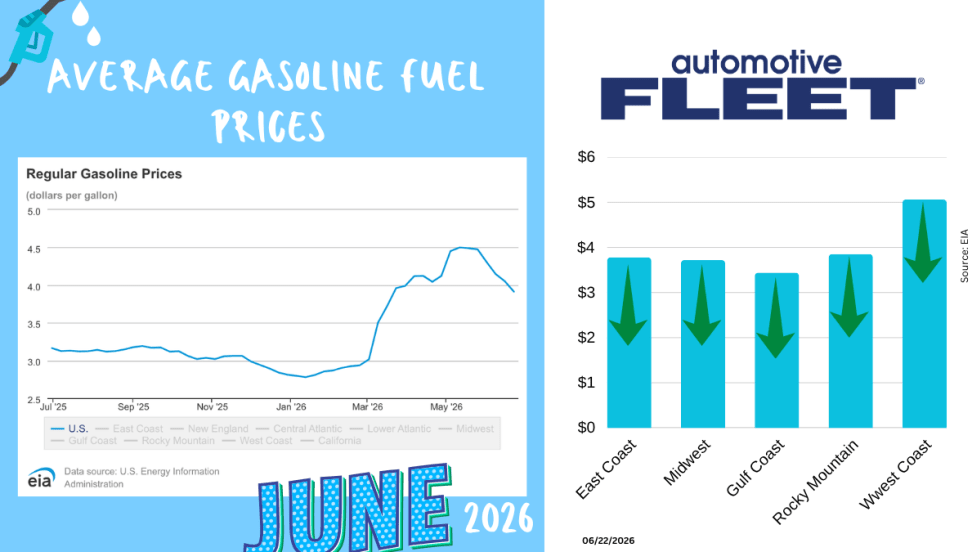
June Fuel Update: Prices Fall Below $4
Drivers are finally getting some relief at the pump. The national average gas price has dropped below $4 a gallon for the first time in months, with prices falling in 47 states as oil markets react to developments in U.S.-Iran negotiations.
Read More →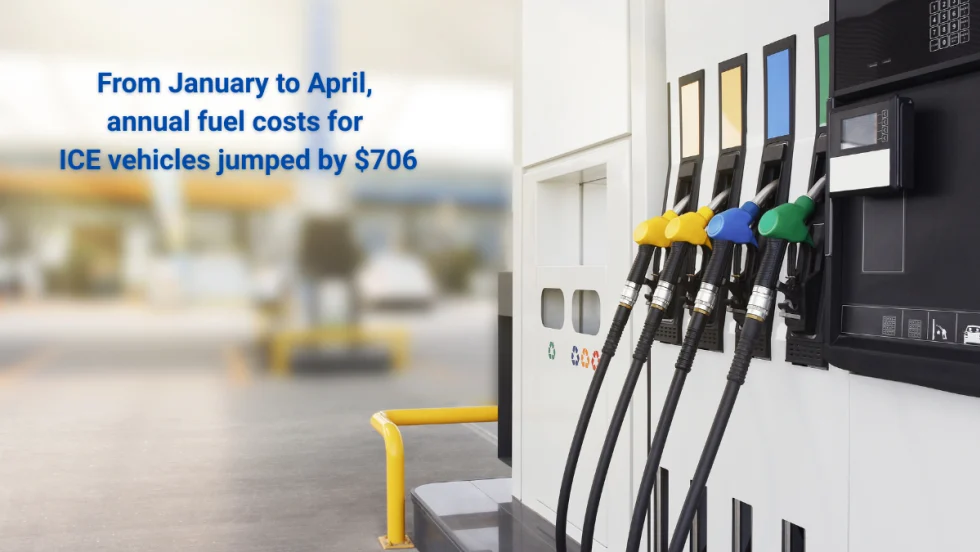
Study: How 2026's Gas Price Hikes Affect Different Vehicle Types
New data from iSeeCars reveals how rising fuel costs have affected different vehicle segments as gasoline prices climbed nearly 46% over the past four months.
Read More →