




Pacific Gas & Electric Demonstrates Power-Sharing Potential of Electric Vehicles
SAN FRANCISCO --- During today's Silicon Valley Leadership Group Alternative Energy Solutions Summit, Pacific Gas and Electric Company showcased utility Vehicle-to-Grid (V2G) technology.
SAN FRANCISCO --- During today's Silicon Valley Leadership Group Alternative Energy Solutions Summit, Pacific Gas and Electric Company showcased utility Vehicle-to-Grid (V2G) technology. V2G technology allows for the bi-directional sharing of electricity between Electric Vehicles (EVs) and Plug-in Electric Hybrid Vehicles (PHEVs) and the electric power grid. The technology turns each vehicle into a power storage system, increasing power reliability and the amount of renewable energy available to the grid during peak power usage. PG&E's prototype PHEV, converted in partnership with the Bay Area Air Quality Management District and Energy CS, adds a lithium ion battery to a traditional Toyota Prius. The additional battery capacity increases the vehicle's ability to run completely on electricity. In front of many of the Silicon Valley's industry and governmental leaders, PG&E showed the reverse flow of energy from the vehicle back to the outlet. Once connected to the outlet, PG&E then ran several lights and appliances to show how V2G could benefit its customers. Although PG&E's PHEV is currently in prototype form, the company sees the possibility that its customers will be able to take advantage of V2G technology and PHEVs by providing power to their home or businesses during hot summer days to avoid high energy prices and help prevent outages. "PG&E is committed to meeting the challenges associated with climate change by developing and bringing innovative alternative-fuel technologies to our customers," said Bob Howard, PG&E vice president of gas transmission and distribution. "V2G represents the best of these technologies because it intersects the transportation and utility sectors --- the nation's two largest contributors of greenhouse gases --- to increase energy reliability and protect the environment." In addition to reducing energy costs, V2G technology could let customers sell back energy to the utility during hot afternoons when demand is highest and most costly to avoid blackouts. During these periods, energy is worth several times more than overnight when vehicles charge. Vehicle owners will select a price threshold at which they are willing to sell energy, and when the price reaches this point the utility will be able to automatically draw energy out of the vehicle, leaving enough for the drive home if necessary. The utility's customers would then earn credit in the amount of energy used by the utility toward their monthly energy bill. V2G technology also serves as a way to increase the amount of renewable energy used during peak energy hours. During times of maximum demand, electrical utilities have to buy power from expensive and less efficient fossil-fuel power-generating sources. PHEVs will charge their batteries at night when energy is inexpensive and is generated with a larger percentage of renewable resources. When demand is high the next day, instead of turning on a fossil fuel-based generator, the utility can purchase the renewable energy stored in the vehicle batteries. "PG&E's V2G demonstration marks an important milestone for plug-in vehicle technology," said Felix Kramer, founder of CalCars.org. "Using a grid-connected car's battery as distributed energy storage for homes or businesses expands the economic and environmental benefits of plug-in vehicles." In addition to its PHEV, PG&E owns and operates a clean-fuel fleet of fuel cell vehicles and more than 1,200 natural gas vehicles --- the largest of its kind in the United States. PG&E's clean fuel fleet consists of service and crew trucks, meter reader vehicles and pool cars that run either entirely on compressed natural gas or have bi-fuel capabilities.
More Fuel
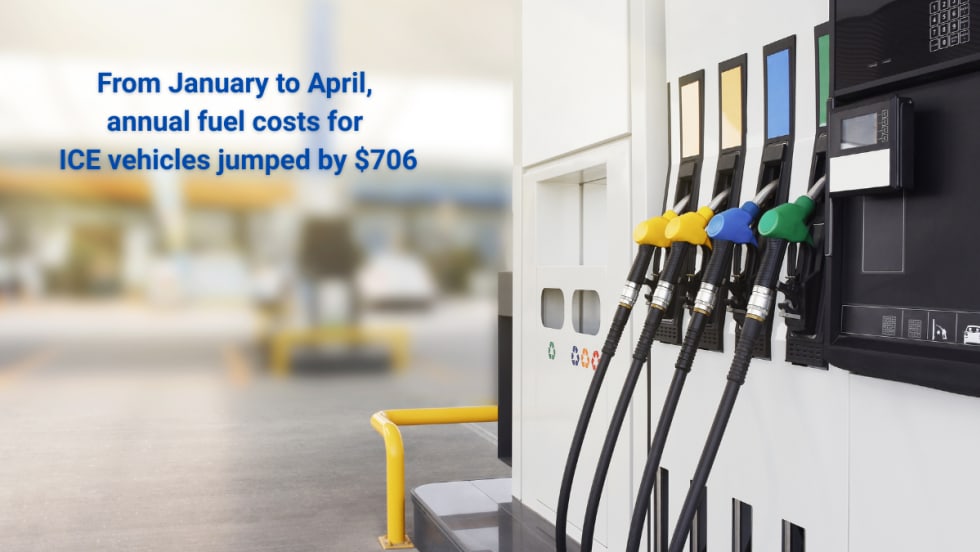
Study: How 2026's Gas Price Hikes Affect Different Vehicle Types
New data from iSeeCars reveals how rising fuel costs have affected different vehicle segments as gasoline prices climbed nearly 46% over the past four months.
Read More →
Are You Tracking Your Fleet's True Total Cost of Ownership?
Bobit Business Media surveyed 190 fleet professionals and found that while most fleets are tracking costs, fragmented systems and data gaps are keeping true TCO visibility out of reach. With rising pressure to control spend in an increasingly volatile environment, the gap between what fleets think they know and what the data actually shows is wider than you might expect. See how your peers are managing costs today and where the industry still has room to improve.
Read More →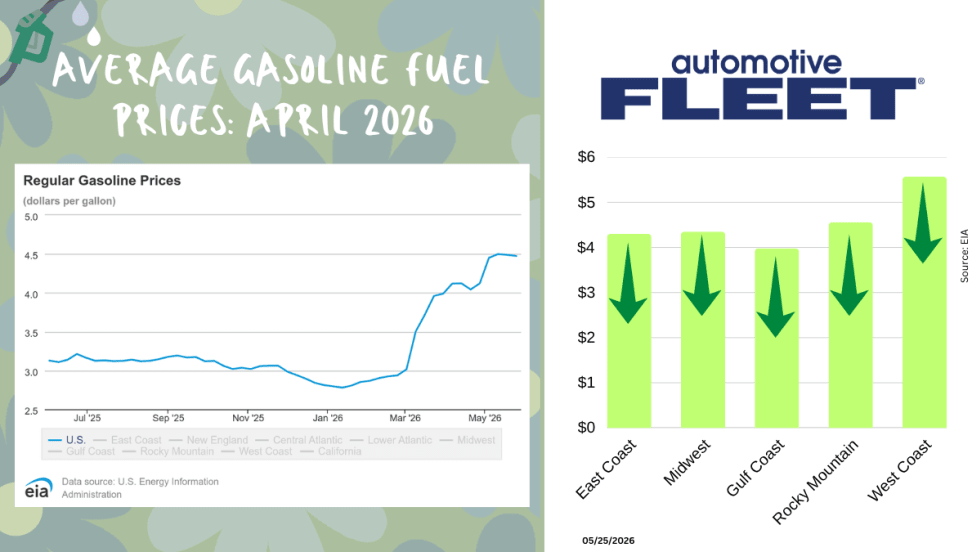
May Fuel Update: All Regions Experience Declines
Gas prices are finally easing in much of the country, but experts warn global tensions could quickly reverse the trend as the national average remains well above last month’s levels.
Read More →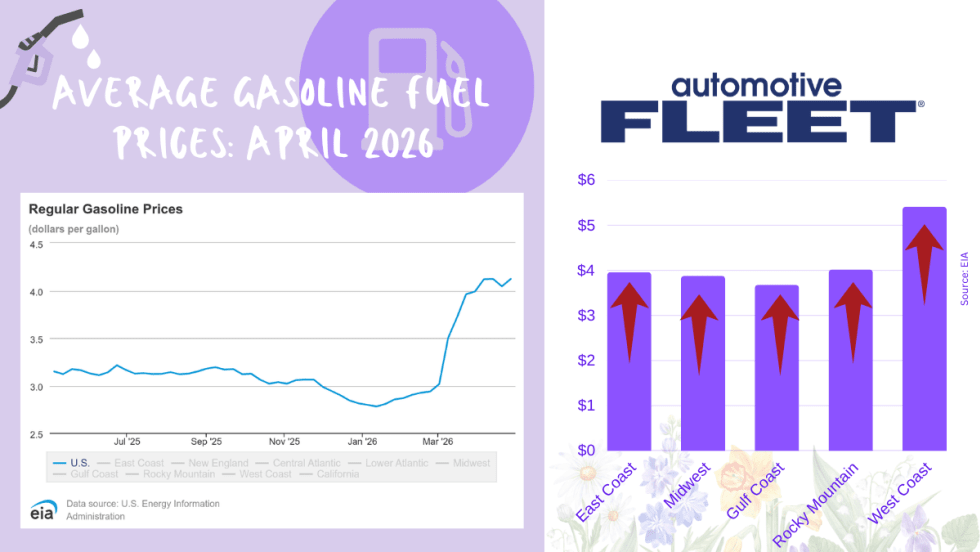
April Fuel Update: Prices Climb Above $4 as Spring Surge Accelerates
National average jumps to $4.04 per gallon, up sharply from last year, with West Coast prices topping $5 and further increases expected amid rising oil tensions.
Read More →
Tips from Fleet Managers on Saving Fuel Costs
Fleet leaders share practical strategies to reduce fuel spend through smarter policy, routing, and driver guidance.
Read More →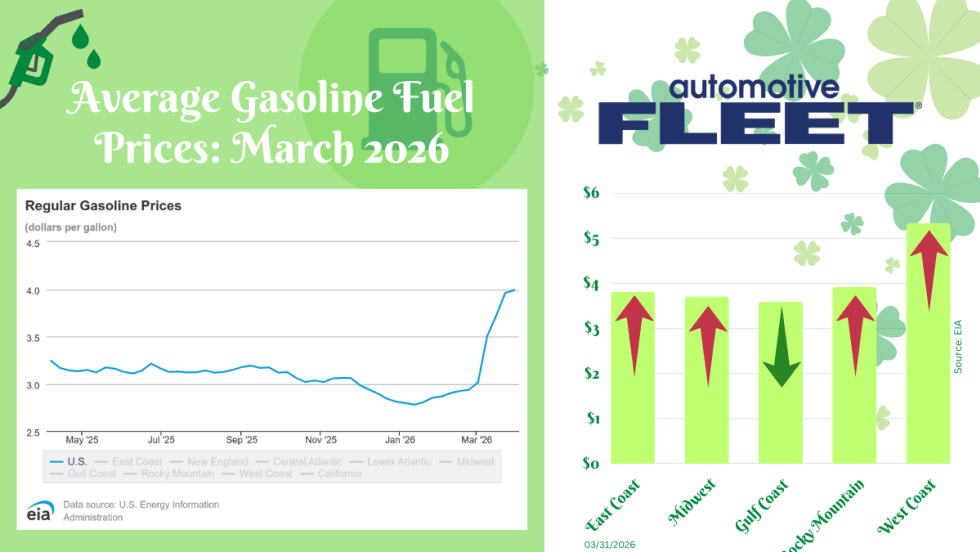
March Fuel Update: Prices Settle With a $4 Average
Fuel prices significantly slowed this week, but a $4 national average is still expected.
Read More →
Bob Adamsky on Fuel Volatility: “Don’t Panic — Have a Plan”
With oil prices rising again, AWP Safety’s fleet manager shares how to respond to rising fuel costs and how the right strategy can turn fuel spikes into cost-saving opportunities.
Read More →
Oil Market Turbulence Is Complicating Fleet Cost Planning
Rapid swings in crude oil prices driven by the conflict in the Middle East could create longer-term cost pressures for fleets, affecting fuel prices, supply chains, and vehicle strategy, says NTEA’s Andrew Wrobel.
Read More →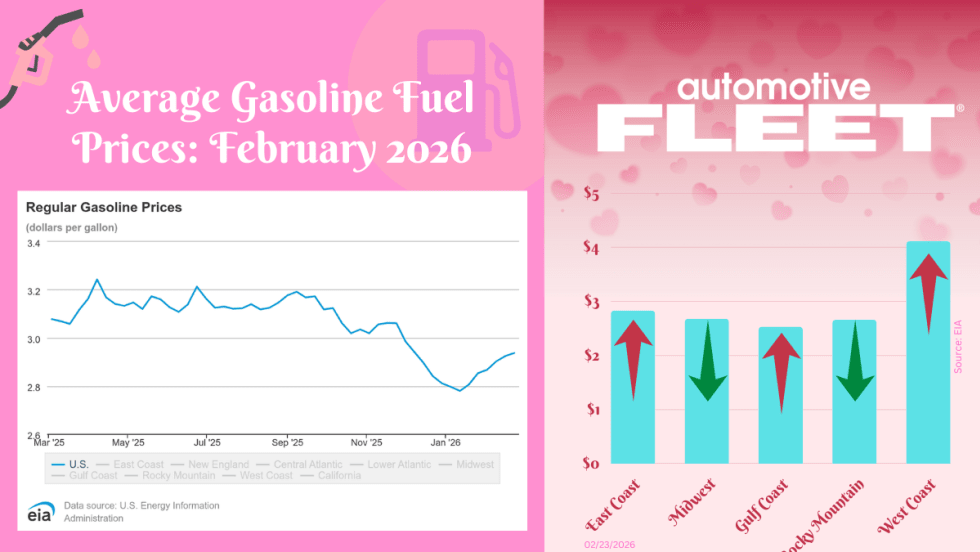
February Fuel Update: Prices Inch Higher for Third Week in a Row
The final February fuel update reveals prices continuing to inch higher for the third week in a row.
Read More →
The 2026 Fuel Economy Guide: Updated Cost and Efficiency Benchmarks for Fleets
Fleet managers can use the DOE’s 2026 Fuel Economy Guide to benchmark MPG across powertrain types using side-by-side vehicle ratings and compare new model-year options.
Read More →