




Pacific Gas and Electric Company Expands Green Fleet with Phoenix Motorcars' All-Electric Sport Utility Trucks
SAN FRANCISCO – Pacific Gas and Electric Company (PG&E) has added four Phoenix Motorcars all-electric sport/utility trucks (SUTs) to its clean-fuel fleet. PG&E will test the Phoenix Motorcars SUTs in its daily operations across its 70,000-square-mile service area in central and northern California.
SAN FRANCISCO – Pacific Gas and Electric Company (PG&E) has added four Phoenix Motorcars all-electric sport/utility trucks (SUTs) to its clean-fuel fleet. PG&E will test the Phoenix Motorcars SUTs in its daily operations across its 70,000-square-mile service area in central and northern California. "By adding the Phoenix Motorcars SUTs to our clean-fuel fleet, we are taking an important step in developing a proven and necessary electric vehicle market. Electric vehicles provide a practical solution to help us reduce our dependency on petroleum-based fuels, keep California's air clean, and meet the challenges associated with climate change," said Bob Howard, PG&E vice president of gas transmission and distribution. As part of its larger environmental leadership strategy, PG&E owns and operates a clean-fuel fleet of electric and fuel-cell vehicles, and more than 1,100 natural gas vehicles. PG&E's clean-fuel fleet consists of service and crew trucks, meter reader vehicles, and pool cars that run either entirely on compressed natural gas or have bi-fuel capabilities. Over the past 15 years, PG&E's clean-fuel fleet has displaced more than 2.7 million gallons of gasoline and diesel, and helped to avoid 5,000 tons of carbon dioxide from entering the atmosphere. California-based Phoenix Motorcars produces full-function, freeway-speed, green electric trucks for commercial fleet use. The SUT has a driving range of 130 miles, can be recharged in 10 minutes, and cruises at freeway speeds while carrying five passengers and a full payload. Phoenix's SUT is a battery-electric vehicle that eliminates noise and toxic vehicle emissions that contribute to air pollution. It is powered by UQM Technologies' propulsion system, utilizes Boshart Engineering homologation process, and is equipped with a non-toxic, Altairnano NanoSafe all-battery pack.
More Fuel
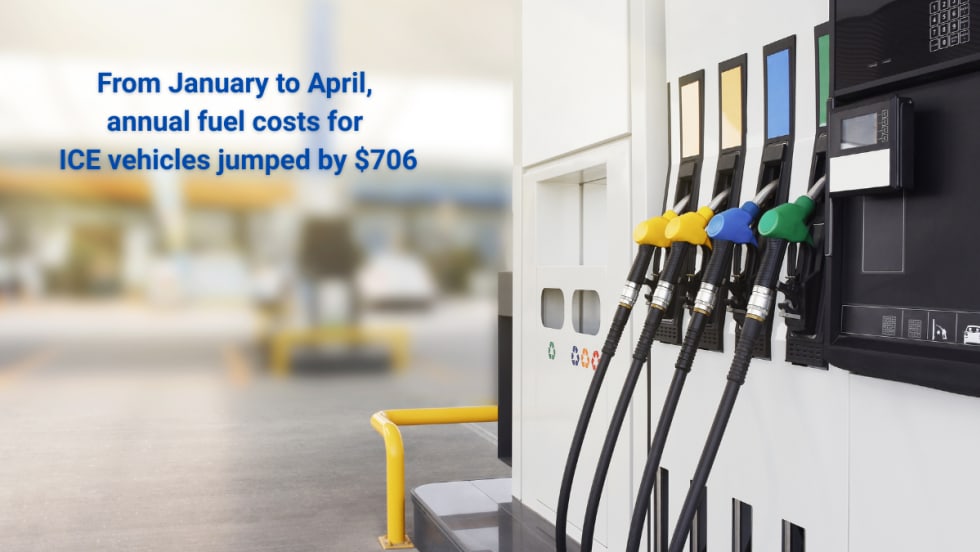
Study: How 2026's Gas Price Hikes Affect Different Vehicle Types
New data from iSeeCars reveals how rising fuel costs have affected different vehicle segments as gasoline prices climbed nearly 46% over the past four months.
Read More →
Are You Tracking Your Fleet's True Total Cost of Ownership?
Bobit Business Media surveyed 190 fleet professionals and found that while most fleets are tracking costs, fragmented systems and data gaps are keeping true TCO visibility out of reach. With rising pressure to control spend in an increasingly volatile environment, the gap between what fleets think they know and what the data actually shows is wider than you might expect. See how your peers are managing costs today and where the industry still has room to improve.
Read More →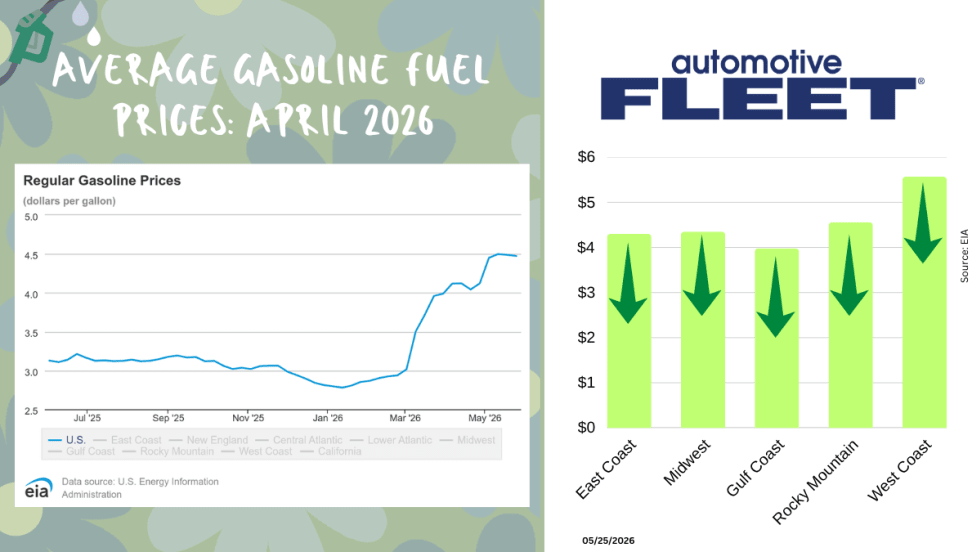
May Fuel Update: All Regions Experience Declines
Gas prices are finally easing in much of the country, but experts warn global tensions could quickly reverse the trend as the national average remains well above last month’s levels.
Read More →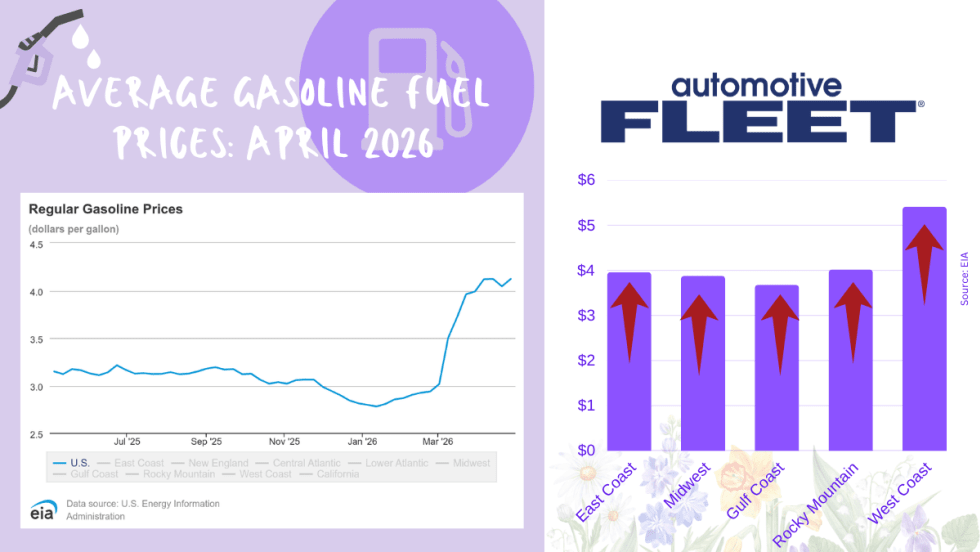
April Fuel Update: Prices Climb Above $4 as Spring Surge Accelerates
National average jumps to $4.04 per gallon, up sharply from last year, with West Coast prices topping $5 and further increases expected amid rising oil tensions.
Read More →
Tips from Fleet Managers on Saving Fuel Costs
Fleet leaders share practical strategies to reduce fuel spend through smarter policy, routing, and driver guidance.
Read More →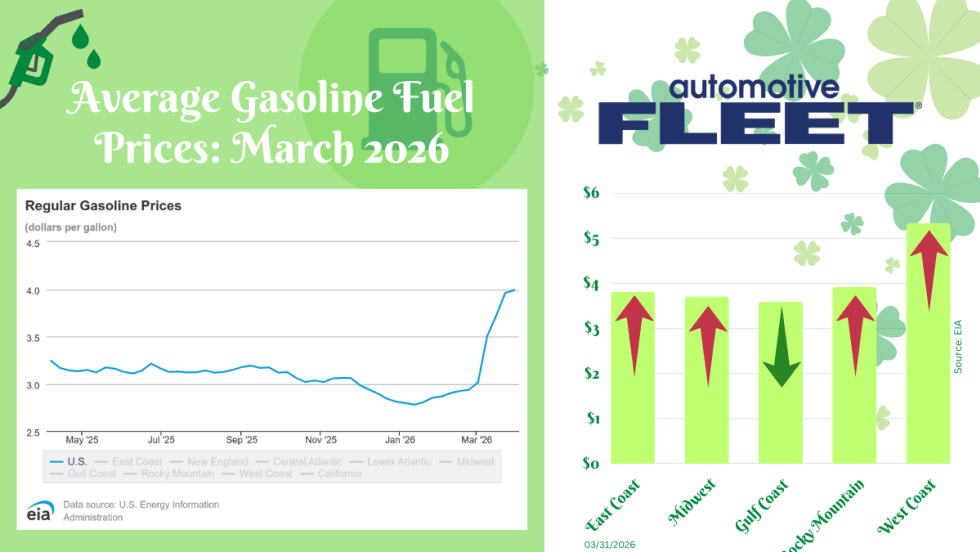
March Fuel Update: Prices Settle With a $4 Average
Fuel prices significantly slowed this week, but a $4 national average is still expected.
Read More →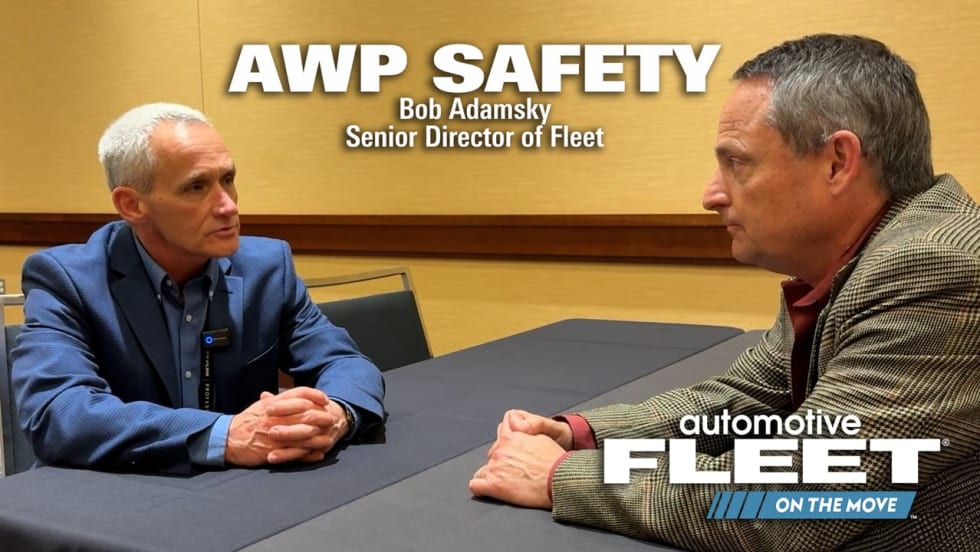
Bob Adamsky on Fuel Volatility: “Don’t Panic — Have a Plan”
With oil prices rising again, AWP Safety’s fleet manager shares how to respond to rising fuel costs and how the right strategy can turn fuel spikes into cost-saving opportunities.
Read More →
Oil Market Turbulence Is Complicating Fleet Cost Planning
Rapid swings in crude oil prices driven by the conflict in the Middle East could create longer-term cost pressures for fleets, affecting fuel prices, supply chains, and vehicle strategy, says NTEA’s Andrew Wrobel.
Read More →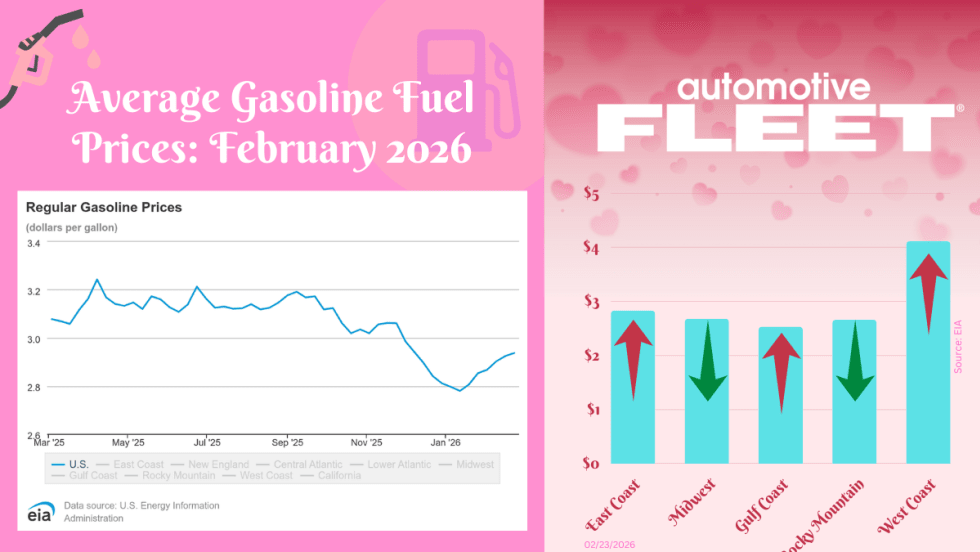
February Fuel Update: Prices Inch Higher for Third Week in a Row
The final February fuel update reveals prices continuing to inch higher for the third week in a row.
Read More →
The 2026 Fuel Economy Guide: Updated Cost and Efficiency Benchmarks for Fleets
Fleet managers can use the DOE’s 2026 Fuel Economy Guide to benchmark MPG across powertrain types using side-by-side vehicle ratings and compare new model-year options.
Read More →