




Oil Prices Continue to Drop
WASHINGTON, D.C. --- In the past five weeks, oil prices, both for crude oil and petroleum products, have dropped substantially.
WASHINGTON, D.C. --- In the past five weeks, oil prices, both for crude oil and petroleum products, have dropped substantially. The price of West Texas Intermediate (WTI) crude oil has fallen from $77 per barrel to below $64 per barrel. Retail gasoline prices have dropped 42 cents per gallon to $2.62 as of Sept. 11. At the same time, retail diesel fuel prices, at $2.86 per gallon, are now about 20 cents per gallon lower than they were five weeks ago. So will the declines continue, or will they begin to level off and possibly increase later this year? In its newly released report titled "Short-Term Energy Outlook," the Energy Department's Energy Information Administration (EIA) said it expects the price of WTI crude oil during the fourth quarter of 2006 to average around $70 per barrel, gasoline prices to average below $2.60 per gallon, and diesel prices to approach $2.80 per gallon by the end of the year. EIA predicted the recent price decline to slow, with prices then leveling off and possibly increasing later this year. This outlook reflects the EIA's analysis of the factors driving the current price decline. For crude oil markets, the global situation is about as stable as it has been in the past several months. In its regular weekly report, the EIA noted: "Almost every concern that existed in crude oil markets this summer is much more benign now. Concerns about a possible oil disruption from Iran have faded, as the diplomatic push to get Iran to halt enrichment of nuclear material has not yet led to sanctions imposed by the United Nations Security Council, and Iran has stated recently its willingness to continue negotiations with the United Nations." Moreover, mid-September has arrived without a single hurricane affecting oil facilities in the Gulf of Mexico and with no storms likely to arrive within at least the next week. Nigeria, where significant disruptions have occurred with some frequency over the past several years, has been quiet. "The oil situation in Iraq is as positive as it has been in nearly two years, with EIA estimating Iraqi crude oil production in July and August at its highest levels since the fall of 2004. Even the one disruption that did make news recently, the BP pipeline leak in Alaska, now appears to be much less of a problem than originally thought," the report continued. At first, there were worries that Prudhoe Bay production might be halted entirely. However, only a part of production had to be taken offline for an extended period. According to the state of Alaska, Prudhoe Bay production for the month of August averaged 189,000 barrels per day, which is about half of its August 2005 level. BP recently announced plans to begin to bring more production online soon and hopes to have full production restored by the end of October. For gasoline markets, the price drop that normally arrives after Labor Day began a few weeks early, as the market entered the last few weeks of August with no hurricanes threatening petroleum infrastructure and with enough supplies on hand to get through Labor Day. Currently, the near-month futures price of a barrel of gasoline is only $1 to $2 above that of a barrel of crude oil, an unusually low margin that is likely to increase over the coming months, the EIA said. Diesel prices have not dropped as much as gasoline, mostly because diesel demand tends to be strong in the fall with agricultural use of diesel increasing as crops are harvested. Also, the similarity of diesel to heating oil often causes diesel prices to rise in conjunction with heating oil as the winter approaches. Thus, declines in diesel prices have been limited to those caused by the decline in crude oil prices, the EIA said. The EIA added: "Unless the U.S. economy starts showing signs of a significant slowdown, which would slow oil demand growth, or an unusually warm winter in the northern hemisphere that depresses heating-related demand, the opportunity for further improvement in crude oil markets appears to be limited." The global balance is expected to remain relatively tight as long as global demand continues to increase at a faster pace than non-OPEC supply, limiting gains in global spare production capacity. This implies that the downward trend in prices is likely to stop or reverse if one of the many potential sources of supply trouble flares up or if product pressures from heating fuels pull up crude oil prices once cold weather begins.
More Fuel
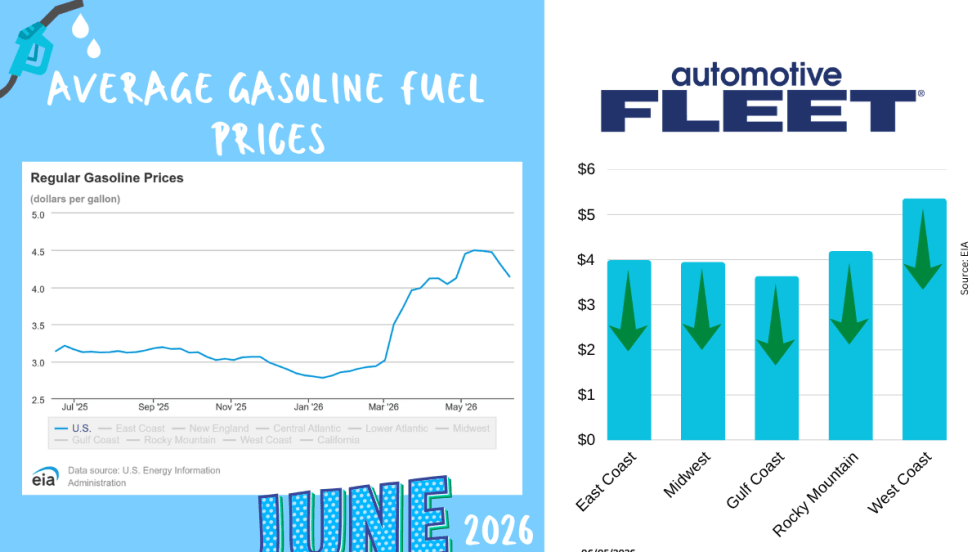
June Fuel Update: Prices Continue to Fall
While prices have continued to decline for four straight weeks, the next weeks don't look as promising.
Read More →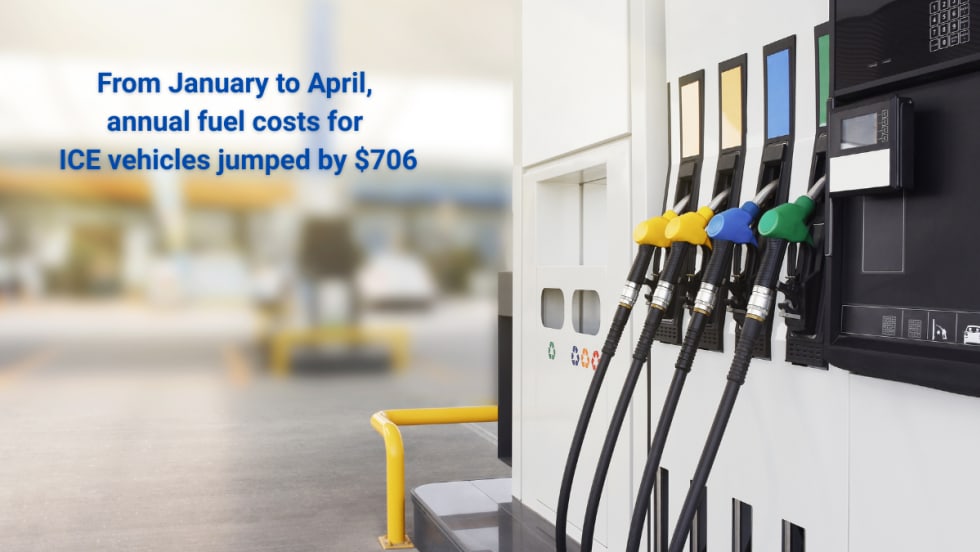
Study: How 2026's Gas Price Hikes Affect Different Vehicle Types
New data from iSeeCars reveals how rising fuel costs have affected different vehicle segments as gasoline prices climbed nearly 46% over the past four months.
Read More →
Are You Tracking Your Fleet's True Total Cost of Ownership?
Bobit Business Media surveyed 190 fleet professionals and found that while most fleets are tracking costs, fragmented systems and data gaps are keeping true TCO visibility out of reach. With rising pressure to control spend in an increasingly volatile environment, the gap between what fleets think they know and what the data actually shows is wider than you might expect. See how your peers are managing costs today and where the industry still has room to improve.
Read More →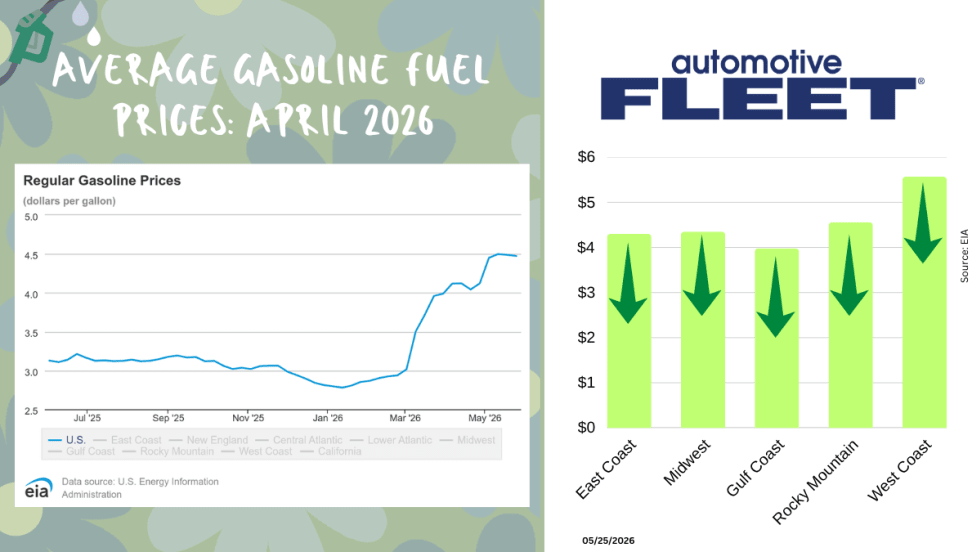
May Fuel Update: All Regions Experience Declines
Gas prices are finally easing in much of the country, but experts warn global tensions could quickly reverse the trend as the national average remains well above last month’s levels.
Read More →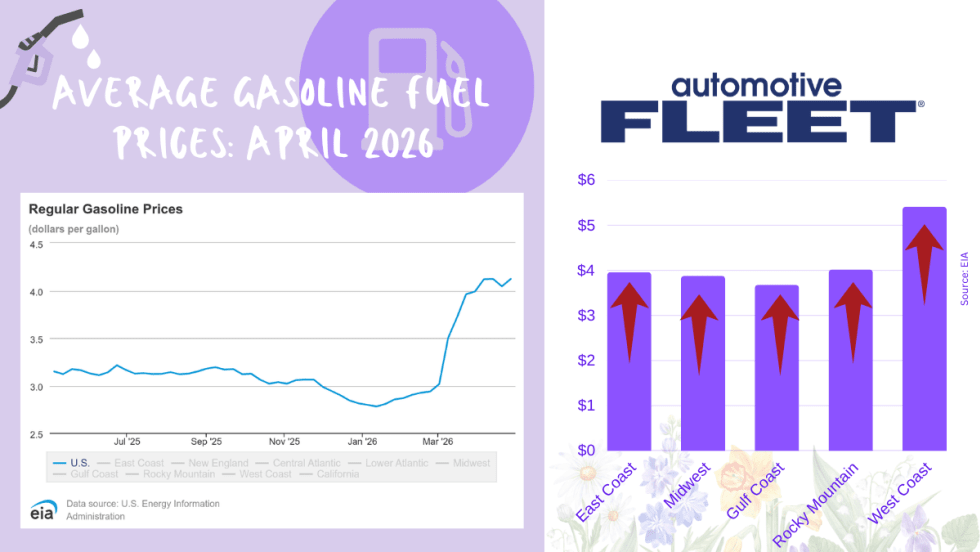
April Fuel Update: Prices Climb Above $4 as Spring Surge Accelerates
National average jumps to $4.04 per gallon, up sharply from last year, with West Coast prices topping $5 and further increases expected amid rising oil tensions.
Read More →
Tips from Fleet Managers on Saving Fuel Costs
Fleet leaders share practical strategies to reduce fuel spend through smarter policy, routing, and driver guidance.
Read More →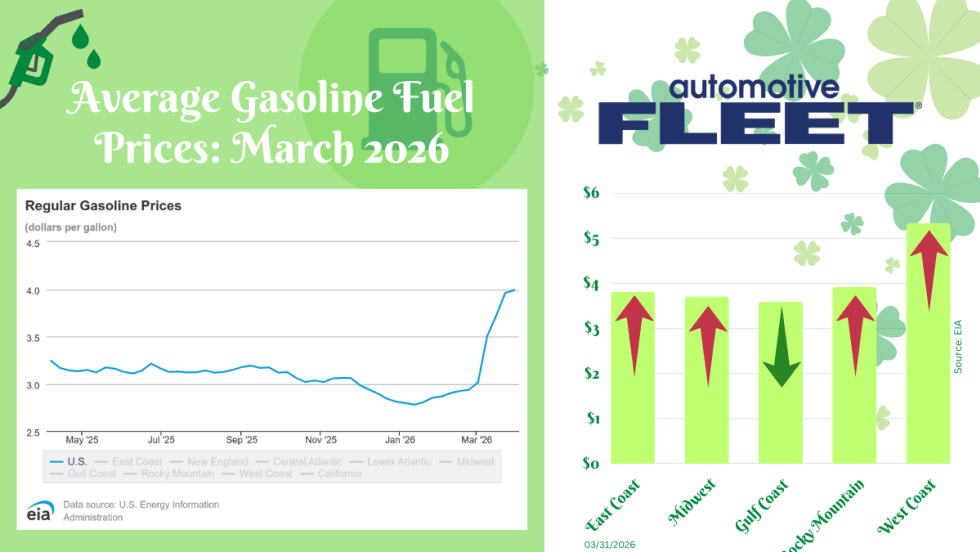
March Fuel Update: Prices Settle With a $4 Average
Fuel prices significantly slowed this week, but a $4 national average is still expected.
Read More →
Bob Adamsky on Fuel Volatility: “Don’t Panic — Have a Plan”
With oil prices rising again, AWP Safety’s fleet manager shares how to respond to rising fuel costs and how the right strategy can turn fuel spikes into cost-saving opportunities.
Read More →
Oil Market Turbulence Is Complicating Fleet Cost Planning
Rapid swings in crude oil prices driven by the conflict in the Middle East could create longer-term cost pressures for fleets, affecting fuel prices, supply chains, and vehicle strategy, says NTEA’s Andrew Wrobel.
Read More →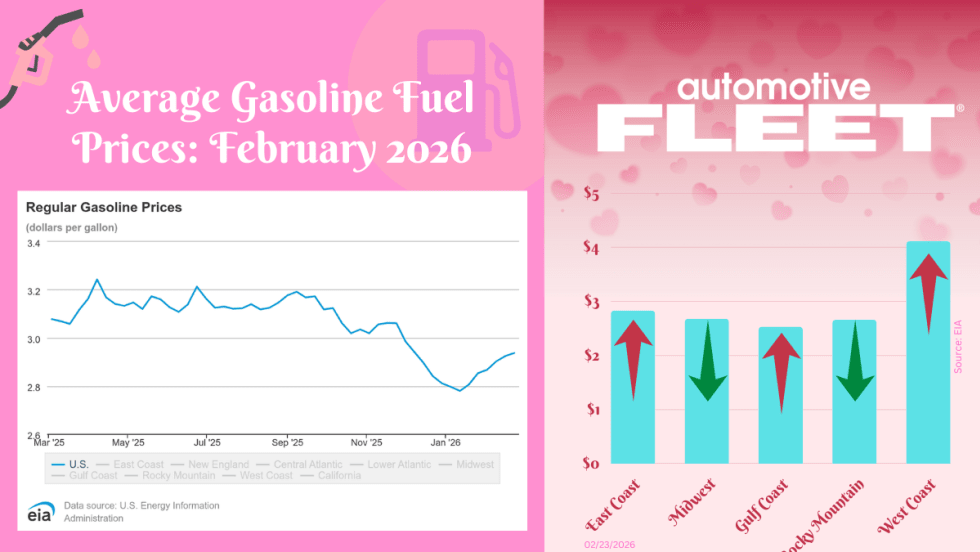
February Fuel Update: Prices Inch Higher for Third Week in a Row
The final February fuel update reveals prices continuing to inch higher for the third week in a row.
Read More →