




Night Worker Injuries Three Times More Likely
Night-shift workers, including drivers and other transportation personnel, are three times more likely to get injured on the job. Tired workers can cost a typical employer with 1,000 employees up to $1 million each year.

Night-shift workers, including drivers and other transportation personnel, are three times more likely to get injured on the job.
Photo via Joonas Tikkanen/Flickr.
Night-shift workers, including drivers and other transportation personnel, are three times more likely to get injured on the job, according to a new study that explores fatigue in the workplace. Tired workers can cost a typical employer with 1,000 employees up to $1 million each year.
Shift scheduling can contribute to fatigue, but identifying risky practices and implementing effective scheduling practices can help reduce or manage fatigue risk, according to the report from the National Safety Council.
For example, 51% of employers expect their people to work a night shift immediately before or after a day shift. Moreover, 49% of employers schedule night shifts with no pre-determined end time. Yet both practices increase an employee's fatigue risk, which ups their chances of getting injured on the job.
For drivers, increased fatigue can quickly advance to drowsiness behind the wheel. Fleet managers should be aware of smart scheduling practices.
Limiting the number of consecutive night shifts for any given employee — and allowing naps or rest breaks during night shifts — are two of the best ways to manage fatigue risk, according to the report.
However, the survey indicates that employers have a long way to go to ensure they are taking tired workers seriously.
While some 90% of employers say they are willing to meet with a fatigued employee to understand the causes of his or her exhaustion, only 55% say they adjust the worker's schedule or tasks accordingly.
An alarming 73% of employers say they do not communicate with their workers about fatigue.
The survey findings indicate that overtime practices are another area of concern. Employees who work long hours accumulate fatigue throughout the shift, increasing their risk for accident and injury.
In fact, injury risk begins increasing after eight hours, with a 13% increase on a 10-hour shift and a 30% increase on a 12-hour shift, notes the report.
Working long shifts on a regular basis contributes to sleep deprivation, which can affect a driver's health and wellbeing.
The report suggests the following strategies employers can use to better manage the risk of long hours:
Avoid quick shift returns.
Ensure employees have enough time off between shifts to allow for commuting, personal responsibilities and at least seven hours of sleep.
Ten to twelve-hour shift return minimums should be considered.
Related Video: 11 Drowsy Driving Tips
More Safety

Nexar-Nauto Merger Aims to Give Fleets Better Safety Intelligence Through Larger Driving Dataset
Stefan Heck tells Automotive Fleet that combining more than 10 billion miles of driving history with Nexar's AI models will give fleets deeper insights into driver risk and roadway conditions than either company could provide independently.
Read More →
Don't Wait for a Crisis: 5 Ways to Build Mental Health Into Your Fleet Safety Program
For Suicide Prevention Month, fleet and safety leaders have an opportunity to put mental health where it belongs: at the center of workplace safety.
Read More →
How Camera Data Can Strengthen a Fleet’s Insurance Renewal
Insights from a commercial insurance carrier and a broker show how fleets can turn video telematic data, driver coaching, and improved claims results into a stronger case at insurance renewal.
Read More →
The Safest Fleets Aren’t the Ones with the Most Technology
You’ve made the telematics investment. Here’s how to capture the other half of its value and build the safest fleet on the road.
Read More →
Hidden in Plain Sight: Fleet Compliance Risks
Fleet compliance isn't just about having policies — it's about consistently enforcing them. This practical guide reveals six hidden compliance risks common in public sector and shared fleet operations and outlines proven strategies to improve visibility, accountability, and audit readiness
Read More →
NETS Sets 2026 Fleet Safety Benchmark Conference for Indianapolis
The Sept. 15–17 program will feature fleet benchmarking data, case studies, emerging technologies, and implementation strategies while running alongside the NSC Safety Congress & Expo.
Read More →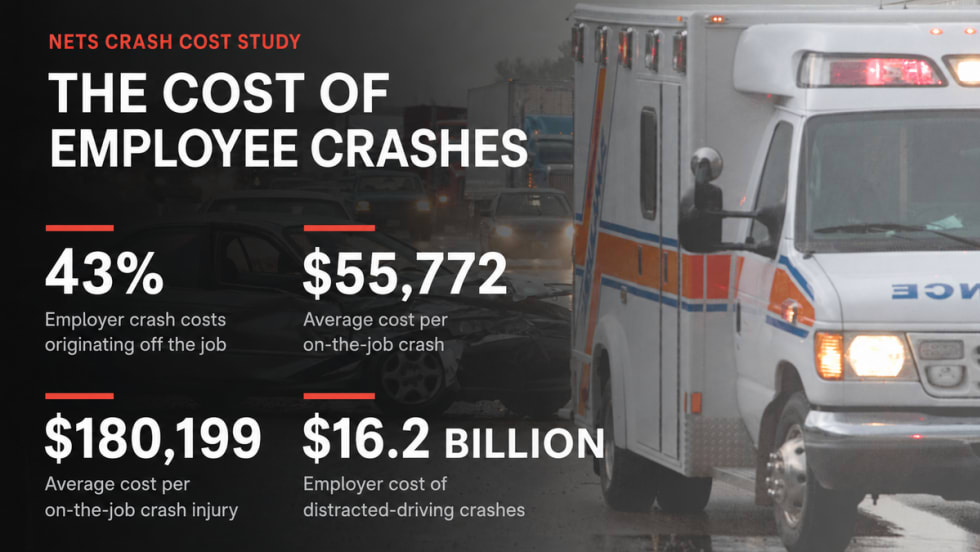
Off-the-Job Crashes Account for 43% of Employers’ $61.7 Billion Crash Burden
NETS quantifies costs dispersed across fleet, risk, HR, and other departments while providing new per-crash benchmarks for employers.
Read More →
Ram Recalls More Than 1.27 Million 1500 Pickups for Seat Belt Anchor Issue
The recall affects certain 2019-2026 Ram 1500 pickups that may have improperly attached second-row seat belt buckle anchors.
Read More →
How Better Visibility Cut Speeding Violations by 48%
Fleet leaders don't need more data, they need clearer visibility into what the data is saying. This case study explores how one utility replaced speeding-event counts with a single metric — miles driven in violation — to strengthen safety and significantly reduce speeding violations.
Read More →
Operation Safe Driver Week: Why the Industry's Oldest Safety Campaign Still Matters to Fleets
A look at how a 2007 enforcement initiative became one of the most consequential weeks on the fleet safety calendar, and what it means for your drivers in 2026.
Read More →