





Related: Upgrading Refuse Fleets to CNG: Three Considerations Beyond Economics
NGVi Certifies More than 1,000 CNG Fuel System Inspectors
Natural Gas Vehicle Institute (NGVi) has certified more than 1,000 CNG fuel system inspectors since the program was launched in late 2016.
January 30, 2020
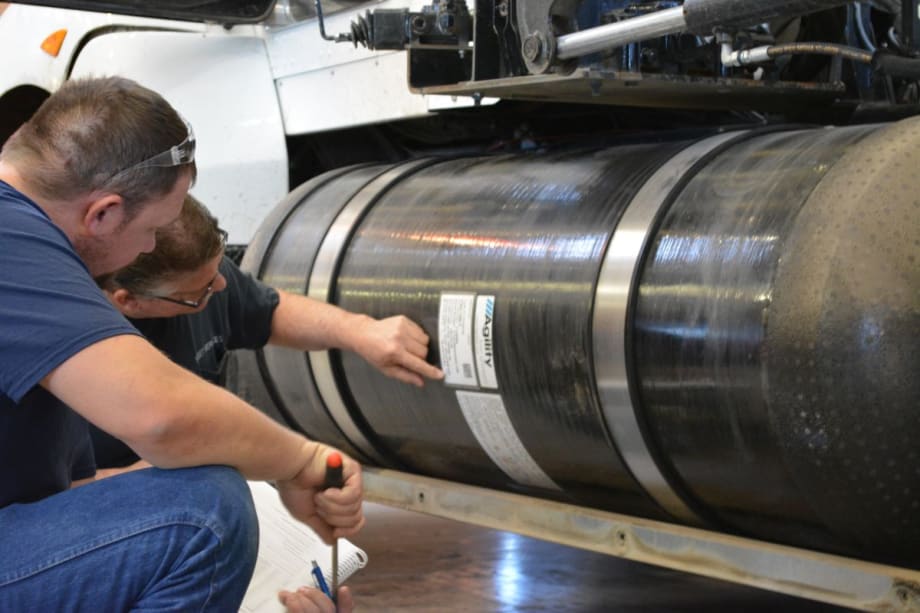
Qualified CNG fuel system inspectors must be able to thoroughly examine all components of the CNG fuel system, correctly identify and determine the extent or significance of any discovered damage, and clearly understand and prescribe what actions must be taken.
Photo: NGVi
3 min to read
Natural Gas Vehicle Institute (NGVi) has certified more than 1,000 CNG fuel system inspectors since the program was launched in late 2016. This represents ten times the number of inspectors certified just three years ago and is comprised of representatives from 51 transit agencies, 28 refuse companies, 25 trucking companies, 46 municipal fleets, as well as those from numerous school districts, cylinder manufacturers, truck manufacturers and dealers, and more.
“We are thrilled to see this growing commitment to ensuring fleet safety,” said Annalloyd Thomason, vice president and general manager of NGVi. “NGVi CNG Fuel System Inspector Certification is an important verification of the technician’s qualifications and competence, and a recognized hallmark of best practices in risk mitigation for the operation of CNG powered vehicles. The large interest in our program clearly signifies that companies recognize the importance of having their technicians certified.”
NGVi's CNG Fuel System Inspector Certification program launched in September 2016. It was created in conformance with National Commission for Certifying Agencies (NCCA) guidelines.
Qualified CNG fuel system inspectors must be able to thoroughly examine all components of the CNG fuel system, correctly identify and determine the extent or significance of any discovered damage, and clearly understand and prescribe what actions must be taken. They also must have sufficient knowledge of all applicable codes and standards governing CNG fuel system installation and CNG fuel system components, as well as be able to interpret and apply them in the inspection process.
“On-the-job applicability and practicality are the main attributes of any certification program. Right from the start, we specifically focused on creating a rigorous certification that assesses in detail the knowledge and skills technicians must apply during an actual inspection,” said Thomason. “Because the repercussions of improper installation or undetected external damage to the CNG fuel system can be serious and dangerous -- and affect not only safety of the fleet but also potentially the general public -- it’s imperative that organizations ensure their CNG fuel system inspectors are 100% qualified for the job. We are proud to provide them with an assessment tool adding that extra layer of assurance.”
The NGVi CNG Fuel System Inspector Certification program is administered independently from the company training programs, and there is no training prerequisite for technicians seeking certification.
“Training is recommended, of course, but participants in our CNG Fuel System Inspector Certification program are not required to take training from NGVi to sit for the exam,” said Thomason. “If you are prepared, you are welcome to take the exam,” she added. “We also understand the importance of convenience and accessibility. This is why, in addition to offering a live-proctored paper exam, NGVi certification exam participants may take the exam online at any convenient time.”
NGVi’s CNG Fuel System Inspector Certification is valid for five years. Participants who pass the certification exam are designated as NGVi-Certified CNG Fuel System Inspectors. They receive a certificant number, identification card and a certification document.
Originally posted on Work Truck Online
More Global Fleet

GeoFencing Adds to Your Truck Security Arsenal
Geofencing is a familiar fleet tool today, but its early adoption marked a major shift in vehicle tracking, route monitoring, and the debate over employee privacy.
Read More →
Holman Takes Full Ownership of ARIZA in Mexico
Holman is bringing its Mexican fleet management operation fully under its own brand after more than 30 years as a joint venture. The change gives multinational fleet customers a single Holman operation across the U.S., Canada, and Mexico.
Read More →
5 Tire Maintenance Tips to Help Prevent Work Truck Downtime
Regular tire checks can do more than extend tread life. These five maintenance practices can help work truck fleets catch problems early, reduce costs, and prevent downtime.
Read More →

Proven Ways to Reduce Work Truck Downtime
The age-old problem of downtime will always be a reality, but with new strategies at hand, fleets have more ways to keep trucks on the road longer.
Read More →


Cameras, Safety and Insurance: From Reactive Claims to Real-Time Prevention (Part 2 of 2)
Part Two: Commercial auto remains one of the most challenging and costly lines of coverage for fleet operators and insurers alike. Continue learning more about how to effectively address these issues from Onur Aksan, Enterprise Business Development Executive, Geotab
Read More →
Cameras, Safety and Insurance: From Reactive Claims to Real-time Prevention
Commercial auto remains one of the most challenging and costly lines of coverage for fleet operators and insurers alike. Learn more about how to effectively address these issues from Onur Aksan, Enterprise Business Development Executive, Geotab.
Read More →
Fleet Costs Are Rising: Here’s How Leaders Are Responding
Fleet leaders are under pressure to reduce costs, adapt to economic uncertainty, and make smarter decisions. See how peers across North America are responding with real data, proven strategies, and forward-looking insights. Download the 2026 Market Pulse Report to benchmark your strategy and uncover where you can gain an edge.
Read More →
Enterprise Fleet Management Surpasses 900,000 Vehicles in U.S. & Canada
Enterprise Mobility connects with mobility solutions around the globe
Read More →