




New Seat Belt, Cell Phone Laws to Take Effect in Texas
AUSTIN, TX --- A number of new traffic and vehicle laws in Texas go into effect Sept. 1, the Texas Department of Public Safety said, including selt belt requirements and cell phone restrictions.
AUSTIN, TX --- A number of new traffic and vehicle laws in Texas go into effect Sept. 1, the Texas Department of Public Safety said, including selt belt requirements and cell phone restrictions. Here are some of the laws set to take effect in Texas:
HB 537 requires all occupants of a vehicle, no matter their age, to be secured by a safety belt, no matter where they are seated in the vehicle; changes the definition of a passenger vehicle to include a passenger van designed to transport 15 or fewer passengers including the driver; removes the current exemption for third-party Medicaid transportation provisions regarding the use of child passenger safety seats; and prohibits a motorcycle operator from carrying a passenger under the age of five, unless the child is seated in a sidecar attached to the motorcycle.
SB 61 amends the existing statute regarding child passenger safety seats. The bill requires that any child younger than eight years of age be restrained in an approved child passenger safety seat unless the child is at least 4 feet, 9 inches in height. The fine is no more than $25 for a first offense and $250 for a second offense. The law also creates a new court cost for conviction of an offense under this section to be collected and used by TxDOT to buy safety seats for low-income families. The law becomes effective on Sept. 1, 2009, but tickets for this offense cannot be issued until June 1, 2010. Police officers are allowed to issue a warning before that date.
HB 55 makes it illegal to use a wireless communication device in a school zone unless the vehicle is stopped or a hands-free device is used. Cities or counties wanting to enforce this law must post a sign at the beginning of each school zone to inform drivers that using a wireless communications device is prohibited and the operator is subject to a fine. It is a defense to prosecution if the operator was making an emergency call.
HB 2730 increases the penalties for driving while intoxicated with a child passenger by adding an automatic driver license suspension period for first-time offenders and an increased suspension period for repeat offenders. The driver license re-instatement fee for completing an education program will rise from $50 to $100. The law closes a loophole so a person who commits an offense as a minor cannot circumvent the driver license penalty if the person turns 21 before their court date.
HB 2730 allows a new Texas resident to operate a vehicle without a Texas license for 90 days instead of the current 30. (This provision went into effect on June 19, 2009.)
HB 2012 creates two new punishment enhancements: a Class B misdemeanor if a person drives with a suspended license and without insurance; and a class A misdemeanor if the person driving without insurance or a valid driver license has an accident and someone is seriously injured or dies as a result of that accident.
SB 129 authorizes neighborhood electric vehicles (NEVs) to be operated on roads with a posted speed limit of 45 miles per hour or less. The bill authorizes driver license holders to operate NEVs without having a motorcycle endorsement, clarifies that drivers and passengers in such vehicles are not required to wear helmets and specifies that enclosed three-wheeled vehicles as described in the bill are authorized to operate in preferential lanes.
HB 2730 requires that all applicants under the age of 18 take the driving skills exam to receive a driver license. The law also requires that a provisional driver license (under 18) or instruction permit expire on an individual's 18th birthday, removes the requirement that a provisional driver license or instruction permit be renewed annually and increases the fee for those licenses from $5 to $15. It also extends the current phase-two restrictions for holders of a graduated driver license from six months to 1 year. These restrictions include limited night driving, prohibited use of wireless communication devices and a limited number of passengers.
HB 339 increases the total hours of behind-the-wheel driving instruction a teen receives from 14 to 34 after TEA develops criteria for curriculum. (Goes into effect May 1, 2010.)
SB 1317 creates a six-hour driver education course required for driver license applicants 18 years of age or older. It also mandates that applicants 25 or under must submit to an approved driver education course. (Goes into effect March 1, 2010.)
SB 328 gives DPS the power to suspend a minor's driver license if he or she fails a breath or blood alcohol test while operating a watercraft. Chapter 524 of the Transportation Code also clearly defines the suspension period for an individual who was under the age of 21 at the time when the offense of boating under the influence or driving under the influence of alcohol occurred. The law also increases the reinstatement fee for a license suspended under sections 49.04-49.08, Penal Code from $50 to $100.
HB 2730 increases the driver license sanction from a one-year CDL license disqualification to a lifetime disqualification if a person uses a motor vehicle to transport, conceal or harbor an alien. If a child is engaged in conduct involving a severe form of trafficking persons, a judge at a juvenile hearing is required to order the juvenile's driver license or permit to be suspended.
HB 2730 prohibits DPS from issuing a driver license or identification card to a person who has not established a domicile in Texas. The law specifies that an applicant may receive a driver license at a post office box only if the applicant's residence address has also been provided, with some exceptions.
HB 1282 makes it a Class B misdemeanor to steal a driver license, commercial driver license or personal identification.
HB 2730 increases the fine for a parking violation at the state Capitol from $10 to $25, and increases the late fee from $2 to $5.
SB 589 requires that window installers place a vehicle equipment safety compliance label on a windshield, side or rear window stating that the window tinting complies with the appropriate provisions of the Transportation Code. Failing to place the required label on the vehicle could now lead to a $1,000 fine for the window installer.
More Safety
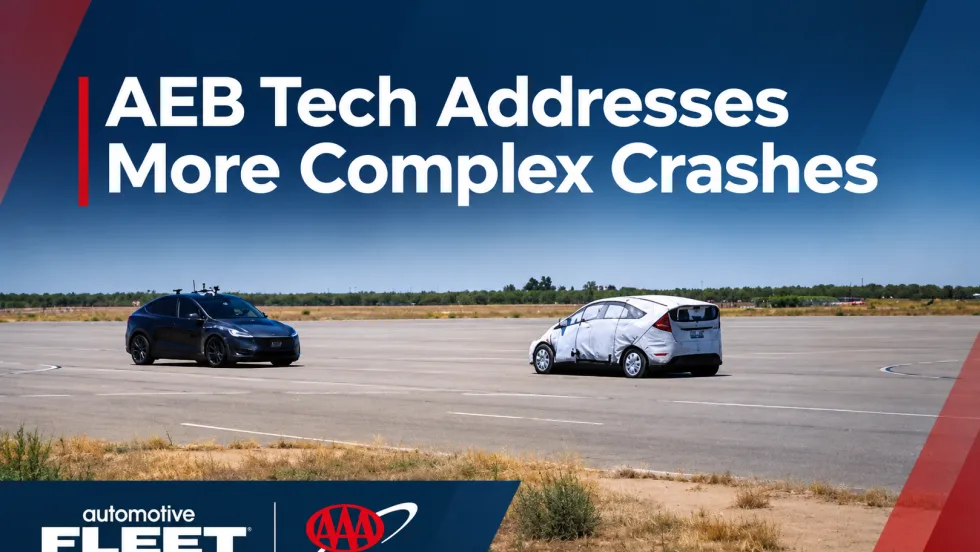
AAA Testing Finds Gaps in Intersection AEB Crash Prevention
Testing of four 2026 model-year vehicles found that automatic emergency braking prevented collisions in standardized intersection scenarios, but three vehicles failed to avoid crashes when another vehicle turned into their path.
Read More →
Which Fleet Types Have the Highest Severe Speeding Rates?
New research from SambaSafety finds significant differences in speeding rates across fleet industries, even as nearly 90% of surveyed fleets report using telematics.
Read More →
When a Cyberattack Hits Your Fleet: What Happens Next?
“You have two opportunities to test your plans: when you choose or when the threat actor chooses.” A cybersecurity expert reveals what fleet managers need to know before a cyberattack puts their operations at risk — and why the decisions made in the first moments can shape the entire recovery.
Read More →
Tips for Driving Safely on Halloween Night
This video features a reminder from the Connecticut Department of Transportation (DOT) and the Connecticut Police Chiefs Association, urging drivers to prioritize safety this Halloween.
Read More →
IIHS Crash Avoidance Tests Reveal Safety Gaps in Cargo Vans and Work Trucks
New IIHS crash avoidance ratings show uneven performance among cargo vans and heavy-duty pickups, with most struggling to avoid vehicle-to-vehicle collisions.
Read More →
What’s Next for Fleet? Safety, AI & Industry Recognition | AF News Recap
Could your company's culture be encouraging distracted driving? This week, we're exploring how workplace expectations affect driver safety, what AI, EVs, and autonomous vehicles could mean for the future of fleet management, and how fleet professionals can strengthen their award nominations.
Read More →
Does Your Fleet's Culture Encourage Distracted Driving?
What happens when the people responsible for enforcing safety rules are the ones setting the wrong example? The answer may reveal why some of the biggest risks to fleet drivers have little to do with what's written in the employee handbook.
Read More →
Fleet Manager’s Ultimate Playbook: Navigating the New Standard in OEM Connectivity
Rising operating costs, driver safety concerns, and unplanned downtime are putting unprecedented pressure on modern fleets. Discover how fleet managers use embedded OEM connectivity and real-time vehicle data to cut TCO, prevent downtime, and protect drivers without aftermarket telematics hardware.
Read More →
From Driver Well-Being to EV Charging | AF News Recap
Mental health belongs in the fleet safety conversation. This week, we’re looking at five ways fleets can support employee well-being before a crisis, plus Holman’s expansion in Mexico, new one-day Fleet Forward passes, and why EV charging demand is outpacing infrastructure growth.
Read More →
Nexar-Nauto Merger Aims to Give Fleets Better Safety Intelligence Through Larger Driving Dataset
Stefan Heck tells Automotive Fleet that combining more than 10 billion miles of driving history with Nexar's AI models will give fleets deeper insights into driver risk and roadway conditions than either company could provide independently.
Read More →