




New Generation of Clean Diesel Fuel Begins Flowing
ROCKVILLE, MD – Allen Schaeffer, executive director of the Diesel Technology Forum, issued the following statement commenting on the June 1 milestone requiring that at least 80 percent of the diesel fuel refined in the United States for use by on-road vehicles be ultra-low sulfur diesel (ULSD) fuel, containing only 15 parts per million sulfur content:
ROCKVILLE, MD – Allen Schaeffer, executive director of the Diesel Technology Forum, issued the following statement commenting on the June 1 milestone requiring that at least 80 percent of the diesel fuel refined in the United States for use by on-road vehicles be ultra-low sulfur diesel (ULSD) fuel, containing only 15 parts per million sulfur content: “Today is the beginning of a new generation of clean diesel technology, as the nation’s refineries begin producing cleaner diesel fuel. Just as taking the lead out of gasoline in the 1970s enabled a new generation of emissions control technologies that made gasoline vehicles more than 95 percent cleaner, so will removing the sulfur from diesel help usher in a new generation of clean diesel technology across all applications. “This new fuel will contain 97-percent less sulfur than today’s diesel and will be available at retail facilities nationwide starting on Oct. 15, 2006. Clean diesel fuel is critically important because sulfur tends to hamper the effectiveness of diesel exhaust-control devices, like lead once obstructed the catalytic converters on gasoline cars. “The advanced clean diesel system — combining cleaner fuel, state-of-the- art engines, and effective exhaust-control technology — will play a leading role in helping cities and states meet strict new air quality goals set by the federal government. Clean diesel will ultimately bring emissions reductions across a range of applications, including:
Trucks and Buses: New trucks and buses will be the first class of equipment to benefit from clean diesel. While today’s trucks and buses already produce only one-eighth the tailpipe exhaust compared to those built in 1990, new engines will be even cleaner. It will take 60 trucks built in 2007 to equal the soot emissions of one truck sold in 1988. The EPA predicts that these new trucks — once they fully replace the existing fleet — will reduce emissions of smog-forming gases by 2.6 million tons each year and cut soot emissions by 110,000 tons annually.
Cars, Pickups, and SUVs: By 2009, gasoline and diesel cars, pickups, and SUVs — regardless of fuel type and engine size — will meet the same stringent emissions standards. In the coming years, consumers can expect to see more diesel options in showrooms and will ultimately benefit from diesel’s greater fuel efficiency (typically 20 to 40 percent more miles per gallon than a comparable gasoline version).
Construction Machines and Farm Equipment: Emissions reductions on the same magnitude as those occurring for trucks and buses in 2007 will be phased in for off-road construction and agricultural equipment later this decade.
The Existing Fleet: Many of the same clean diesel technologies developed for new engines can be applied to some older vehicles and equipment. The nationwide availability of ultra-low sulfur fuel will help expand opportunities for these clean diesel retrofits.”
More Fuel

Study: How 2026's Gas Price Hikes Affect Different Vehicle Types
New data from iSeeCars reveals how rising fuel costs have affected different vehicle segments as gasoline prices climbed nearly 46% over the past four months.
Read More →
Are You Tracking Your Fleet's True Total Cost of Ownership?
Bobit Business Media surveyed 190 fleet professionals and found that while most fleets are tracking costs, fragmented systems and data gaps are keeping true TCO visibility out of reach. With rising pressure to control spend in an increasingly volatile environment, the gap between what fleets think they know and what the data actually shows is wider than you might expect. See how your peers are managing costs today and where the industry still has room to improve.
Read More →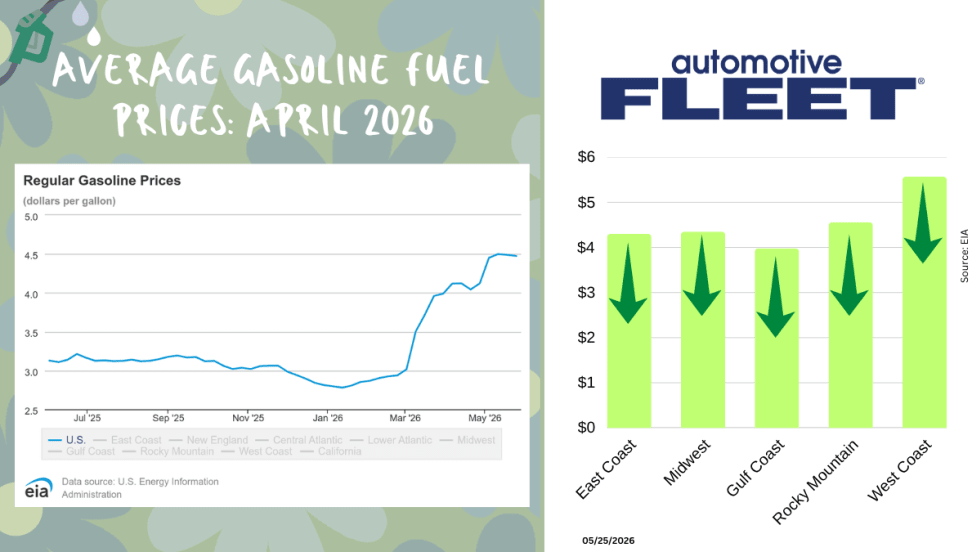
May Fuel Update: All Regions Experience Declines
Gas prices are finally easing in much of the country, but experts warn global tensions could quickly reverse the trend as the national average remains well above last month’s levels.
Read More →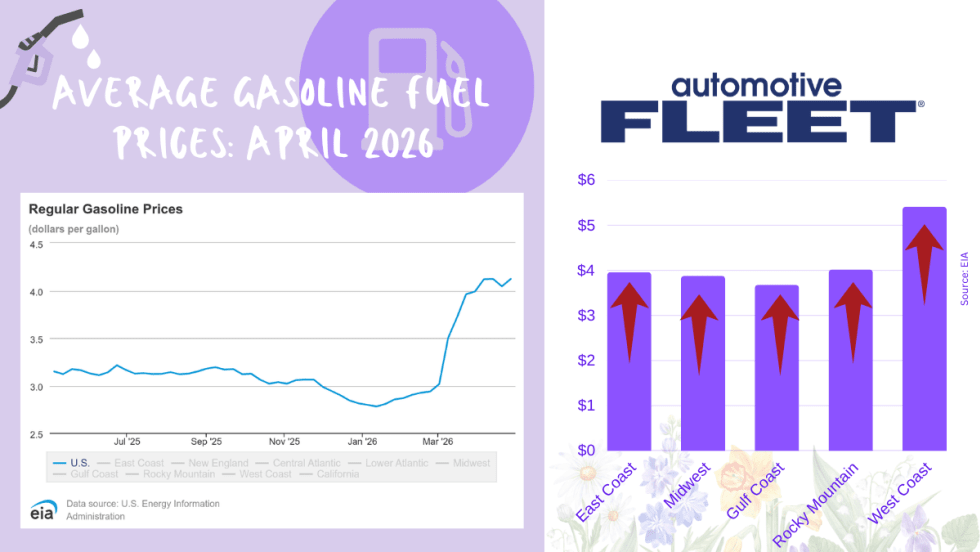
April Fuel Update: Prices Climb Above $4 as Spring Surge Accelerates
National average jumps to $4.04 per gallon, up sharply from last year, with West Coast prices topping $5 and further increases expected amid rising oil tensions.
Read More →
Tips from Fleet Managers on Saving Fuel Costs
Fleet leaders share practical strategies to reduce fuel spend through smarter policy, routing, and driver guidance.
Read More →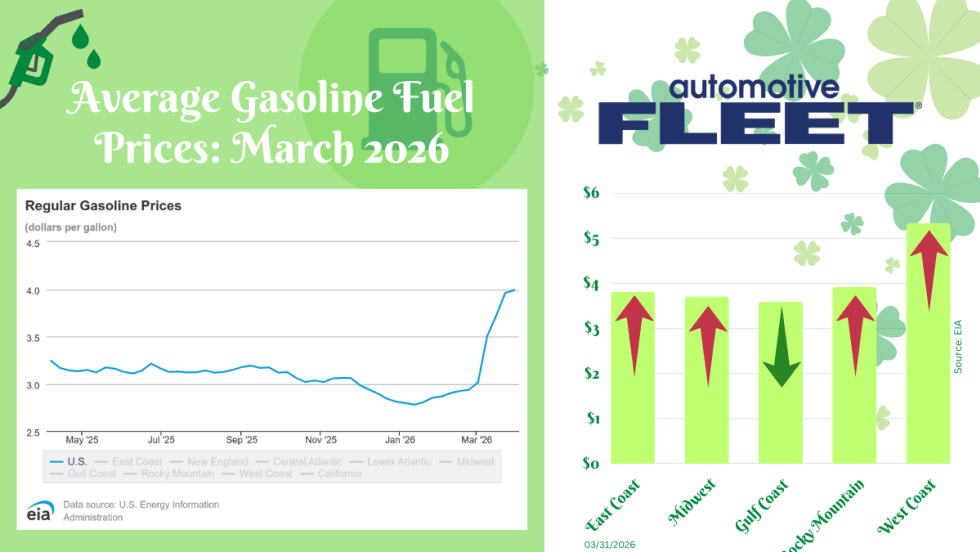
March Fuel Update: Prices Settle With a $4 Average
Fuel prices significantly slowed this week, but a $4 national average is still expected.
Read More →
Bob Adamsky on Fuel Volatility: “Don’t Panic — Have a Plan”
With oil prices rising again, AWP Safety’s fleet manager shares how to respond to rising fuel costs and how the right strategy can turn fuel spikes into cost-saving opportunities.
Read More →
Oil Market Turbulence Is Complicating Fleet Cost Planning
Rapid swings in crude oil prices driven by the conflict in the Middle East could create longer-term cost pressures for fleets, affecting fuel prices, supply chains, and vehicle strategy, says NTEA’s Andrew Wrobel.
Read More →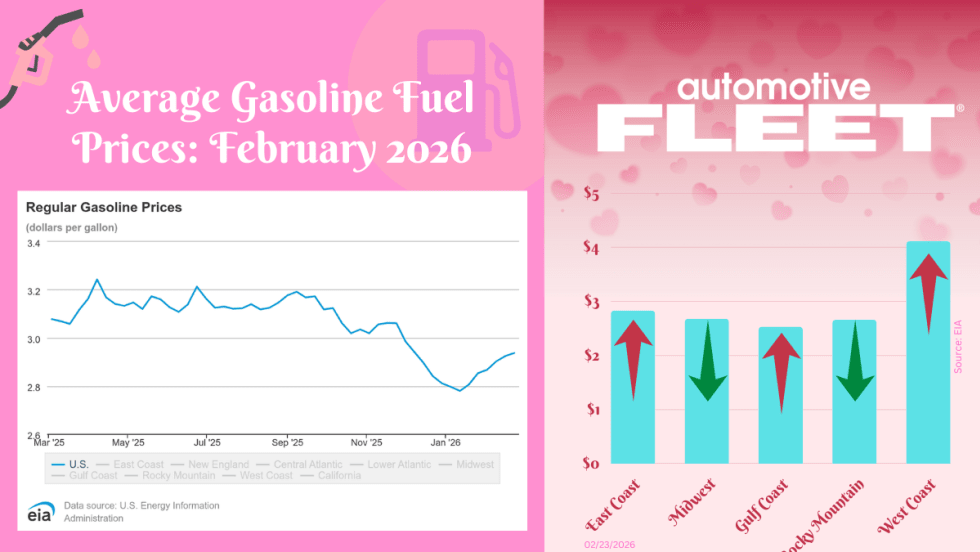
February Fuel Update: Prices Inch Higher for Third Week in a Row
The final February fuel update reveals prices continuing to inch higher for the third week in a row.
Read More →
The 2026 Fuel Economy Guide: Updated Cost and Efficiency Benchmarks for Fleets
Fleet managers can use the DOE’s 2026 Fuel Economy Guide to benchmark MPG across powertrain types using side-by-side vehicle ratings and compare new model-year options.
Read More →