





Related News:
Male Drivers Far More Likely than Female Drivers to Die in a Crash
Minivans Don’t Make the Grade When It Comes to Rear-Seat Safety
The IIHS tested the Chrysler Pacifica, Kia Carnival, Toyota Sienna, and the Honda Odyssey minivans and none of the four vans earned an acceptable safety rating in the crash test.
September 22, 2023
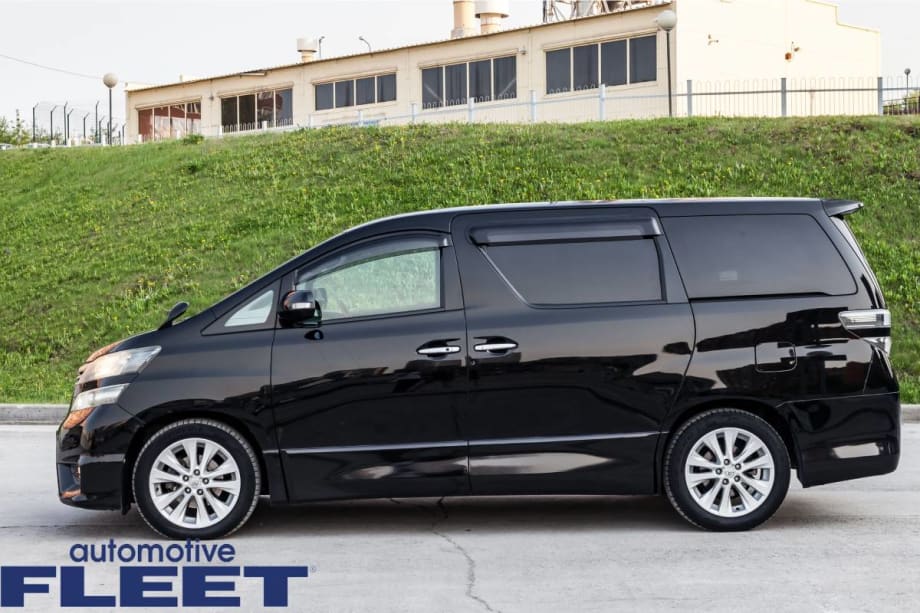
IIHS launched the updated moderate overlap front test last year after research showed that in newer vehicles the risk of a fatal injury is now higher for belted occupants in the second row than for those in front
Photo: Canva/Bobit
3 min to read
According to a report from the Insurance Institute for Highway Safety (IIHS) released Sept. 19, none of the four minivans tested earns an acceptable or good rating in the updated moderate overlap front crash test, which now emphasizes back seat safety.
The Chrysler Pacifica, Kia Carnival, and Toyota Sienna are rated marginal, while the Honda Odyssey is rated poor.
Aside from the Sienna, all vehicles also lacked seat belt reminders for the second-row seats, as IIHS highlighted in February.
“Back seat safety is important for all vehicles, but it’s especially vital for those, like minivans, that customers are choosing specifically to transport their families,” said IIHS President David Harkey in a recent news release. “It’s disappointing that automakers haven’t acted faster to apply the best available technology to the second row in this vehicle class.”
IIHS launched the updated moderate overlap front test last year after research showed that in newer vehicles the risk of a fatal injury is now higher for belted occupants in the second row than for those in front.
This is not because the second row has become less safe. Rather, the front seat has become safer because of improved airbags and advanced seat belts that are rarely available in the back.
Even with these developments, the back seat remains the safest place for children, who can be injured by an inflating front airbag, and the rating does not apply to children secured properly in child safety seats.
In the updated test, a second dummy is positioned in the second row behind the driver. The driver dummy is the size of an average adult man. The rear dummy is the size of a small woman or 12-year-old child. IIHS researchers also developed new metrics that focus on the injuries most frequently seen in backseat passengers.
For a vehicle to earn a good rating, there can’t be an excessive risk of injury to the head, neck, chest, or thigh, as recorded by the second-row dummy. The dummy should remain correctly positioned during the crash without “submarining,” or sliding forward beneath the lap belt, which increases the risk of abdominal injuries.
The head should also remain a safe distance from the front seatback and the rest of the vehicle interior, and the shoulder belt should remain on the shoulder, where it is most effective.
A pressure sensor on the rear dummy’s torso is used to check the shoulder belt position during the crash.
As in the original test, the structure of the occupant compartment must maintain adequate survival space for the driver, and measurements taken from the driver dummy shouldn’t show an excessive risk of injuries.
All four minivans provide good protection in the front seat. But each is plagued by multiple issues when it comes to the second row.
“The restraint systems in all four vehicles leave the second-row occupant vulnerable to chest injuries, either because of excessive belt forces or poor belt-positioning,” said Jessica Jermakian, IIHS vice president of vehicle research. “That’s concerning because those injuries can be life-threatening.”
Of the four vehicles, only the marginal-rated Sienna is equipped with belt pretensioners and force limiters, technologies designed to reduce belt forces. However, the rear dummy submarined beneath the lap belt, and the shoulder belt migrated off the shoulder toward the dummy’s neck during the test.
In the two other marginal vehicles, the Carnival and Pacifica, the seat belt exerted too much force on the dummy’s chest. The side curtain airbag of the Pacifica also did not deploy during the test.
The forces on the rear dummy’s neck were within reasonable limits in the Pacifica and Sienna but substantially higher in the Carnival, increasing the chances of a head or neck injury.
In the Odyssey, the forces on the head and neck were higher still, and the crash video demonstrated that the rear seat belt allowed the dummy’s head to come too close to the front seatback, which also increased the risk of head injuries.
More Safety

Sponsored•October 1, 2026
Fleet Manager’s Ultimate Playbook: Navigating the New Standard in OEM Connectivity
Rising operating costs, driver safety concerns, and unplanned downtime are putting unprecedented pressure on modern fleets. Discover how fleet managers use embedded OEM connectivity and real-time vehicle data to cut TCO, prevent downtime, and protect drivers without aftermarket telematics hardware.
Read More →
From Driver Well-Being to EV Charging | AF News Recap
Mental health belongs in the fleet safety conversation. This week, we’re looking at five ways fleets can support employee well-being before a crisis, plus Holman’s expansion in Mexico, new one-day Fleet Forward passes, and why EV charging demand is outpacing infrastructure growth.
Read More →
Nexar-Nauto Merger Aims to Give Fleets Better Safety Intelligence Through Larger Driving Dataset
Stefan Heck tells Automotive Fleet that combining more than 10 billion miles of driving history with Nexar's AI models will give fleets deeper insights into driver risk and roadway conditions than either company could provide independently.
Read More →
Don't Wait for a Crisis: 5 Ways to Build Mental Health Into Your Fleet Safety Program
For Suicide Prevention Month, fleet and safety leaders have an opportunity to put mental health where it belongs: at the center of workplace safety.
Read More →
How Camera Data Can Strengthen a Fleet’s Insurance Renewal
Insights from a commercial insurance carrier and a broker show how fleets can turn video telematic data, driver coaching, and improved claims results into a stronger case at insurance renewal.
Read More →
The Safest Fleets Aren’t the Ones with the Most Technology
You’ve made the telematics investment. Here’s how to capture the other half of its value and build the safest fleet on the road.
Read More →
Sponsored•August 7, 2026
Hidden in Plain Sight: Fleet Compliance Risks
Fleet compliance isn't just about having policies — it's about consistently enforcing them. This practical guide reveals six hidden compliance risks common in public sector and shared fleet operations and outlines proven strategies to improve visibility, accountability, and audit readiness
Read More →
NETS Sets 2026 Fleet Safety Benchmark Conference for Indianapolis
The Sept. 15–17 program will feature fleet benchmarking data, case studies, emerging technologies, and implementation strategies while running alongside the NSC Safety Congress & Expo.
Read More →
Off-the-Job Crashes Account for 43% of Employers’ $61.7 Billion Crash Burden
NETS quantifies costs dispersed across fleet, risk, HR, and other departments while providing new per-crash benchmarks for employers.
Read More →
Ram Recalls More Than 1.27 Million 1500 Pickups for Seat Belt Anchor Issue
The recall affects certain 2019-2026 Ram 1500 pickups that may have improperly attached second-row seat belt buckle anchors.
Read More →