




Luxury Car TCO Dips While SUV Segments Edge Up
Depreciation drives segment divergence in Q1 fleet costs.

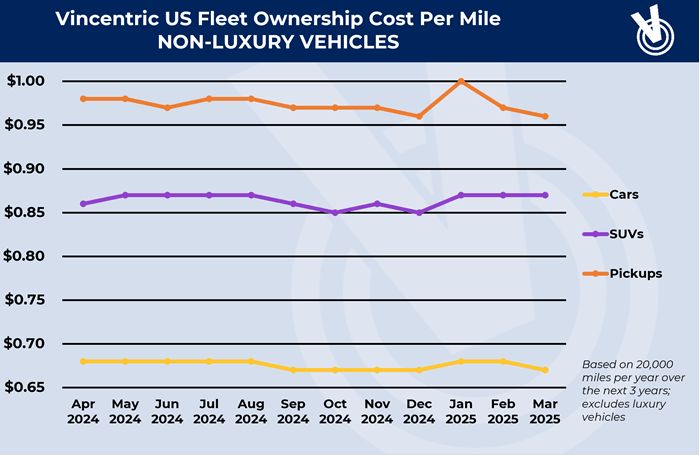
Despite fluctuations in financing and fuel trends, the passenger car segment shows consistent cost stability dating back to mid-2024.
Source: Vincentric
Welcome to the latest installment of Fleet Data Depot, which provides snapshots of information, trends, and analysis relevant to the fleet market.
The total cost of ownership (TCO) experts at Vincentric deliver another quarterly update on ownership costs for fleets. These fleet cost-per-mile calculations are for the first quarter of 2025.
This analysis is based on vehicles driven 20,000 miles per year for three years. As usual, Vincentric calculates its standard eight cost elements: depreciation, financing, fees and taxes, fuel, insurance, maintenance, opportunity cost, and repairs.
In the latest snapshot, TCO for fleet vehicles overall remained mostly steady from January to April 2025, with a few notable shifts, particularly among luxury car and SUV categories.
Luxury Car TCO Sees Relief
Among all segments, luxury cars posted the most significant decrease in ownership costs, with cost per mile dropping about 2.3% quarter-over-quarter.
While Vincentric notes that a base finance rate drop (from 6.75% to 6.31%) had a broad impact across all segments, it notably affected luxury cars more due to their higher up-front costs.
This dip reverses a steady incline seen through most of 2024 and brings luxury cars to their lowest cost-per-mile average since November 2023. In the past year, costs slid from above $1.30 last April to below $1.26 today.
SUV and Pickup Segments Tick Up
By contrast, the SUV and luxury SUV segments saw incremental cost gains of around 2.3% and 0.8%, respectively. According to Vincentric, both segments experienced 3% to 4% increases in depreciation, which offset gains made from reduced financing costs.
Non-luxury pickups, meanwhile, remained the highest-cost segment overall, climbing back to the $1.00-per-mile mark in January before receding slightly. Still, they continue to trend above passenger cars and SUVs in long-term ownership costs.
Flatline for Passenger Cars
The passenger car segment held steady with no significant cost movement in the quarter. Despite fluctuations in financing and fuel trends, the segment shows consistent CPM stability dating back to mid-2024.
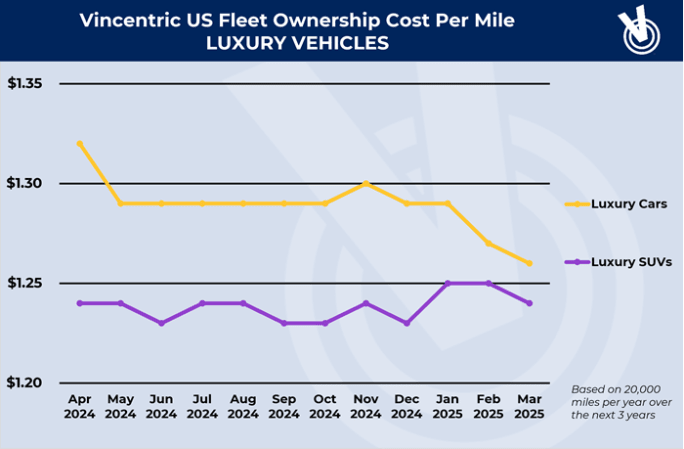
Among all segments, luxury cars posted the most significant decrease in ownership costs, with cost per mile dropping about 2.3% quarter-over-quarter.
Source: Vincentric
Steady Costs After Spikes
Following cost spikes in early 2024 and depreciation-driven increases in Q4, this quarter's relative calm aligns with Vincentric’s past trendline: cost fluctuations now appear more modest and tied to individual vehicle classes rather than systemic inflation or external shocks.
More Vehicle Research

Crash Tests, Catalytic Converter Theft & Fleet Safety | AF News Recap
A stolen catalytic converter can cost a fleet far more than the replacement part. This week, we're exploring how to reduce theft-related risk, what fleet managers learned from live IIHS crash testing, the 2027 Jeep Compass's new safety features, and why supporting original industry reporting matters.
Read More →
2027 Jeep Compass Adds Standard Driver-Assistance Features, Starts at $31,985
The 2027 Jeep Compass adds standard adaptive cruise control across the lineup, along with additional technology and equipment options on select trims.
Read More →
2027 Subaru Outback Adds Base Trim, Lowers Pricing Across Lineup
The 2027 Outback starts at $32,995, with price reductions on several trims and expanded availability of hands-free driver-assistance technology.
Read More →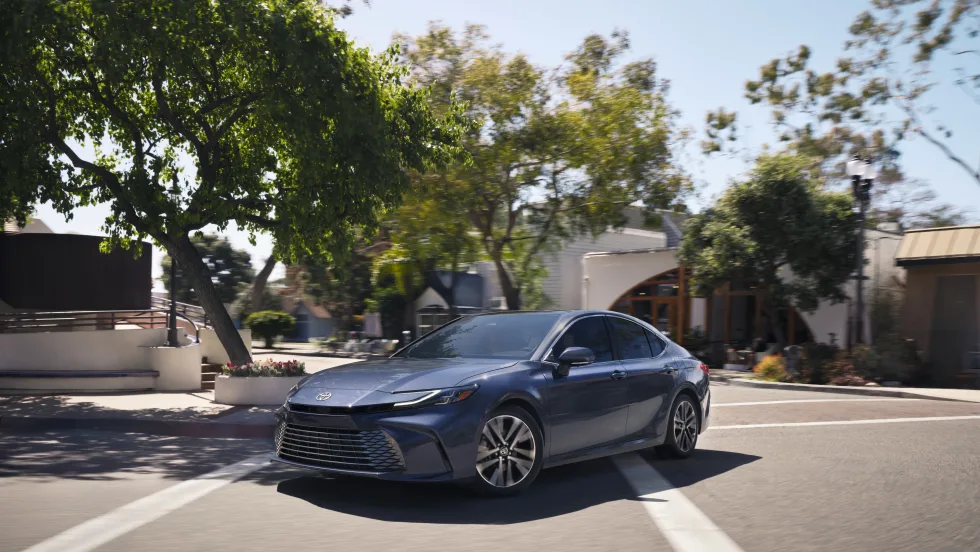
2027 Toyota Camry Offers Hybrid Powertrain Across Five Grades
The 2027 Toyota Camry is a carryover with new pricing.
Read More →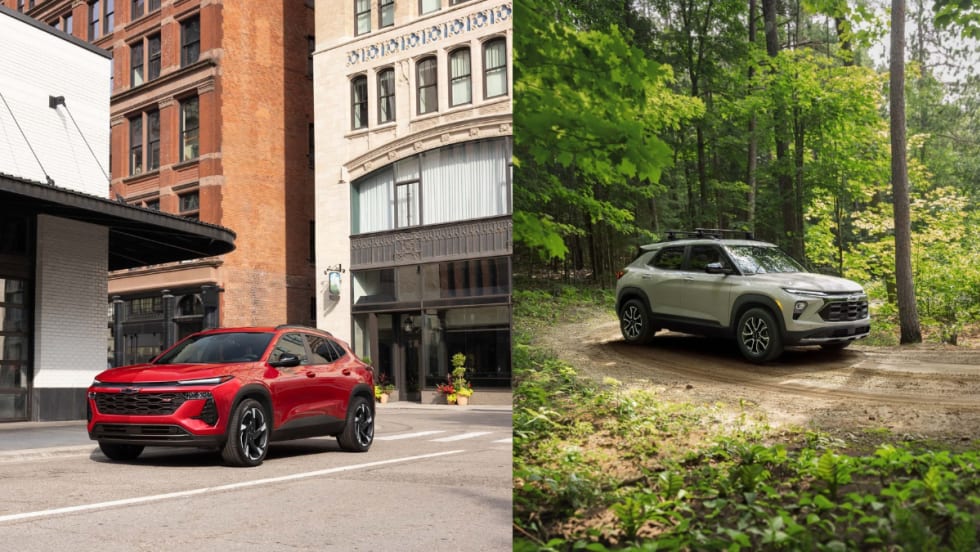
Chevrolet Updates 2027 Trax and Trailblazer with More Standard Safety Features
Chevrolet is updating two of its smallest SUVs with added driver-assistance technology, redesigned interiors, and revised trim options. The changes could add more safety equipment as standard for commercial fleets, while a new Trailblazer configuration adds another all-wheel-drive option.
Read More →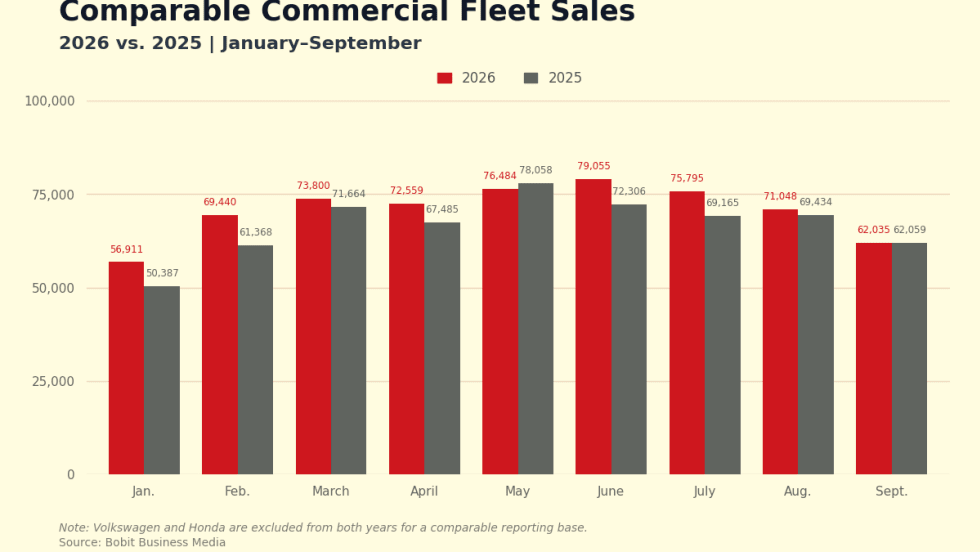
Commercial Fleet Sales Rise 5.8% Through September 2026
September commercial fleet sales were essentially unchanged from a year earlier, slowing year-to-date growth while keeping volume ahead of 2025.
Read More →
Hall of Fame Inductee: John Dmochowsky
The longtime Mondelēz International fleet executive joins the Automotive Fleet Hall of Fame.
Read More →
Hall of Fame Inductee: Lee Miller
After more than four decades at Boehringer Ingelheim, Lee Miller leaves a legacy built on fleet expertise.
Read More →
Hall of Fame Inductee: Mark F. Petersen
From managing fleets of thousands of vehicles to advancing safety and mentoring fellow professionals, Mark F. Petersen made his mark across both the corporate and supplier sides of fleet.
Read More →
When Charger Downtime Becomes a Fleet Availability Problem
As EV deployments move beyond pilot programs, charger reliability can directly affect vehicle readiness, driver productivity and route scheduling.
Read More →