




LSU Researchers Focus on Improving Ethanol Efficiency
BATON ROUGE, La. --– With the help of federal funding, researchers at Louisiana State University are embarking on a project aimed at making ethanol more efficient.
BATON ROUGE, La. --– With the help of federal funding, researchers at Louisiana State University are embarking on a project aimed at making ethanol more efficient. James Spivey, McLaurin Shivers professor of chemical engineering at LSU, and Challa Kumar, group leader of nanofabrication at LSU’s Center for Advanced Microstructures and Devices (CAMD), are working with partners from across the nation to make ethanol fuel an efficient reality. Together with Clemson University and Oak Ridge National Laboratories, the researchers received $2.9 million in funding from the U.S. Department of Energy and its partner, Conoco-Phillips. "We're working with our project partners to produce ethanol from a coal-derived syngas, a mixture of primarily carbon monoxide and hydrogen," Spivey said. "The United States has tremendous reserves of coal, but converting it to affordable, clean fuels is a challenge --– one that we are addressing in this DOE-funded project. Because ethanol is a liquid, it can be more easily distributed to the end user than gaseous hydrogen. It can be converted into a hydrogen-rich gas at the point of use, such as a fuel cell. The net result is clean energy produced from a domestic resource." James Goodwin, chairman of the chemical and biomolecular engineering department at Clemson, and David Bruce, associate professor of chemical and biomolecular engineering at Clemson, are using advanced computational methods to identify new catalysts and test them with techniques such as isotopic labeling. LSU doctoral students Femi Egbebi and Nachal Subramanian are carrying out research with Spivey in the preparation and testing of these catalysts, determining which ones produce the desired results. Steve Overbury and Viviane Schwarz at the Oak Ridge National Laboratory will test new catalysts with their specialized equipment, while Joe Allison and Vis Viswanathan at Conoco-Phillips will analyze the costs and commercial potential of the overall process. Kumar is in charge of designing and synthesizing novel nano-structured catalysts using wet-chemical synthesis capabilities available at CAMD. Kumar will also use synchrotron radiation-based X-ray absorption spectroscopy tools. Now in development at CAMD, nanomaterials with unique core-shell architecture are expected to enhance ethanol production significantly. "It is CAMD's vision to be in the forefront of development of nanomaterials for a broad range of applications, ranging from catalysis to medical diagnosis and therapy," said Kumar. "The DOE is definitely interested in seeing a commercial project come out of this," added Spivey. "Our project team is committed to making this happen."
More Fuel

Bob Adamsky on Fuel Volatility: "Don't Panic, Have a Plan."
When it comes to up and down fuel prices, Adamsky has a message for fleets: “Don’t panic.”
Read More →
How Fleets Can Gain Control of Non-Fuel Spend
Fuel often gets the spotlight, but non-fuel expenses can have a major impact on fleet costs. Ramel Lindsay of U.S. Bank Voyager discusses how fleets can gain better visibility and control over these often-overlooked expenditures.
Read More →
Fuel is Just the Start: How Middle East Tensions are Driving Up Fleet Maintenance Costs
The Middle East conflict is doing more than pushing up fuel prices. It’s also raising the cost of key maintenance products your fleet depends on, from motor oil to tires to windshield wipers. Here’s what you need to know about this budget-busting situation.
Read More →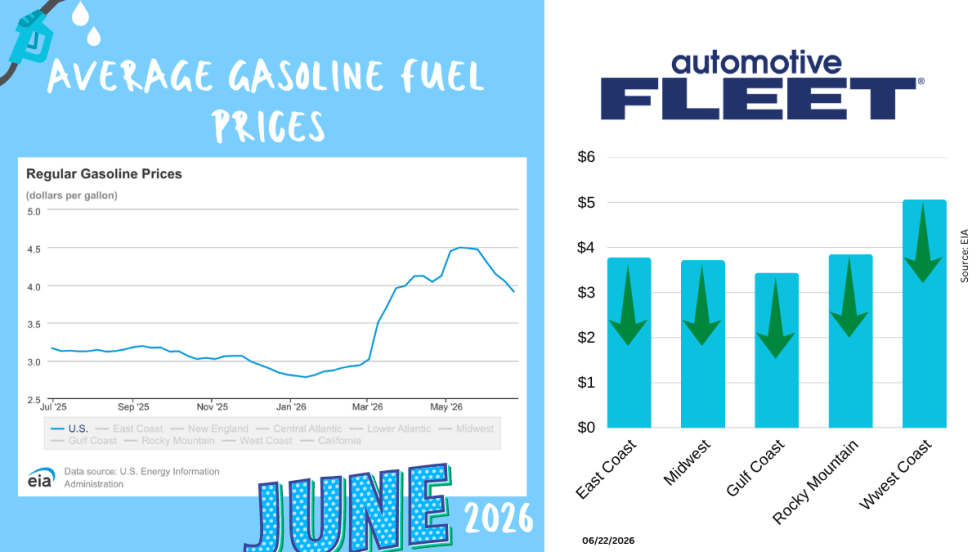
June Fuel Update: Prices Fall Below $4
Drivers are finally getting some relief at the pump. The national average gas price has dropped below $4 a gallon for the first time in months, with prices falling in 47 states as oil markets react to developments in U.S.-Iran negotiations.
Read More →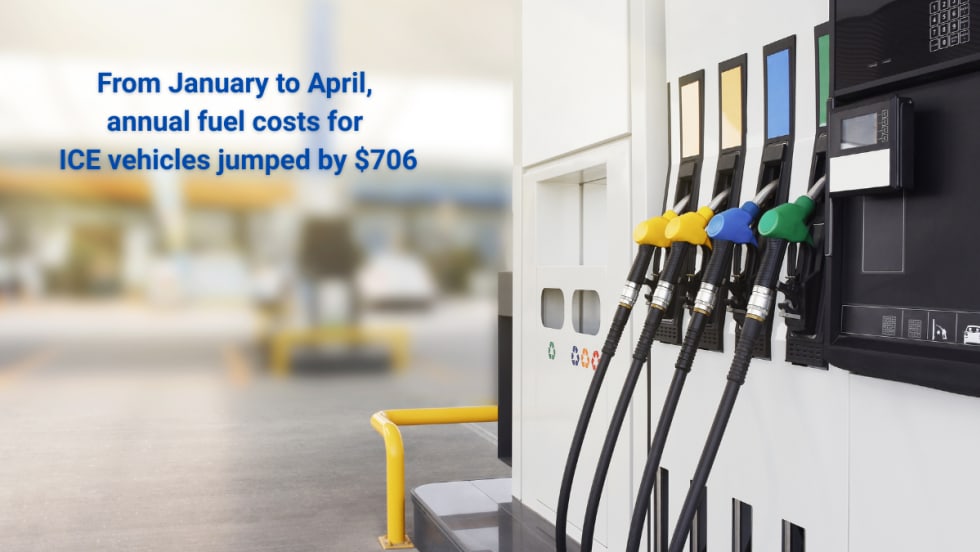
Study: How 2026's Gas Price Hikes Affect Different Vehicle Types
New data from iSeeCars reveals how rising fuel costs have affected different vehicle segments as gasoline prices climbed nearly 46% over the past four months.
Read More →
Are You Tracking Your Fleet's True Total Cost of Ownership?
Bobit Business Media surveyed 190 fleet professionals and found that while most fleets are tracking costs, fragmented systems and data gaps are keeping true TCO visibility out of reach. With rising pressure to control spend in an increasingly volatile environment, the gap between what fleets think they know and what the data actually shows is wider than you might expect. See how your peers are managing costs today and where the industry still has room to improve.
Read More →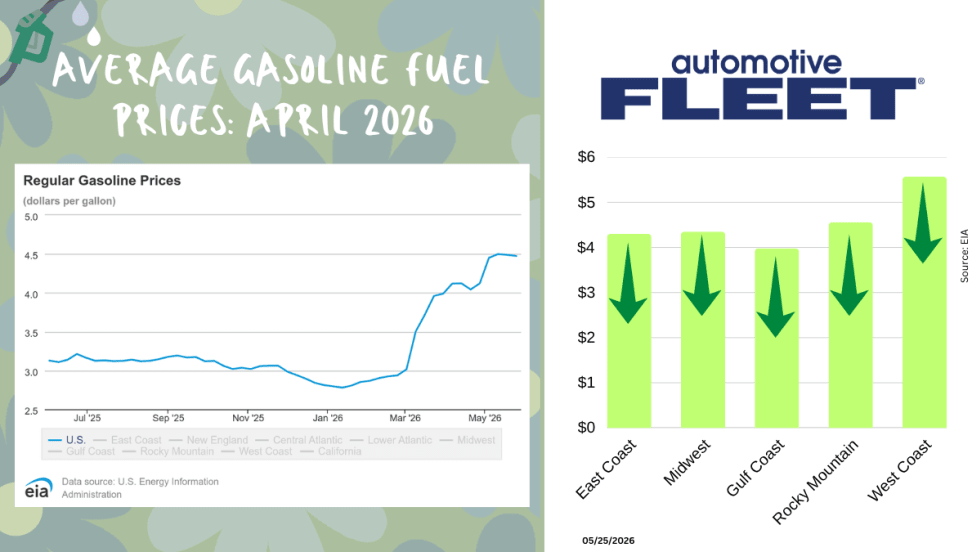
May Fuel Update: All Regions Experience Declines
Gas prices are finally easing in much of the country, but experts warn global tensions could quickly reverse the trend as the national average remains well above last month’s levels.
Read More →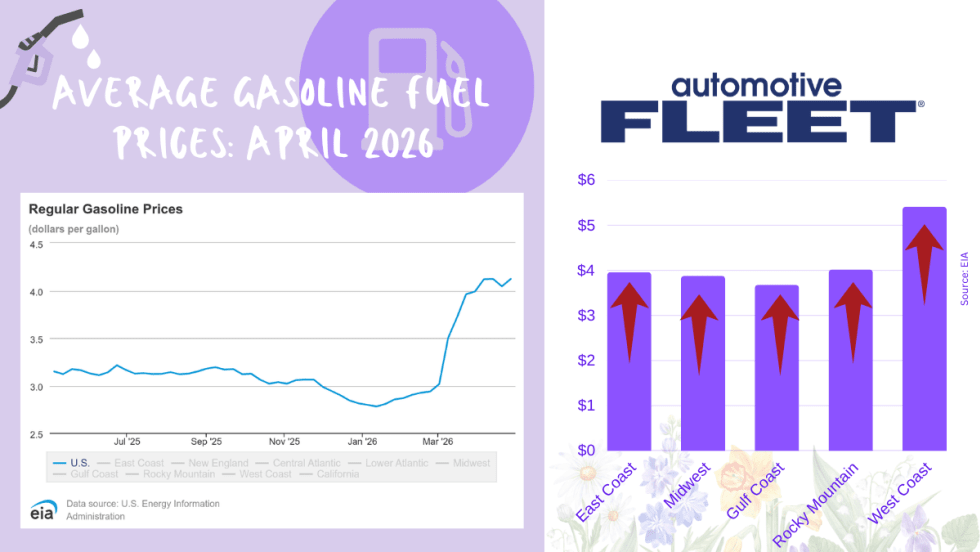
April Fuel Update: Prices Climb Above $4 as Spring Surge Accelerates
National average jumps to $4.04 per gallon, up sharply from last year, with West Coast prices topping $5 and further increases expected amid rising oil tensions.
Read More →
Tips from Fleet Managers on Saving Fuel Costs
Fleet leaders share practical strategies to reduce fuel spend through smarter policy, routing, and driver guidance.
Read More →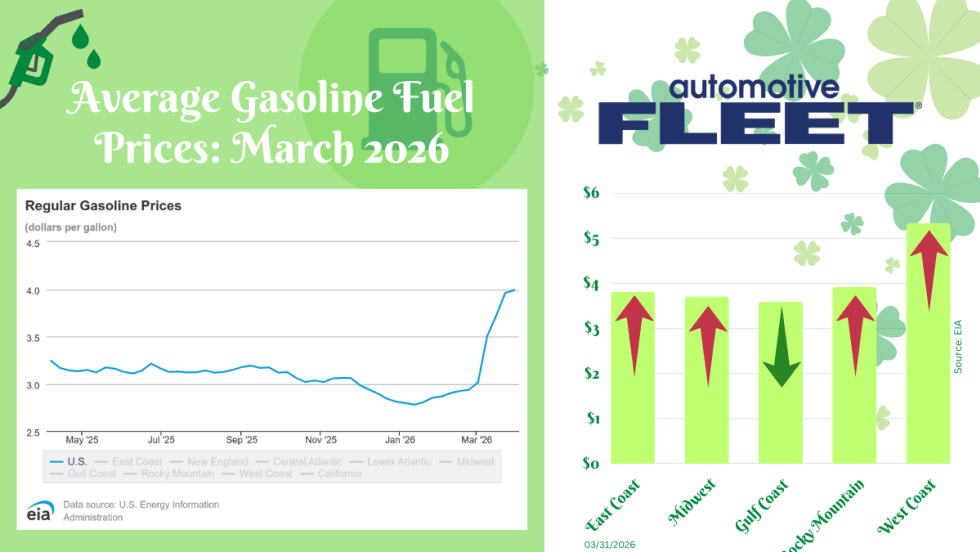
March Fuel Update: Prices Settle With a $4 Average
Fuel prices significantly slowed this week, but a $4 national average is still expected.
Read More →