




Louisiana AG Sues State Farm Over Repair Practices
The lawsuit accuses the insurer of forcing unsafe auto repairs and violating state laws governing trade practices.
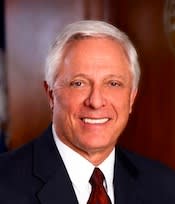
CALDWELL
CALDWELL
Louisiana Attorney General Buddy Caldwell has filed a lawsuit against State Farm, alleging the nationwide insurer has engaged in a pattern of unfair and fraudulent business practices aimed at controlling the auto repair industry and forcing unsafe vehicle repairs for policyholders.
“State Farm has created a culture of unsafe business practices in which consumer vehicle repairs are performed with cost-savings as the primary goal rather than safety and reliability,” Caldwell said in a released statement.
When contacted, State Farm Public Affairs Director Phil Supple said the company is still in the process of reviewing the lawsuit’s allegations.
“The description in this lawsuit is not in line with State Farm's mission to serve the needs of its customers, and our long, proud history of achievements in advancing vehicle safety,” Supple said via email. “We are reviewing the lawsuit and will have more to share soon.”
State Farm holds the largest share of auto insurance policies in Louisiana. In 2012, the company wrote one-third of the state’s private passenger, commercial auto liability and physical damage policies, according to the lawsuit.
Caldwell’s office filed the lawsuit in Louisiana’s 19th Judicial District Court on Aug. 19. The suit – a petition for injunctive relief and restitution – alleges that State Farm violated Louisiana’s Unfair Trade Practices Act and Monopolies Law. The attorney general’s office accuses the insurance company of using scare tactics to steer Louisiana policyholders to State Farm’s preferred repair shops and forcing those shops to perform vehicle repairs cheaply and quickly, rather than in accordance with safety and OEM standards.
The lawsuit also alleges that State Farm’s direct-repair shops have signed agreements requiring them to comply with the insurance company’s standards for repair. State Farm dictates how long repairs should take, what types of repairs are made, and the quality of replacement parts. As a result, the lawsuit contends, repairs are often completed with substandard parts without the policyholder’s consent.
“In some cases, we’ve found that these parts are nothing more than used junk yard parts. In others, we’ve found them to be foreign knock-off parts of questionable quality,” Caldwell said. “Auto repair is not an industry where you can cut corners to save a little money. It could be a matter of life and death.”
In particular, the lawsuit raises safety concerns over the use of non-OEM parts in the repair of supplemental restraint systems as well as the use of non-OEM paint procedures.
According to the lawsuit, “cost-cutting measures include methods which result in airbag deployment sensors being painted over or otherwise compromised during the painting process.”
Additionally, the suit states that repair facilities are expected to limit their use of supplemental damage estimates whenever possible. If a technician spots a particular repair need after the initial estimate, because the damage wasn’t visually apparent until the vehicle’s disassembly, the repair facility might be pressured to forgo the repair, according to the suit.
Caldwell said his office’s suit “aims to change the culture of unsafe business practices led by State Farm in the auto insurance and repair industry.”
More Safety

Top 50 Executive Fleets
It is that time of year again! Time for the 2026 list of the Top 50 Executive Fleets, presented by Automotive Fleet and Volvo as part of its annual Fleet 500. Download now to see this year's list of companies!
Read More →
How Better Visibility Cut Speeding Violations by 48%
Fleet leaders don't need more data, they need clearer visibility into what the data is saying. This case study explores how one utility replaced speeding-event counts with a single metric — miles driven in violation — to strengthen safety and significantly reduce speeding violations.
Read More →
Operation Safe Driver Week: Why the Industry's Oldest Safety Campaign Still Matters to Fleets
A look at how a 2007 enforcement initiative became one of the most consequential weeks on the fleet safety calendar, and what it means for your drivers in 2026.
Read More →
Nexar-Nauto Merger Aims to Give Fleets Better Safety Intelligence Through Larger Driving Dataset
Stefan Heck tells Automotive Fleet that combining more than 10 billion miles of driving history with Nexar's AI models will give fleets deeper insights into driver risk and roadway conditions than either company could provide independently.
Read More →
From Silos to Solutions: Relationship Management for Safer Fleets
From telematics adoption and driver accountability to policy consistency and risk mitigation, this episode breaks down what it really takes to build a safer fleet culture without slowing business down.
Read More →
IIHS Launches First Commercial Vehicle Safety Evaluations
The Insurance Institute for Highway Safety has begun evaluating heavy-duty pickups and cargo vans for driver protection. Which models earned top marks?
Read More →
Reducing Risk by Eliminating Phone Use Behind the Wheel
Hosted with the cofounder of Lifesaver Mobile, this episode addresses phone use behind the wheel and how to design a driving environment that actually helps prevents accidents.
Read More →
Cameras, Safety and Insurance: From Reactive Claims to Real-Time Prevention (Part 2 of 2)
Part Two: Commercial auto remains one of the most challenging and costly lines of coverage for fleet operators and insurers alike. Continue learning more about how to effectively address these issues from Onur Aksan, Enterprise Business Development Executive, Geotab
Read More →
How 5-Second Telematics Data Is Changing Fleet Safety
This episode connects with Steve Santostasi of Ford Pro and covers how a few seconds of data can make a difference in fleet safety.
Read More →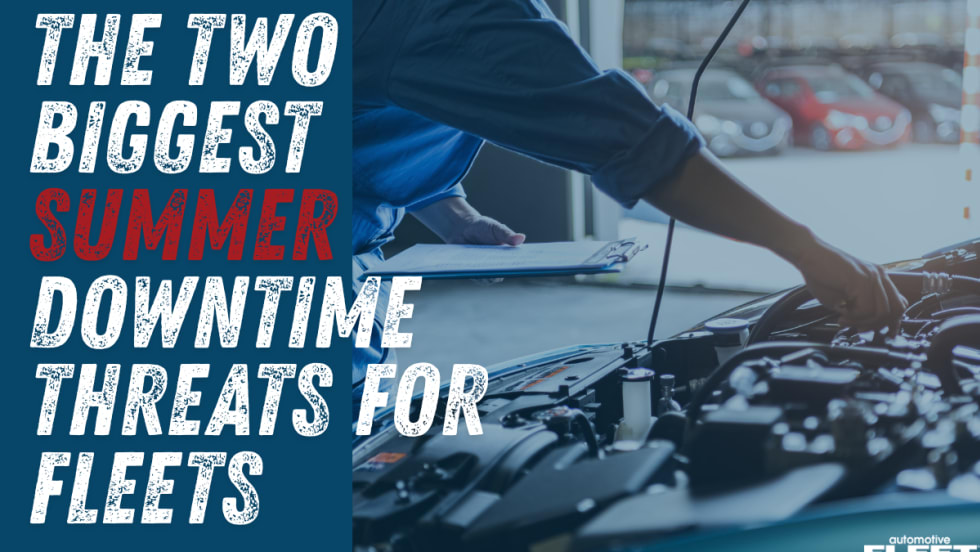
The Two Biggest Summer Downtime Threats for Fleets
A conversation with a maintenance expert reveals the two most common summer maintenance pains and how to prevent them.
Read More →