




London Mayor Sets Out Ambitious Plan For Road User Charging, Toxic Air Reduction
The Mayor of London, Sadiq Khan, has set out a far-reaching plan to tackle dirty air in the city. It includes replacing existing entry charges to the capital city with a pay-per-mile charge based on vehicle pollution. Announced January 18, 2022, the report says that only a truly ambitious program to tackle pollution and congestion will meet the city’s ambition to be net-zero by 2030.
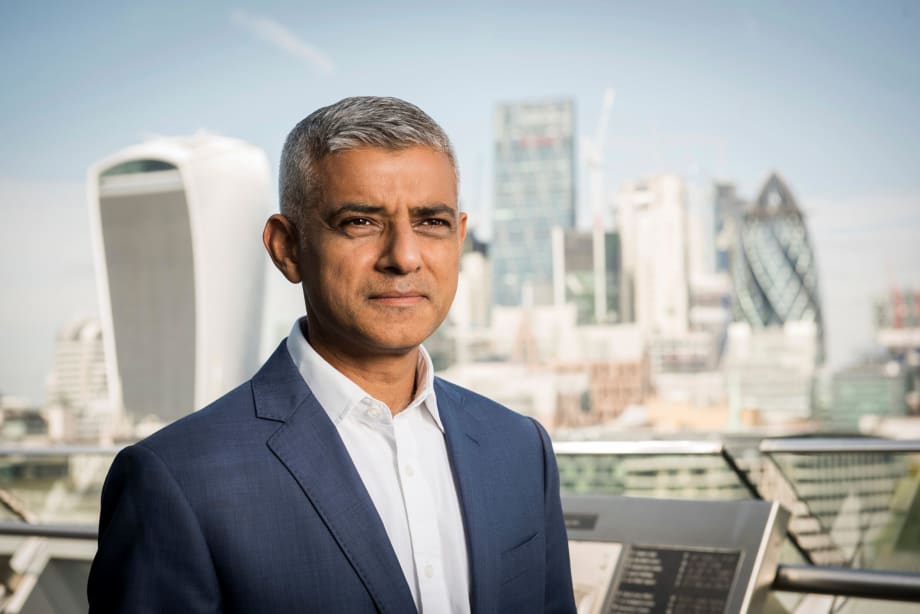
London Mayor Sadiq Khan takes bold actions to reach net zero by 2030
Credit: Greater London Authority
The Mayor of London, Sadiq Khan, has set out a far-reaching plan to tackle dirty air in the city. It includes replacing existing entry charges to the capital city with a pay-per-mile charge based on vehicle pollution.
Announced January 18, 2022, the report commissioned by the London Mayor and compiled by specialist energy consultancy Element Energy, says that only a truly ambitious program to tackle pollution and congestion will meet the city’s ambition to be net-zero by 2030.
Among its recommendations is a new kind of road user charging system that would see all existing road user charges abolished – such as the Congestion Charge and the clean air Ultra Low Emission Zone - and replace them with “a simple and fair scheme” where drivers pay per mile, with different rates depending on the vehicle’s level of pollution, the level of congestion in the area and access to public transport.
The report brings to a head the increasing requirement for road user charging, something that many believe needs to happen in order to ensure Governmental revenue is recouped from the loss of duty on gasoline sales as more electric vehicles come onto the market. It will also make it a requirement that fleets needing access to London plan for vehicles that will be toll-free.
“This new report must act as a stark wake-up call for the Government on the need to provide much greater support to reduce carbon emissions in London. It’s clear the scale of the challenge means we can’t do everything alone," Mayor Khan said, announcing the new report.
“But I’m not willing to stand by and wait when there’s more we can do in London that could make a big difference. We simply don’t have time to waste. The climate emergency means we only have a small window of opportunity left to reduce carbon emissions to help save the planet, and, despite the world-leading progress we have made over the last few years, there is still far too much toxic air pollution permanently damaging the lungs of young Londoners."
While road user charging may not be ready until 2030, the Mayor said bolder action was required now to cut pollution and congestion, pointing out that the pandemic had seen driving into London increase, leading to gridlocked roads and higher levels of air toxicity at a cost of £5.1bn.
Among the options under consideration are:
Extending the Ultra Low Emission Zone (ULEZ) even further to tackle more of the dirtiest vehicles: extending the current zone beyond the north and south circular roads to cover the whole of Greater London, using the current charge level and emissions standards.
Modifying the ULEZ to make it even more impactful in reducing emissions: building on the existing scheme by extending it to cover the whole of Greater London and adding a small clean air charge for all but the cleanest vehicles.
A small clean air charge: a low-level daily charge across all of Greater London for all but the cleanest vehicles to nudge behavior and reduce the number of short journeys by car
Introducing a Greater London boundary charge, which would charge a small fee to non-London registered vehicles entering Greater London, responding to the increase in cars from outside London traveling into the city seen in recent years.
Mayor Khan said that, subject to consultation and feasibility, the chosen scheme would be implemented by May 2024.
Oliver Lord, UK head of Clean Cities Campaign, added: “This is one of the most significant announcements from any European city right now. No leader should declare a climate emergency and air pollution crisis and then skip the details, so I congratulate the Mayor and his team on this report. With these plans, the Mayor commits London to a growing momentum to phase out polluting cars. We now need all actors to play their part – the London boroughs and this Government included – so that climate talk becomes the climate walk.”
The report adds that traffic volumes must reduce by 27% within eight years and that ‘active travel’ - such as walking and cycling - must increase, along with greater use of public transport and higher levels of zero emission vehicles. Khan said that the city’s toxic air was contributing to 4000 premature deaths a year.
The UK Government has outlawed the sale of new petrol and diesel vehicles from 2030.
More Global Fleet
GeoFencing Adds to Your Truck Security Arsenal
Geofencing is a familiar fleet tool today, but its early adoption marked a major shift in vehicle tracking, route monitoring, and the debate over employee privacy.
Read More →
Holman Takes Full Ownership of ARIZA in Mexico
Holman is bringing its Mexican fleet management operation fully under its own brand after more than 30 years as a joint venture. The change gives multinational fleet customers a single Holman operation across the U.S., Canada, and Mexico.
Read More →
5 Tire Maintenance Tips to Help Prevent Work Truck Downtime
Regular tire checks can do more than extend tread life. These five maintenance practices can help work truck fleets catch problems early, reduce costs, and prevent downtime.
Read More →

Proven Ways to Reduce Work Truck Downtime
The age-old problem of downtime will always be a reality, but with new strategies at hand, fleets have more ways to keep trucks on the road longer.
Read More →


Cameras, Safety and Insurance: From Reactive Claims to Real-Time Prevention (Part 2 of 2)
Part Two: Commercial auto remains one of the most challenging and costly lines of coverage for fleet operators and insurers alike. Continue learning more about how to effectively address these issues from Onur Aksan, Enterprise Business Development Executive, Geotab
Read More →
Cameras, Safety and Insurance: From Reactive Claims to Real-time Prevention
Commercial auto remains one of the most challenging and costly lines of coverage for fleet operators and insurers alike. Learn more about how to effectively address these issues from Onur Aksan, Enterprise Business Development Executive, Geotab.
Read More →
Fleet Costs Are Rising: Here’s How Leaders Are Responding
Fleet leaders are under pressure to reduce costs, adapt to economic uncertainty, and make smarter decisions. See how peers across North America are responding with real data, proven strategies, and forward-looking insights. Download the 2026 Market Pulse Report to benchmark your strategy and uncover where you can gain an edge.
Read More →
Enterprise Fleet Management Surpasses 900,000 Vehicles in U.S. & Canada
Enterprise Mobility connects with mobility solutions around the globe
Read More →