




Kentucky Reworks Vehicle Safety Organization
FRANKFORT, KY --- Kentucky Vehicle Enforcement (KVE) will become a division of the Kentucky State Police under an executive order signed this week by Gov. Steve Beshear.
FRANKFORT, KY --- Kentucky Vehicle Enforcement (KVE) will become a division of the Kentucky State Police under an executive order signed this week by Gov. Steve Beshear. This returns KVE to its core mission while allowing the two agencies to combine law enforcement resources and cut costs.
Under the new division, KVE personnel will maintain their identity as the primary agents of driver and vehicle compliance and safety.
"Rigorous and focused commercial and vehicle enforcement is absolutely critical to the safety of our highways, the security of our homeland and the maintenance of our roads," said Gov. Beshear. "By folding KVE into our state police department, we're able to eliminate a layer of bureaucracy, and allow KVE to focus on vehicle and driver safety, and enforce compliance of vehicles operating in commerce."
The reorganization will allow the new division to expand hours of operation at weigh stations, in some cases doubling or tripling the hours these crucial checkpoints are open, Beshear said. Longer hours will increase the inspection and records checks of hazardous cargo, expand the use of radiological and nuclear material, and increase contact with operators and drivers.
The move also enhances critical security measures.
"The specialized training and enforcement capabilities of this agency provide an indispensable line of defense at our borders and on our roadways," said J. Michael Brown, secretary for the Justice and Public Safety Cabinet. "Since 9/11, the development of KVE into a publicly recognized branch of law enforcement has been steady and irreversible. The placement of the KVE function and officers under the umbrella of KSP will only serve to give KVE a permanent home within the law enforcement family."
"The many superb officers and personnel in KVE will continue to serve the commonwealth as they always have," said Rodney Brewer, Kentucky state police commissioner. "The agency will maintain its identity, rank-and-file officers will maintain their positions, uniforms and cars won’t change. What will change is the clarity of a renewed emphasis on their primary function and responsibility."
The reorganization is expected to save $750,000 to $1 million annually by eliminating top-level positions, reducing fuel costs, eliminating overhead costs of duplicative operations and programs, and centralizing offices and facilities. In addition, the increased operation of weigh stations is expected to bring in higher revenue, such as tax compliance, licensing and permits, and fines and fees.
More Safety
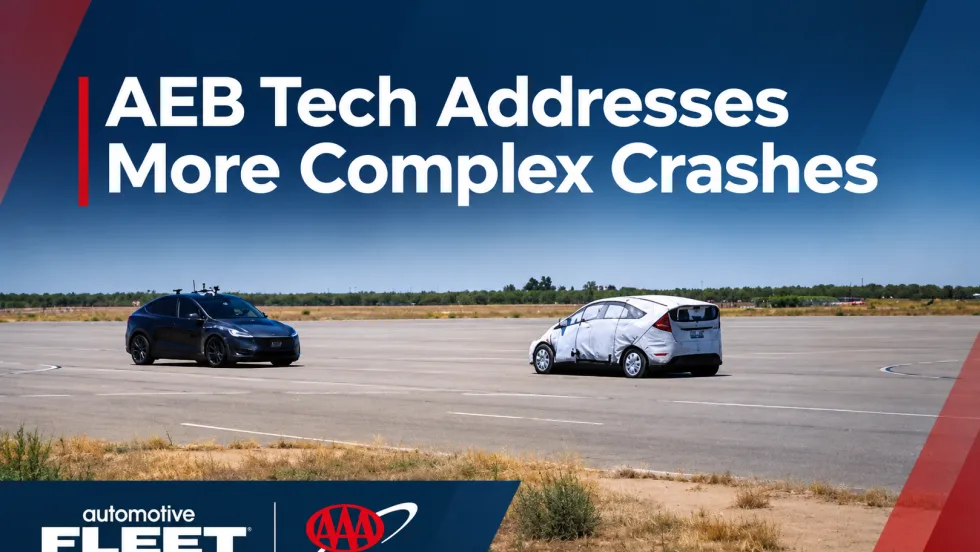
AAA Testing Finds Gaps in Intersection AEB Crash Prevention
Testing of four 2026 model-year vehicles found that automatic emergency braking prevented collisions in standardized intersection scenarios, but three vehicles failed to avoid crashes when another vehicle turned into their path.
Read More →
Which Fleet Types Have the Highest Severe Speeding Rates?
New research from SambaSafety finds significant differences in speeding rates across fleet industries, even as nearly 90% of surveyed fleets report using telematics.
Read More →
When a Cyberattack Hits Your Fleet: What Happens Next?
“You have two opportunities to test your plans: when you choose or when the threat actor chooses.” A cybersecurity expert reveals what fleet managers need to know before a cyberattack puts their operations at risk — and why the decisions made in the first moments can shape the entire recovery.
Read More →
Tips for Driving Safely on Halloween Night
This video features a reminder from the Connecticut Department of Transportation (DOT) and the Connecticut Police Chiefs Association, urging drivers to prioritize safety this Halloween.
Read More →
IIHS Crash Avoidance Tests Reveal Safety Gaps in Cargo Vans and Work Trucks
New IIHS crash avoidance ratings show uneven performance among cargo vans and heavy-duty pickups, with most struggling to avoid vehicle-to-vehicle collisions.
Read More →
What’s Next for Fleet? Safety, AI & Industry Recognition | AF News Recap
Could your company's culture be encouraging distracted driving? This week, we're exploring how workplace expectations affect driver safety, what AI, EVs, and autonomous vehicles could mean for the future of fleet management, and how fleet professionals can strengthen their award nominations.
Read More →
Does Your Fleet's Culture Encourage Distracted Driving?
What happens when the people responsible for enforcing safety rules are the ones setting the wrong example? The answer may reveal why some of the biggest risks to fleet drivers have little to do with what's written in the employee handbook.
Read More →
Fleet Manager’s Ultimate Playbook: Navigating the New Standard in OEM Connectivity
Rising operating costs, driver safety concerns, and unplanned downtime are putting unprecedented pressure on modern fleets. Discover how fleet managers use embedded OEM connectivity and real-time vehicle data to cut TCO, prevent downtime, and protect drivers without aftermarket telematics hardware.
Read More →
From Driver Well-Being to EV Charging | AF News Recap
Mental health belongs in the fleet safety conversation. This week, we’re looking at five ways fleets can support employee well-being before a crisis, plus Holman’s expansion in Mexico, new one-day Fleet Forward passes, and why EV charging demand is outpacing infrastructure growth.
Read More →
Nexar-Nauto Merger Aims to Give Fleets Better Safety Intelligence Through Larger Driving Dataset
Stefan Heck tells Automotive Fleet that combining more than 10 billion miles of driving history with Nexar's AI models will give fleets deeper insights into driver risk and roadway conditions than either company could provide independently.
Read More →