




J.D. Power Report Identifies Most Environmentally Friendly Models
WESTLAKE VILLAGE, Calif. --- In J.D. Power and Associates'newly released "Alternative Powertrain Study," Honda, Toyota, Ford and Volkswagen land the most vehicles at the top of the automotive environmental index.
WESTLAKE VILLAGE, Calif. --- In J.D. Power and Associates' newly released "Alternative Powertrain Study," Honda, Toyota, Ford and Volkswagen land the most vehicles at the top of the automotive environmental index. Fifteen out of 37 automotive brands are represented in the report's top 30 list of environmentally friendly vehicles. All new for 2006, the Alternative Powertrain Study (APS) includes the Automotive Environmental Index (AEI), which combines U.S. Environmental Protection Agency (EPA) publicly available information with voice-of-the-customer data related to fuel economy, air pollution and greenhouse gases for 2006 model-year vehicles. Voice-of-the-customer data is also used to help determine the relative importance of these environmental factors. The fuel economy factor represents approximately 50 percent of the index, while air pollution and greenhouse gases contribute to the remainder. Among the top 30 AEI vehicles, eight are hybrids: the Ford Escape, Honda Accord Hybrid, Honda Civic Hybrid, Honda Insight, Lexus RX 400H, Mercury Mariner Hybrid, Toyota Highlander Hybrid and Toyota Prius. Traditional gasoline-powered models in the top 30 are: Acura RSX, Chevrolet Aveo, Chevrolet Cobalt, Ford Focus, Ford Focus Station Wagon, Honda Accord, Honda Civic, Hyundai Accent, Hyundai Elantra, Kia Rio, Kia Spectra, Mazda3, Mazda MX-5, Nissan Sentra, Saturn Ion, Scion xA, Suzuki Reno, Toyota Camry, Toyota Corolla, Volkswagen Golf, Volkswagen Jetta and Volkswagen New Beetle. Hybrid SUVs are the only truck models among the top 30. Only two luxury models -- the Lexus RX400H and Acura RSX -- are included among the top environmentally friendly vehicles. Volkswagen ranks highest among nameplates in the Automotive Environmental Index, with three models in the top 30. While there are no diesels within the top 30, several diesel models from Volkswagen also perform well, which is reflected in VW's strong overall nameplate performance. VW is followed in the nameplate rankings by Honda and Mazda, respectively. "High gas prices, coupled with consumers becoming more familiar with alternative powertrain technology, are definitely increasing consumer interest in hybrids and flexible fuels," said Mike Marshall, director of automotive emerging technologies at J.D. Power and Associates. "However, the additional price premiums associated with hybrid vehicles, which can run from $3,000 to $10,000 more than a comparable non-hybrid vehicle, remain the biggest concern among consumers considering a hybrid. The AEI highlights several non-hybrid models available that help consumers reduce fuel use and emissions." The study, which examines consumer perceptions regarding hybrids, diesel and flexible fuel vehicles, finds that fewer than one-fourth (23%) of consumers say they will only consider a gasoline-powered model for their next new vehicle. Among consumers who expect to acquire a new vehicle within the next two years, 57 percent indicate that they are considering a hybrid vehicle, while 49 percent are considering a flexible fuel (E85 ethanol-based fuel blend) vehicle and 12 percent a diesel. On average, consumers considering a hybrid expect to pay approximately $5,250 more for the powertrain option. Acknowledging the increased vehicle price, these consumers expect an average fuel economy improvement of 28 miles per gallon compared to a similar vehicle powered by a gasoline internal combustion engine, when in reality, hybrid owners report getting an average improvement of just 9 mpg. Consumers considering a diesel expect to pay approximately $2,800 more for the option and expect an average fuel economy improvement of 21 mpg, while diesel owners report getting a 12 mpg improvement on average. Those considering an E85 vehicle are unsure whether to expect to pay more for the option or see an improvement in fuel economy, but instead hope the use of the ethanol-based fuel blend will help reduce U.S. dependency on foreign fuels. The availability of fuel or fueling stations is the largest concern among consumers considering a flexible fuel or diesel-powered vehicle. "One of the biggest challenges for alternative powertrains is that consumers often have unrealistic expectations for the fuel-saving abilities of these vehicles," Marshall said. "And particularly with hybrids, actual fuel performance often doesn't live up to the vehicle's EPA estimate. There is a real need to educate consumers about the technology and its benefits. Managing consumer expectations and lowering the cost premium will be instrumental in accelerating acceptance." Despite often providing lower-than-expected gas mileage performance, hybrid and diesel U.S. market share continue to grow. J.D. Power and Associates forecasts that hybrid vehicles, which represented 1.2 percent of the U.S. new light-vehicle market in 2005, are expected to increase to 1.6 percent in 2006 and 5 percent by 2013. Diesel vehicles, which represented 3.2 percent of the U.S. new light-vehicle market in 2005, are expected to increase to 3.6 percent in 2006 and 9 percent by 2013. The 2006 Alternative Powertrain Study includes responses from more than 4,000 consumers who plan to purchase a new vehicle within the next two years. Respondents were surveyed in July 2006. The voice-of-the-customer components of the Automotive Environmental Index are derived from both the 2006 Alternative Powertrain Study and the 2006 Automotive Performance, Execution and Layout (APEAL) Study. The more than 63,000 respondents to the 2006 APEAL Study were surveyed between February and May 2006. Comprehensive environmental ratings for 2006 models can be found on the J.D. Power Consumer Center at http://www.jdpower.com.
More Fuel

Turning Fleet Payment Data into Executive Insights
Ramel Lindsay of U.S. Bank Voyager discusses how fleets can transform payment and transaction data into actionable intelligence to reduce costs, improve oversight, and support executive decision-making.
Read More →
Why the IRS Raised Its Mileage Rate in the Middle of 2026
Fuel-price volatility drove the rare increase to 76 cents per mile, the fifth midyear adjustment since 2000.
Read More →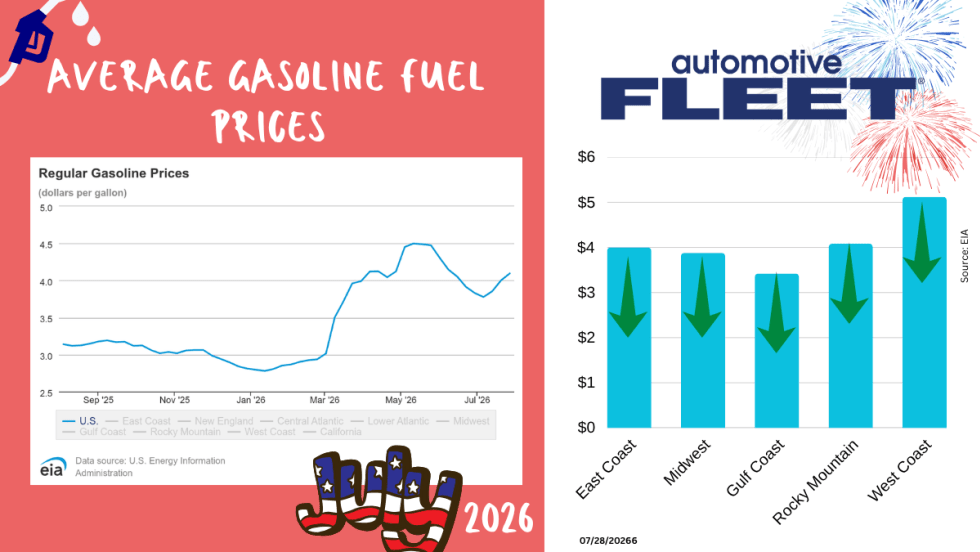
July Fuel Update: Prices Keep Rising in Light of More Conflict
Gas prices continue to rise as more and more conflicts do, too.
Read More →
Bob Adamsky on Fuel Volatility: "Don't Panic, Have a Plan."
When it comes to up and down fuel prices, Adamsky has a message for fleets: “Don’t panic.”
Read More →
How Fleets Can Gain Control of Non-Fuel Spend
Fuel often gets the spotlight, but non-fuel expenses can have a major impact on fleet costs. Ramel Lindsay of U.S. Bank Voyager discusses how fleets can gain better visibility and control over these often-overlooked expenditures.
Read More →
Fuel is Just the Start: How Middle East Tensions are Driving Up Fleet Maintenance Costs
The Middle East conflict is doing more than pushing up fuel prices. It’s also raising the cost of key maintenance products your fleet depends on, from motor oil to tires to windshield wipers. Here’s what you need to know about this budget-busting situation.
Read More →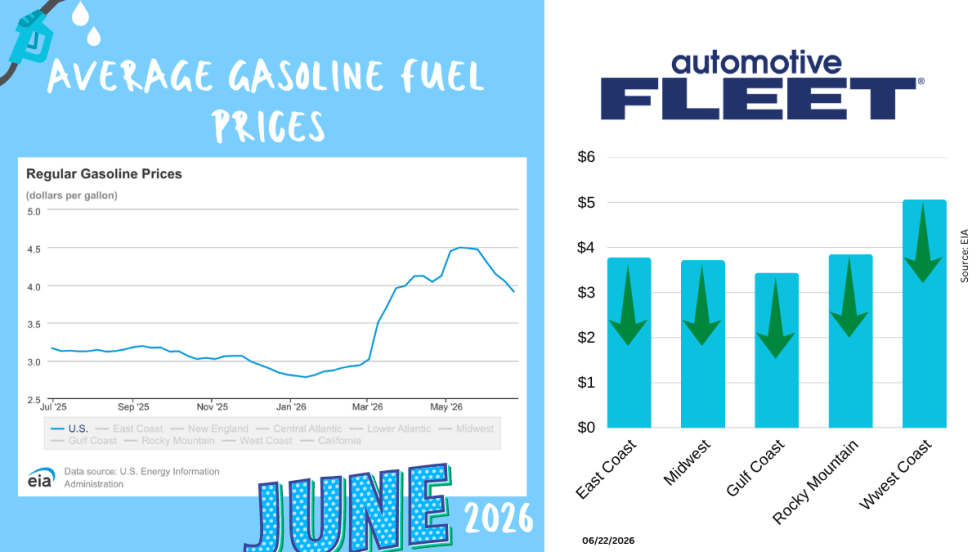
June Fuel Update: Prices Fall Below $4
Drivers are finally getting some relief at the pump. The national average gas price has dropped below $4 a gallon for the first time in months, with prices falling in 47 states as oil markets react to developments in U.S.-Iran negotiations.
Read More →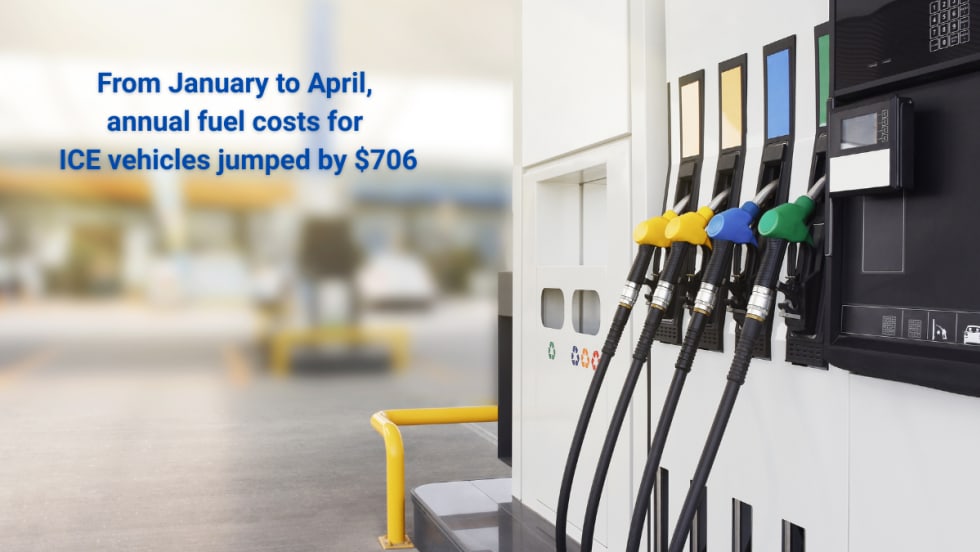
Study: How 2026's Gas Price Hikes Affect Different Vehicle Types
New data from iSeeCars reveals how rising fuel costs have affected different vehicle segments as gasoline prices climbed nearly 46% over the past four months.
Read More →
Are You Tracking Your Fleet's True Total Cost of Ownership?
Bobit Business Media surveyed 190 fleet professionals and found that while most fleets are tracking costs, fragmented systems and data gaps are keeping true TCO visibility out of reach. With rising pressure to control spend in an increasingly volatile environment, the gap between what fleets think they know and what the data actually shows is wider than you might expect. See how your peers are managing costs today and where the industry still has room to improve.
Read More →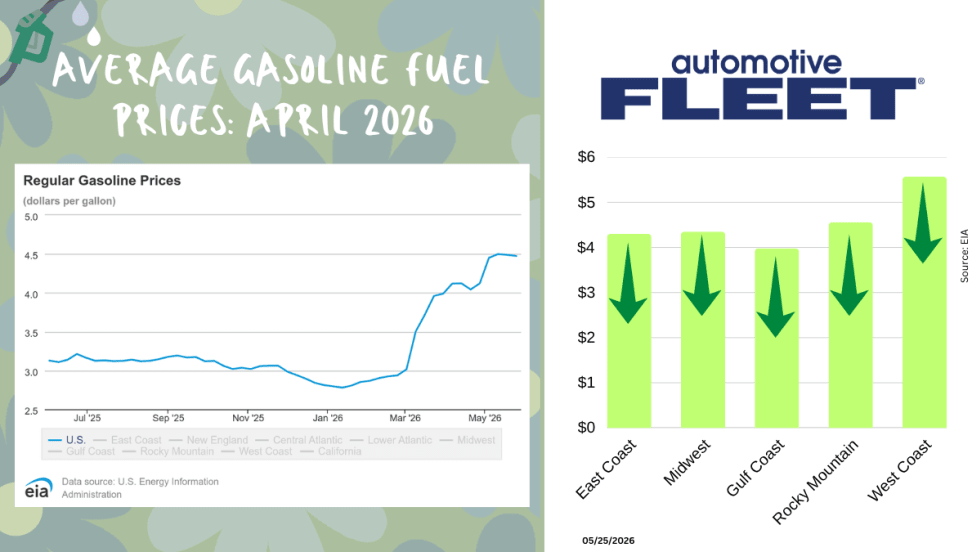
May Fuel Update: All Regions Experience Declines
Gas prices are finally easing in much of the country, but experts warn global tensions could quickly reverse the trend as the national average remains well above last month’s levels.
Read More →