




Insurance Institute Pushes for Federal Reform of Vehicle Bumper Regulations
ARLINGTON, VA — The Insurance Institute for Highway Safety has petitioned the federal government to regulate the bumpers on light trucks (SUVs, pickups, and vans) just as it regulates those on cars.
ARLINGTON, VA — The Insurance Institute for Highway Safety has petitioned the federal government to regulate the bumpers on light trucks (SUVs, pickups, and vans) just as it regulates those on cars. The institute is arguing that the same bumper rules should apply to all kinds of passenger vehicles.
To meet federal rules, car bumpers must be 16 to 20 inches off the ground and limit the amount of damage that can be sustained in a low-speed crash. The idea is to ensure that the bumpers on colliding cars engage, absorbing most of the energy of the impact and keeping damage away from expensive-to-repair parts like fenders, grilles, headlights and taillights.
However, car bumper rules don't apply to light trucks. In fact, it's still legal to sell these vehicles without any bumpers at all. Federal regulators' longstanding thinking is that requiring light trucks to have bumpers would compromise off-road navigation and make it hard to use these vehicles at loading ramps. But the institute counters that putting damage-resistant bumpers on light trucks needn't compromise utility.
In its petition to the National Highway Traffic Safety Administration, the institute cites a series of low-speed crash tests to make its case. The tests involved four midsize SUVs striking the back of a typical midsize car at 10 miles per hour. One of the SUVS — a Ford Explorer — does a better job than three others (Hummer H3, Jeep Grand Cherokee and Mitsubishi Endeavor) of resisting damage in low-speed crashes and minimizing damage to the vehicles with which it collides.
"One big difference is that the Explorer's bumpers line up pretty well with those on cars, so when this SUV hits a car or a car hits it, the bumpers on both vehicles engage instead of over- and underriding each other," said Institute President Adrian Lund. Once engaged, the bumpers absorb a lot of energy, protecting the vehicles from expensive-to-repair damage to safety-related parts and sheet metal.
"When cars collide with other cars, their bumpers usually line up pretty well," Lund noted. "But in SUV-to-car crashes, the bumpers often don't match up at all, and the result is thousands of dollars of unnecessary damage in low-speed crashes."
The front bumpers on the H3, Grand Cherokee and Endeavor were so high that they overrode the rear bumpers of the stationary Hyundai Sonatas in the institute tests, the institute reported. Damage to the Sonatas ranged from $3,891 to $4,737. Even the SUVs sustained more than $1,000 damage each. In contrast, the Explorer sustained less than $1,000 damage in the same front-into-rear test, and it inflicted only about one-third as much damage on the Sonata as the worst performer among the four SUVs, the H3.
The three poor-performing SUVs had some of the highest insurance losses under property damage liability coverage during 2005-07, the institute said. That is, they inflicted excess damage on the vehicles with which they collided. The Explorer had lower-than-average losses under the same insurance coverage during the same years.
"There's no evidence that the relatively effective bumpers on the Ford Explorer compromise its off-road performance or its utility at loading ramps," Lund said. "The Explorer shows that you can still have the utility of an SUV without making bumpers so high that they don't line up with cars."
In fact, light trucks in the 1970-80s had lower bumpers — 19 inches or less — than many of today's models, and they still were used off-road and at loading ramps. Many of today's light truck bumpers measure more than 20 inches tall.
"It's only an inch or so of difference in bumper height," Lund pointed out, "but it's an important inch when you consider that car bumper heights have to be 16 to 20 inches from the ground. That's the federal rule, so anything taller than 20 inches won't line up with a car bumper — and most light truck bumpers today don't."
At the National Highway Traffic Safety Administration's own behest, automakers have been working since 2003 to improve the compatibility between cars and light trucks in front and side collisions that occur at higher speeds. Many light trucks already meet the design criteria the manufacturers agreed on to reduce injuries to people in cars struck by the heavier, higher riding passenger vehicles. All light trucks built after Sept. 1, 2009, will meet the criteria to improve vehicle compatibility in serious crashes. But the institute said that addressing bumper mismatch would also help this effort.
"It's a win-win," Lund said. "One program would complement the other, and the result could be to improve both occupant protection in high-speed crashes and resistance to vehicle damage in collisions at slower speeds. All the agency has to do is regulate light truck bumpers."
More Safety
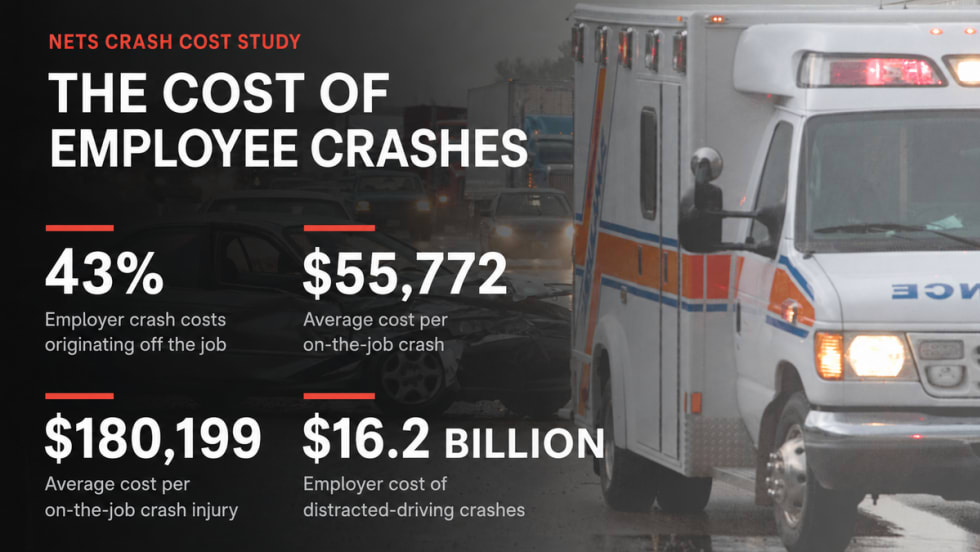
Off-the-Job Crashes Account for 43% of Employers’ $61.7 Billion Crash Burden
NETS quantifies costs dispersed across fleet, risk, HR, and other departments while providing new per-crash benchmarks for employers.
Read More →
Ram Recalls More Than 1.27 Million 1500 Pickups for Seat Belt Anchor Issue
The recall affects certain 2019-2026 Ram 1500 pickups that may have improperly attached second-row seat belt buckle anchors.
Read More →
Top 50 Executive Fleets
It is that time of year again! Time for the 2026 list of the Top 50 Executive Fleets, presented by Automotive Fleet and Volvo as part of its annual Fleet 500. Download now to see this year's list of companies!
Read More →
How Better Visibility Cut Speeding Violations by 48%
Fleet leaders don't need more data, they need clearer visibility into what the data is saying. This case study explores how one utility replaced speeding-event counts with a single metric — miles driven in violation — to strengthen safety and significantly reduce speeding violations.
Read More →
Operation Safe Driver Week: Why the Industry's Oldest Safety Campaign Still Matters to Fleets
A look at how a 2007 enforcement initiative became one of the most consequential weeks on the fleet safety calendar, and what it means for your drivers in 2026.
Read More →
Nexar-Nauto Merger Aims to Give Fleets Better Safety Intelligence Through Larger Driving Dataset
Stefan Heck tells Automotive Fleet that combining more than 10 billion miles of driving history with Nexar's AI models will give fleets deeper insights into driver risk and roadway conditions than either company could provide independently.
Read More →
From Silos to Solutions: Relationship Management for Safer Fleets
From telematics adoption and driver accountability to policy consistency and risk mitigation, this episode breaks down what it really takes to build a safer fleet culture without slowing business down.
Read More →
IIHS Launches First Commercial Vehicle Safety Evaluations
The Insurance Institute for Highway Safety has begun evaluating heavy-duty pickups and cargo vans for driver protection. Which models earned top marks?
Read More →
Reducing Risk by Eliminating Phone Use Behind the Wheel
Hosted with the cofounder of Lifesaver Mobile, this episode addresses phone use behind the wheel and how to design a driving environment that actually helps prevents accidents.
Read More →
Cameras, Safety and Insurance: From Reactive Claims to Real-Time Prevention (Part 2 of 2)
Part Two: Commercial auto remains one of the most challenging and costly lines of coverage for fleet operators and insurers alike. Continue learning more about how to effectively address these issues from Onur Aksan, Enterprise Business Development Executive, Geotab
Read More →