




Hyundai Lineup to Average 50 mpg by 2025
FOUNTAIN VALLEY, CA - Hyundai Motor America announced plans to maintain its leadership and achieve a corporate average fuel economy (CAFE) rating of at least 50 miles per gallon by 2025 for its lineup of passenger cars and light-duty trucks.
FOUNTAIN VALLEY, CA- Hyundai Motor America announced plans Aug. 4 to maintain its leadership and achieve a corporate average fuel economy (CAFE) rating of at least 50 miles per gallon (mpg) by 2025 for its lineup of passenger cars and light-duty trucks.
Current National Highway Traffic Safety Administration regulations require automakers to achieve a CAFE rating of 35.5 mpg by 2016. Before those rules were enacted last year, Hyundai had already announced its own plan to reach 35 mpg by 2015.
"We're committed to setting the pace in this industry on fuel economy, and we're inspired by the possibilities that our advanced Blue Drive technologies afford," said John Krafcik, Hyundai Motor America president and CEO. "Getting to 50 mpg and beyond seems like a huge leap, but by making this commitment and aligning our R&D initiatives now, we know we can get there."
Hyundai's plan to achieve an average of 50 mpg or better encompasses a full line of products, from small cars to larger family haulers. It leverages Hyundai's global Blue Drive strategy, aligning research and development resources at its engineering centers in California, Michigan, Korea, India and Germany to develop more fuel-efficient vehicle technologies. Key enablers are improvements and innovation in powertrains including gasoline direct injection, turbocharging, electric hybrids, plug-in hybrids, light-weight materials and design, and more.
"This is our simple formula for success in the automobile industry," said Krafcik. "Rather than fighting fuel economy regulation, we encourage our Hyundai engineers to deliver more fuel efficiency, faster, accelerating the benefits to our customers, society, and the planet."
Hyundai achieved fuel economy leadership by topping the U.S. Environmental Protection Agency fuel economy report for the 2008 model year. The EPA 2009 Light-Duty Automotive Technology and Fuel Economy Trends Report indicates that Hyundai has the highest 2008 model year laboratory 55/45 fuel economy at 30.9 mpg. Hyundai passed all major manufacturers in combined passenger car and light-duty truck fuel efficiency including traditional leaders like Honda and Toyota.
Hyundai said it is poised to maintain its fuel-economy leadership as projected data for the 2009 model year shows Hyundai retaining its edge over the industry. Forecasts show a 2009 model-year fuel economy rating of 30.1 mpg for passenger cars and light-duty trucks. Hyundai is also the only automaker to top 30 mpg in the 2009 projections.
[PAGEBREAK]
Environmental Protection Agency Fuel Economy Reports
Group | Fuel Economy (mpg) |
MY 2008 EPA Lab 55/45* | |
Manufacturer** | Overall (Cars/Trucks) |
Hyundai | 30.9 |
Honda | 30.1 |
Volkswagen | 27.9 |
Toyota | 29 |
Kia | 28.8 |
Nissan | 27.6 |
BMW | 26.3 |
Ford | 24.5 |
General Motors | 24.4 |
Chrysler | 24.2 |
* From EPA Table A-7 2009 Trends Report (Appendix A) http://www.epa.gov/otaq/cert/mpg/fetrends/420r09014-appx-a.pdf
**Includes ten highest-volume manufacturers. Based on sales projections for the 10 highest volume manufacturers. EPA Light-Duty Automotive Technology, Carbon Dioxide and Fuel Economy Trends: 1975-2009 Report. Honda includes combined Honda and Acura brands. Hyundai excludes Kia brand.
More Fuel

Turning Fleet Payment Data into Executive Insights
Ramel Lindsay of U.S. Bank Voyager discusses how fleets can transform payment and transaction data into actionable intelligence to reduce costs, improve oversight, and support executive decision-making.
Read More →
Why the IRS Raised Its Mileage Rate in the Middle of 2026
Fuel-price volatility drove the rare increase to 76 cents per mile, the fifth midyear adjustment since 2000.
Read More →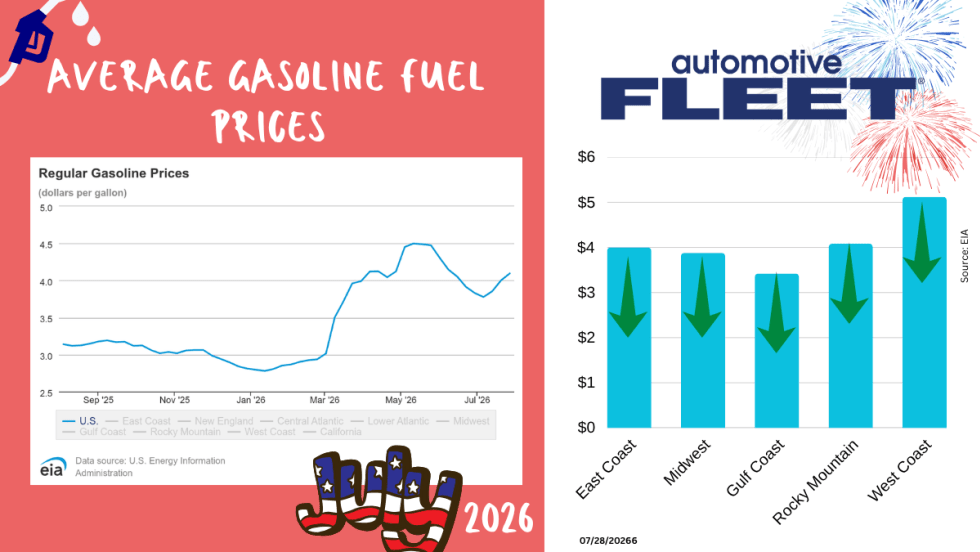
July Fuel Update: Prices Keep Rising in Light of More Conflict
Gas prices continue to rise as more and more conflicts do, too.
Read More →
Bob Adamsky on Fuel Volatility: "Don't Panic, Have a Plan."
When it comes to up and down fuel prices, Adamsky has a message for fleets: “Don’t panic.”
Read More →
How Fleets Can Gain Control of Non-Fuel Spend
Fuel often gets the spotlight, but non-fuel expenses can have a major impact on fleet costs. Ramel Lindsay of U.S. Bank Voyager discusses how fleets can gain better visibility and control over these often-overlooked expenditures.
Read More →
Fuel is Just the Start: How Middle East Tensions are Driving Up Fleet Maintenance Costs
The Middle East conflict is doing more than pushing up fuel prices. It’s also raising the cost of key maintenance products your fleet depends on, from motor oil to tires to windshield wipers. Here’s what you need to know about this budget-busting situation.
Read More →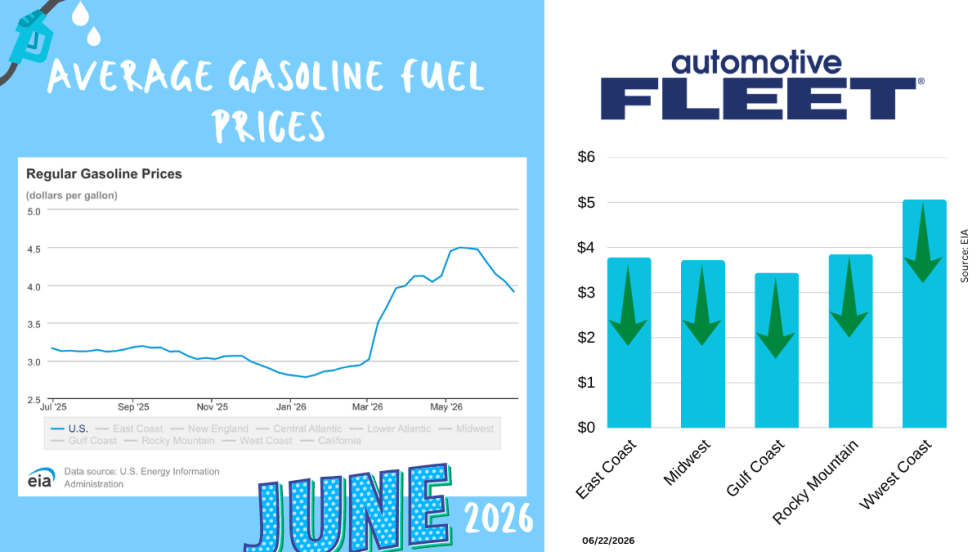
June Fuel Update: Prices Fall Below $4
Drivers are finally getting some relief at the pump. The national average gas price has dropped below $4 a gallon for the first time in months, with prices falling in 47 states as oil markets react to developments in U.S.-Iran negotiations.
Read More →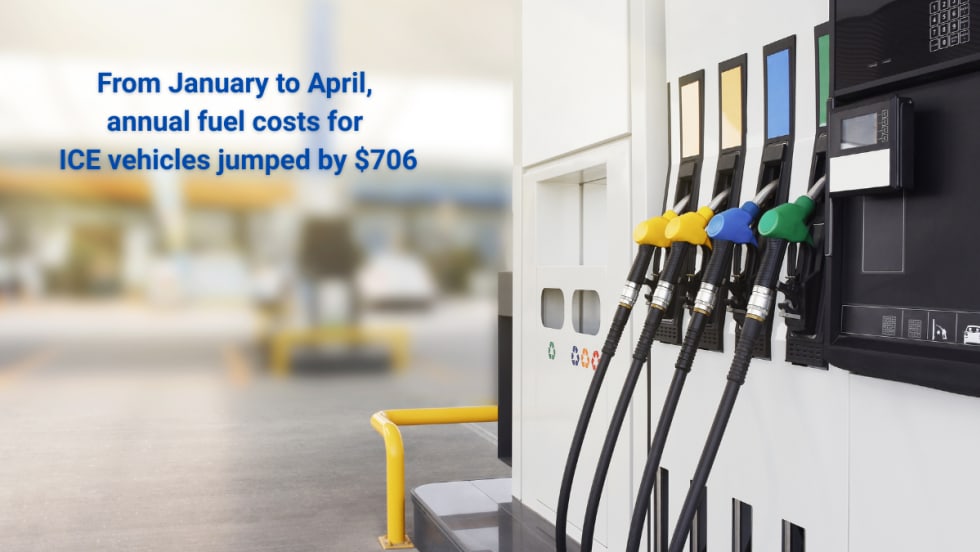
Study: How 2026's Gas Price Hikes Affect Different Vehicle Types
New data from iSeeCars reveals how rising fuel costs have affected different vehicle segments as gasoline prices climbed nearly 46% over the past four months.
Read More →
Are You Tracking Your Fleet's True Total Cost of Ownership?
Bobit Business Media surveyed 190 fleet professionals and found that while most fleets are tracking costs, fragmented systems and data gaps are keeping true TCO visibility out of reach. With rising pressure to control spend in an increasingly volatile environment, the gap between what fleets think they know and what the data actually shows is wider than you might expect. See how your peers are managing costs today and where the industry still has room to improve.
Read More →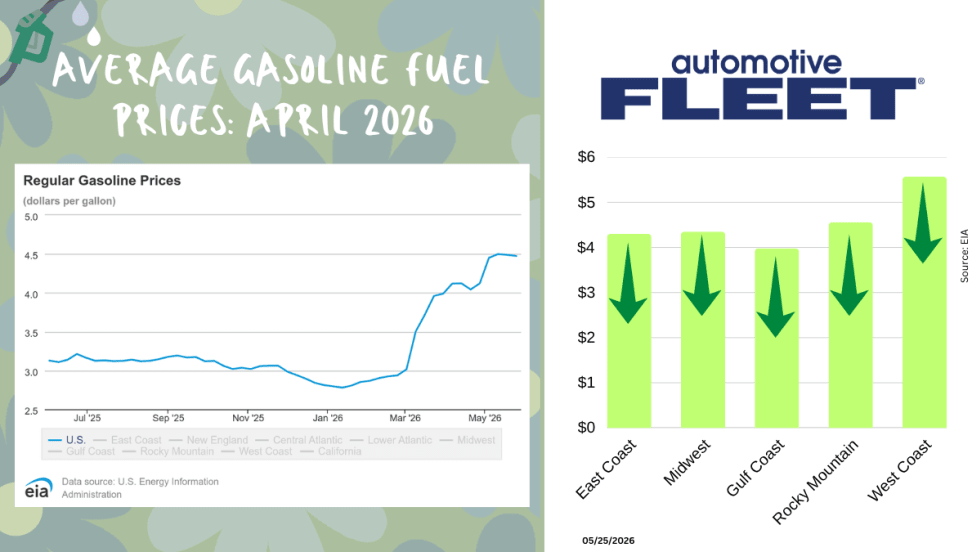
May Fuel Update: All Regions Experience Declines
Gas prices are finally easing in much of the country, but experts warn global tensions could quickly reverse the trend as the national average remains well above last month’s levels.
Read More →