




Hybrid Powertrain Design Continues to Evolve
SAN DIEGO --- Though hybrid powertrain design presents unique engineering challenges, advances in technology are clearing the way for further improvement.
SAN DIEGO --- Though hybrid powertrain design presents unique engineering challenges, advances in technology are clearing the way for further improvement. Opal-RT Technologies Inc. underscored this opportunity when it presented its latest development in real-time hybrid powertrain simulation at the SAE Hybrid Vehicle Technologies Symposium held Feb. 1-2 in San Diego. Since 1999, Opal-RT Technologies has provided simulation technologies to help engineers reduce the development cycle of power electronics, electric drive control, and energy management systems. Using hardware in-the-loop simulators (HIL), design engineers can use a virtual vehicle based on real-time simulation to prototype new system concepts, validate control systems, and perform initial calibration in the laboratory -- all before a prototype vehicle becomes available. Opal-RT's HIL simulators now serve OEMs and suppliers developing hybrid electric vehicles and components throughout North America and Asia. Opal-RT's customers include AISIN, DaimlerChrysler, DENSO, Ford, GM, Toyota, and other companies and universities leading the development of hybrid powertrains and vehicles. Technical specialists from Opal-RT brought two examples to the symposium. The first demonstration was a real-time simulation of a fuel-cell hybrid vehicle. The core of the virtual hybrid powertrain was a high-precision Permanent Magnet Synchronous Motor (PMSM) inverter model running on an HIL simulator at a time step of 10 microseconds, with an IGBT pulse capture resolution of 10 nanoseconds. The simulation provided sufficient accuracy to reproduce typical distortions caused by dead times in switching circuits. In the second demonstration, a three-phase PMSM model was implemented in Simulink, which compiled and downloaded into a Field Programmable Gate Array (FPGA) chip for execution using the XILINX System Generator. With a 250-nanosecond time step, this chip-based simulation allows upcoming hybrid powertrain components, such as inverters and DC-DC converters with switching frequency upwards of 100 kHz, to be accurately modeled in real-time. “As hybrid vehicles gain greater acceptance in the marketplace, Opal-RT will continue to develop technologies and practical solutions that allow design engineers to simulate more, accurately, and in real-time," said Jean Belanger, president of Opal-RT Technologies.
More Fuel
Fuel Prices Surge in September | September Fuel Update
September brought major fuel price swings, including diesel crossing $6 a gallon. Here’s how gas and diesel prices changed throughout the month, and where they stood heading into October.
Read More →
Turning Fleet Payment Data into Executive Insights
Ramel Lindsay of U.S. Bank Voyager discusses how fleets can transform payment and transaction data into actionable intelligence to reduce costs, improve oversight, and support executive decision-making.
Read More →
Why the IRS Raised Its Mileage Rate in the Middle of 2026
Fuel-price volatility drove the rare increase to 76 cents per mile, the fifth midyear adjustment since 2000.
Read More →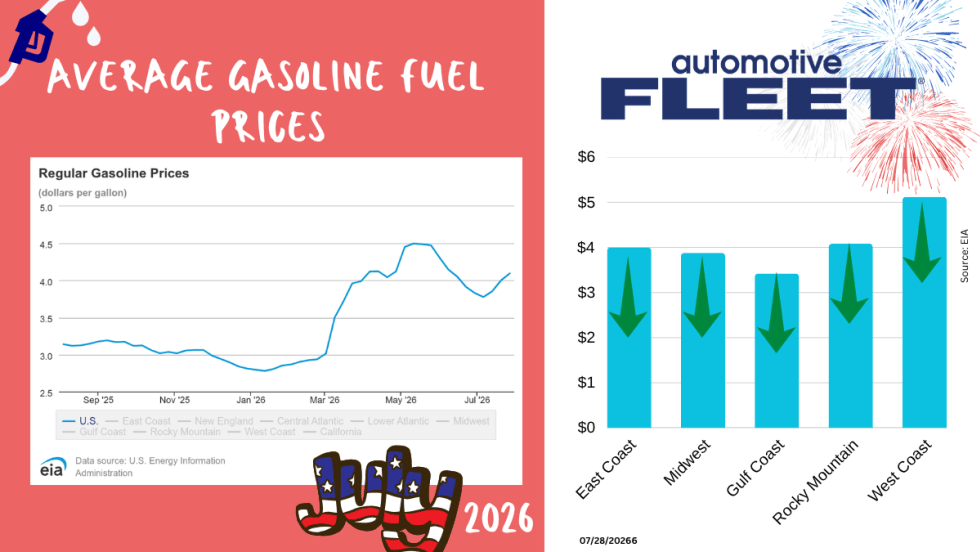
July Fuel Update: Prices Keep Rising in Light of More Conflict
Gas prices continue to rise as more and more conflicts do, too.
Read More →
Bob Adamsky on Fuel Volatility: "Don't Panic, Have a Plan."
When it comes to up and down fuel prices, Adamsky has a message for fleets: “Don’t panic.”
Read More →
How Fleets Can Gain Control of Non-Fuel Spend
Fuel often gets the spotlight, but non-fuel expenses can have a major impact on fleet costs. Ramel Lindsay of U.S. Bank Voyager discusses how fleets can gain better visibility and control over these often-overlooked expenditures.
Read More →
Fuel is Just the Start: How Middle East Tensions are Driving Up Fleet Maintenance Costs
The Middle East conflict is doing more than pushing up fuel prices. It’s also raising the cost of key maintenance products your fleet depends on, from motor oil to tires to windshield wipers. Here’s what you need to know about this budget-busting situation.
Read More →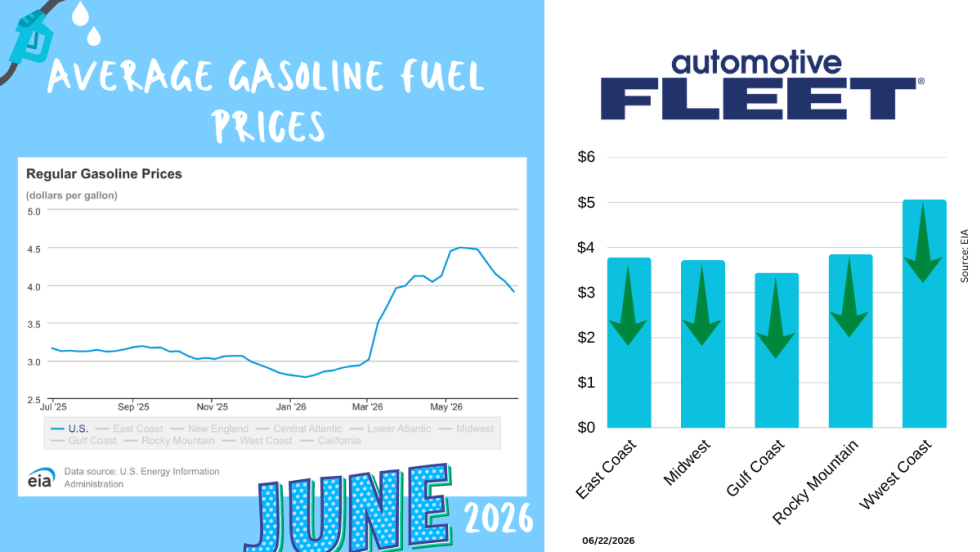
June Fuel Update: Prices Fall Below $4
Drivers are finally getting some relief at the pump. The national average gas price has dropped below $4 a gallon for the first time in months, with prices falling in 47 states as oil markets react to developments in U.S.-Iran negotiations.
Read More →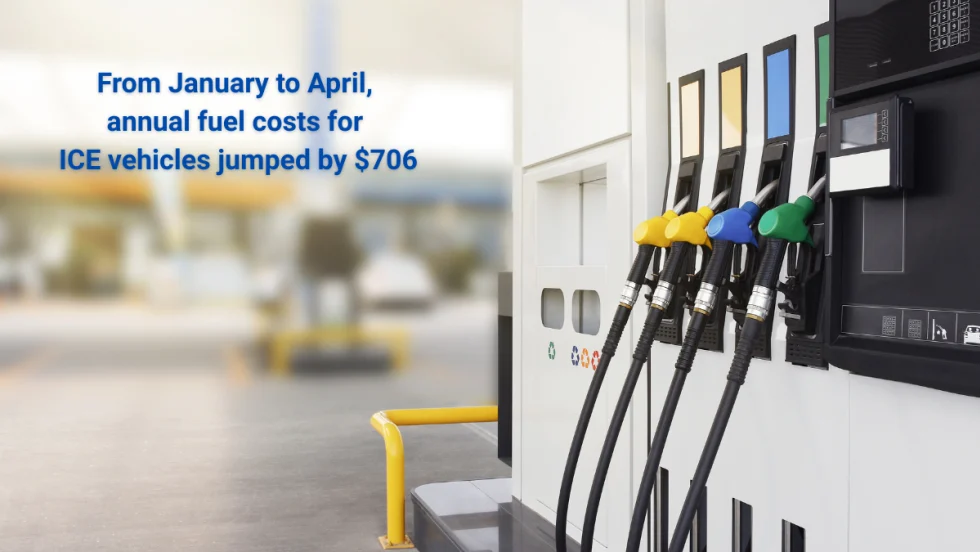
Study: How 2026's Gas Price Hikes Affect Different Vehicle Types
New data from iSeeCars reveals how rising fuel costs have affected different vehicle segments as gasoline prices climbed nearly 46% over the past four months.
Read More →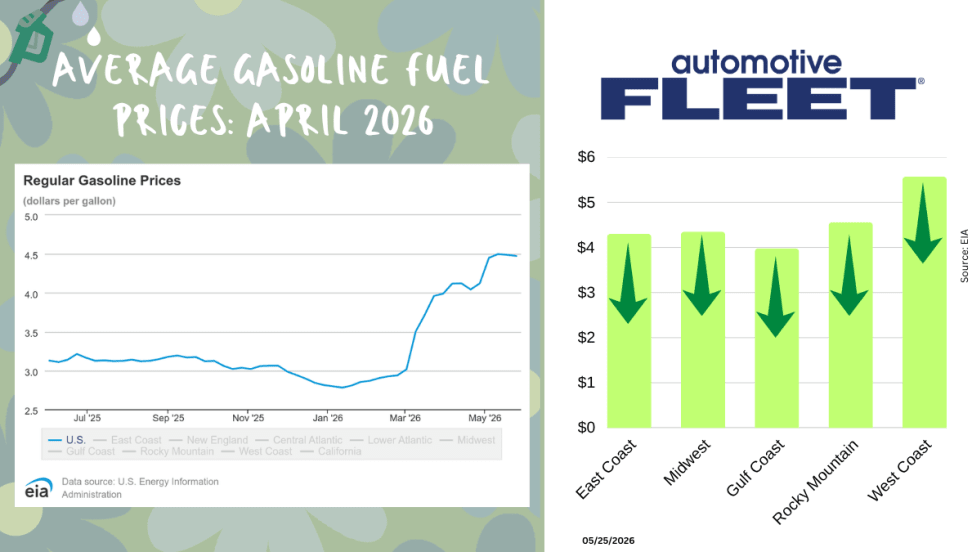
May Fuel Update: All Regions Experience Declines
Gas prices are finally easing in much of the country, but experts warn global tensions could quickly reverse the trend as the national average remains well above last month’s levels.
Read More →