




HLDI Report Says Autonomous Braking and Adaptive Headlights Reduce Collision Claims & Injuries
ARLINGTON, VA – The Highway Loss Data Institute (HLDI) conducted a study of new advanced crash avoidance technologies and found that forward collision avoidance systems have the greatest impact on reducing crash incidents.
ARLINGTON, VA – The Highway Loss Data Institute (HLDI) conducted a study of new advanced crash avoidance technologies and found that forward collision avoidance systems have the greatest impact on reducing crash incidents. Two technologies in particular, autonomous braking and adaptive headlights, showed the most significant crash reduction results.
"As more automakers offer advanced technologies on their vehicles, insurance data provide an early glimpse of how these features perform in the real world," said Matt Moore, vice president of HLDI, an affiliate of the Insurance Institute for Highway Safety (IIHS). "So far, forward collision technology is reducing claims, particularly for damage to other vehicles, and adaptive headlights are having an even bigger impact than we had anticipated."
According to the Insurance Institute for Highway Safety (IIHS), of which the HLDI is a research organization that supports the IIHS’ efforts, HLDI analysts looked at how new safety features affected claim frequency under a range of different insurance coverage types for damage and injuries. In this study, HLDI said all of the features it evaluated were optional equipment rather than standard. Also, HLDI controlled for factors that could influence claim rates (driver age, gender, garaging state, and collision deductible).
The organization measured frequency as the number of claims relative to the number of years the vehicle has been insured. HLDI said it found “clear patterns” under property damage liability (PDL) insurance, which covers damage caused by the insured vehicle to another vehicle, and collision insurance, which covers damage to the insured vehicle itself.
To start, HLDI said it evaluated the forward collision systems on Acura, Mercedes-Benz, and Volvo vehicles. Forward collision systems alert a driver if the vehicle is moving too fast and is likely to collide with a vehicle ahead. The PDL frequencies for the Acura and Mercedes models were 14% lower when compared with the same models without the optional forward collision systems. The organization said Volvo’s autonomous braking system also reduced crashes by 10% but noted that in this case the finding wasn’t statistically significant. HLDI also noted that Volvo includes lane departure warning and fatigue warning as part of the overall safety system, so the result could be affected by the overall safety system rather than just forward collision.
When studying adaptive headlights on Acura, Mazda, Mercedes, and Volvo models, HLDI found PDL claims fell by up to 10% in models equipped with this technology. Adaptive headlights adjust the horizontal aim of the headlights depending on steering input, vehicle speed, among other factors. HLDI said this result surprised its analysts since roughly 7% of crashes reported to police occur between 9 p.m. and 6 a.m., and that an even smaller percentage of collisions involve multiple vehicles at night on a curve in a road. HLDI said brightness or range may be factors that help reduce collisions, but it didn’t find consistent differences among the vehicles analyzed.
HLDI researchers only found a small reduction in single-vehicle crashes when looking at collision coverage due to adaptive headlight use, but saw a substantial drop in injury claims for vehicle occupants in the insured vehicle, and to others on the road, when using this headlight technology (save for one make).
One interesting finding, though not statistically significant, was a mixed result for lane departure warning systems. HLDI found increased claim rates, and injuries to occupants of insured vehicles, in Buick and Mercedes models with lane departure warning systems but reduced claim frequencies for Volvo models (compared with those without the feature). HLDI noted that the Volvo model claim frequencies evaluated were for models that bundled forward collision warning with automatic braking. One reason for the lack of a significant effect in crash reduction for lane departure warning systems is that few crashes overall result from drifting off a road.
"Lane departure warning may end up saving lives down the road, but so far these particular versions aren't preventing insurance claims," Moore said. "It may be that drivers are getting too many false alarms, which could make them tune out the warnings or turn them off completely. Of course, that doesn't explain why the systems seem to increase claim rates, but we need to gather more data to see if that's truly happening."
HLDI hasn’t evaluated lane departure prevention systems yet (systems that take control of the vehicle if it drifts), only warning systems.
More Safety
Tips for Driving Safely on Halloween Night
This video features a reminder from the Connecticut Department of Transportation (DOT) and the Connecticut Police Chiefs Association, urging drivers to prioritize safety this Halloween.
Read More →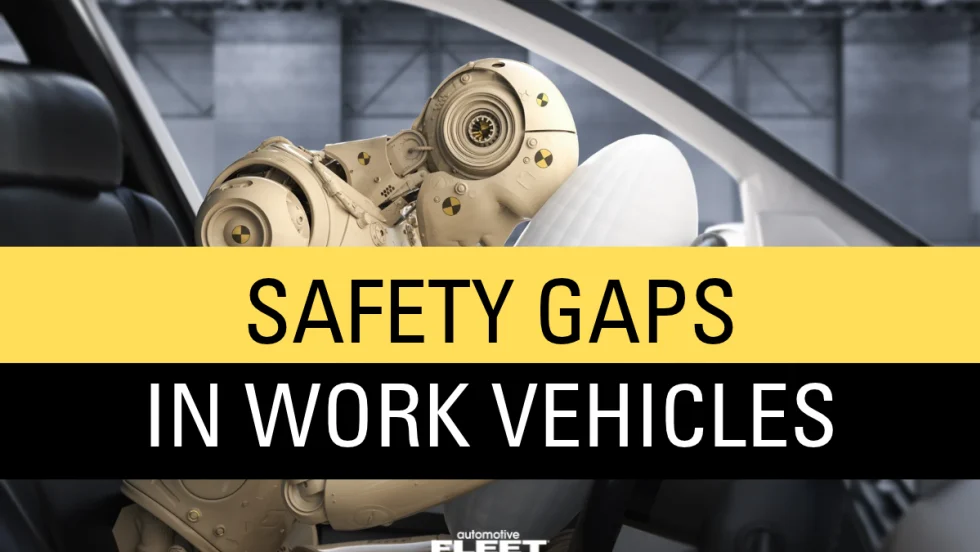
IIHS Crash Avoidance Tests Reveal Safety Gaps in Cargo Vans and Work Trucks
New IIHS crash avoidance ratings show uneven performance among cargo vans and heavy-duty pickups, with most struggling to avoid vehicle-to-vehicle collisions.
Read More →
What’s Next for Fleet? Safety, AI & Industry Recognition | AF News Recap
Could your company's culture be encouraging distracted driving? This week, we're exploring how workplace expectations affect driver safety, what AI, EVs, and autonomous vehicles could mean for the future of fleet management, and how fleet professionals can strengthen their award nominations.
Read More →
Does Your Fleet's Culture Encourage Distracted Driving?
What happens when the people responsible for enforcing safety rules are the ones setting the wrong example? The answer may reveal why some of the biggest risks to fleet drivers have little to do with what's written in the employee handbook.
Read More →
Fleet Manager’s Ultimate Playbook: Navigating the New Standard in OEM Connectivity
Rising operating costs, driver safety concerns, and unplanned downtime are putting unprecedented pressure on modern fleets. Discover how fleet managers use embedded OEM connectivity and real-time vehicle data to cut TCO, prevent downtime, and protect drivers without aftermarket telematics hardware.
Read More →
From Driver Well-Being to EV Charging | AF News Recap
Mental health belongs in the fleet safety conversation. This week, we’re looking at five ways fleets can support employee well-being before a crisis, plus Holman’s expansion in Mexico, new one-day Fleet Forward passes, and why EV charging demand is outpacing infrastructure growth.
Read More →
Nexar-Nauto Merger Aims to Give Fleets Better Safety Intelligence Through Larger Driving Dataset
Stefan Heck tells Automotive Fleet that combining more than 10 billion miles of driving history with Nexar's AI models will give fleets deeper insights into driver risk and roadway conditions than either company could provide independently.
Read More →
Don't Wait for a Crisis: 5 Ways to Build Mental Health Into Your Fleet Safety Program
For Suicide Prevention Month, fleet and safety leaders have an opportunity to put mental health where it belongs: at the center of workplace safety.
Read More →
How Camera Data Can Strengthen a Fleet’s Insurance Renewal
Insights from a commercial insurance carrier and a broker show how fleets can turn video telematic data, driver coaching, and improved claims results into a stronger case at insurance renewal.
Read More →
The Safest Fleets Aren’t the Ones with the Most Technology
You’ve made the telematics investment. Here’s how to capture the other half of its value and build the safest fleet on the road.
Read More →