




Highway Safety Group Urges Motorists to Slow Down
WASHINGTON, D.C. --- As millions of Americans take to the roadways for the busy Memorial Day Weekend and summer driving season, the Governors Highway Safety Association (GHSA) reminds drivers that slowing down will not only reduce the amount of money they have to spend on gas, but also could save their life.
WASHINGTON, D.C. --- As millions of Americans take to the roadways for the busy Memorial Day Weekend and summer driving season, the Governors Highway Safety Association (GHSA) reminds drivers that slowing down will not only reduce the amount of money they have to spend on gas, but also could save their life.
According to the Department of Energy, aggressive driving (speeding, rapid acceleration and braking) can lower gas mileage by 33 percent at highway speeds and 5 percent around town. The agency also estimates that, as a rule of thumb, drivers can assume that each 5 mph they drive above 60 mph is like paying an additional $0.20 per gallon for gas.
Despite the benefits of slowing down, the public has not yet gotten the message. According to an informal GHSA survey of state highway safety agencies, only Wisconsin reports a noticeable trend of reduced speeds as a result of high gas prices. Wisconsin officials report that while traffic volume is down slightly, speeds are also down, directly impacting both the frequency and seriousness of crashes across the entire state. State troopers report speeds along the freeways are moderating especially with commercial vehicles, many of which have slowed to travel at or even below the speed limit. A handful of other states note the reduced speed of commercial vehicles, likely resulting from more trucking companies setting policies that require their drivers to stay below a set speed, such as 67 mph.
In addition to helping fight the cost of record-high gas prices, slowing down also increases the likelihood of surviving a crash. According to the Insurance Institute for Highway Safety, in a high-speed crash, a passenger vehicle is subjected to forces so severe that the vehicle structure cannot withstand the impact of the crash and maintain survival space in the occupant compartment.
Further evidence comes from a 2005 study that showed even a small reduction in speed can have a big impact on lives saved. In the report, published in the Transportation Research Record, author Rune Elvik found that a 1 percent decrease in travel speed reduces injury crashes by about 2 percent, serious injury crashes by about 3 percent and fatal crashes by about 4 percent. These reductions are critically needed as speeding remains a serious highway safety problem --- nearly 13,500 people died in speed-related crashes in 2006.
According to GHSA Chairman Christopher J. Murphy, "Nationally, GHSA members report that we are not seeing any noticeable decreases in travel speeds by passenger vehicles. However, given the extremely high gas prices and life-saving benefits of slowing down, we urge the public to ease off the accelerator."
More Safety

Nexar-Nauto Merger Aims to Give Fleets Better Safety Intelligence Through Larger Driving Dataset
Stefan Heck tells Automotive Fleet that combining more than 10 billion miles of driving history with Nexar's AI models will give fleets deeper insights into driver risk and roadway conditions than either company could provide independently.
Read More →
Don't Wait for a Crisis: 5 Ways to Build Mental Health Into Your Fleet Safety Program
For Suicide Prevention Month, fleet and safety leaders have an opportunity to put mental health where it belongs: at the center of workplace safety.
Read More →
How Camera Data Can Strengthen a Fleet’s Insurance Renewal
Insights from a commercial insurance carrier and a broker show how fleets can turn video telematic data, driver coaching, and improved claims results into a stronger case at insurance renewal.
Read More →
The Safest Fleets Aren’t the Ones with the Most Technology
You’ve made the telematics investment. Here’s how to capture the other half of its value and build the safest fleet on the road.
Read More →
Hidden in Plain Sight: Fleet Compliance Risks
Fleet compliance isn't just about having policies — it's about consistently enforcing them. This practical guide reveals six hidden compliance risks common in public sector and shared fleet operations and outlines proven strategies to improve visibility, accountability, and audit readiness
Read More →
NETS Sets 2026 Fleet Safety Benchmark Conference for Indianapolis
The Sept. 15–17 program will feature fleet benchmarking data, case studies, emerging technologies, and implementation strategies while running alongside the NSC Safety Congress & Expo.
Read More →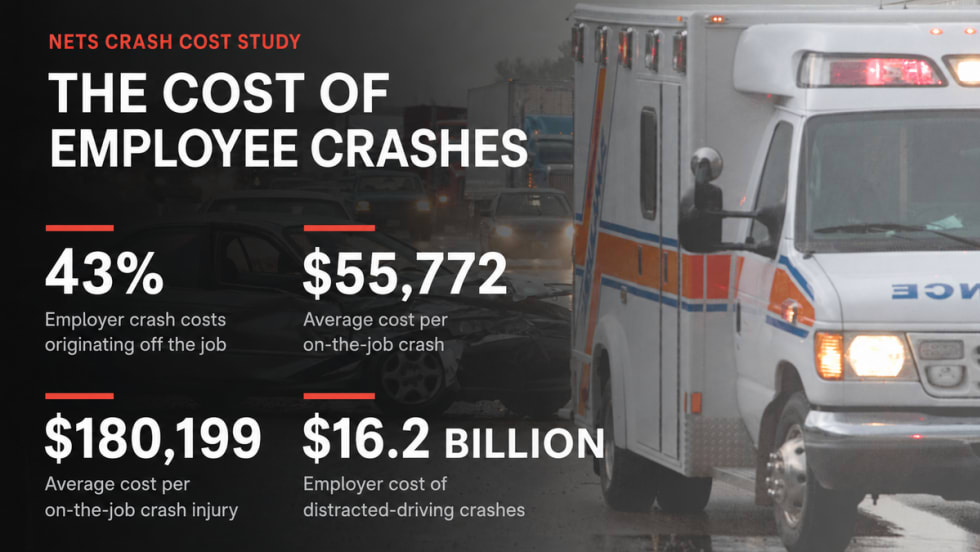
Off-the-Job Crashes Account for 43% of Employers’ $61.7 Billion Crash Burden
NETS quantifies costs dispersed across fleet, risk, HR, and other departments while providing new per-crash benchmarks for employers.
Read More →
Ram Recalls More Than 1.27 Million 1500 Pickups for Seat Belt Anchor Issue
The recall affects certain 2019-2026 Ram 1500 pickups that may have improperly attached second-row seat belt buckle anchors.
Read More →
How Better Visibility Cut Speeding Violations by 48%
Fleet leaders don't need more data, they need clearer visibility into what the data is saying. This case study explores how one utility replaced speeding-event counts with a single metric — miles driven in violation — to strengthen safety and significantly reduce speeding violations.
Read More →
Operation Safe Driver Week: Why the Industry's Oldest Safety Campaign Still Matters to Fleets
A look at how a 2007 enforcement initiative became one of the most consequential weeks on the fleet safety calendar, and what it means for your drivers in 2026.
Read More →