





Closer Look:Latest Hard Realities, Top Pressures for Electric Fleets
Higher Costs Drive Up New Vehicle Prices
Many imported luxury vehicles tangle with tariffs, and other premium brands reposition product portfolios for higher revenue.
August 12, 2025
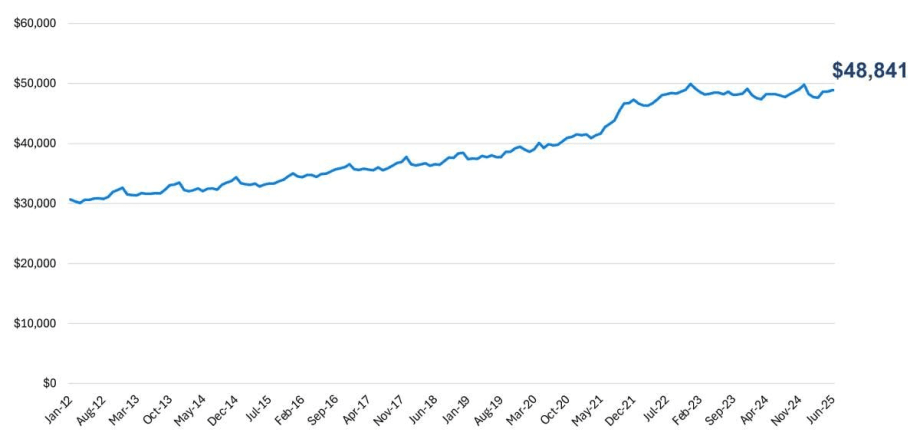
In July, the new-vehicle ATP was $48,841, down 0.1% from the revised lower June ATP of $48,900. ATPs last month were higher year over year by 1.5%, the largest annual gain of 2025, though still below long-term average gains.
Graphic: Cox Automotive
4 min to read
Annual gains in new-vehicle average transaction prices (ATPs) and manufacturer’s suggested retail prices (MSRPs) – two key measures of vehicle price increases in the U.S. – are accelerating but remain below long-term averages, according to numbers released Aug. 11 by Kelley Blue Book.
But new-vehicle prices in July remained mostly unchanged from June, with only a slight decline month over month as incentive spending accelerated and fueled strong sales volumes.
The cost of high-end living is increasing, as many imported luxury vehicles tangle with tariffs and other premium brands reposition product portfolios for higher revenue. The reasons differ, but many luxury brands saw notably higher prices year over year in July. (Acura is a stand-out exception.)
Cadillac, Land Rover and Infiniti all posted double-digit ATP gains versus 2024. ATP growth at Mercedes, Porsche and Lincoln was also more than twice the industry average, while Audi, BMW and Genesis increases were closer to the industry average.
“In the face of rising prices, it is becoming more evident that the new-vehicle market is being supported by pent-up demand driven largely by high-net-worth households," said Erin Keating, executive analyst at Cox Automotive, in a news release. "These buyers benefit from the wealth effect of a healthy stock market and solid wage growth since the pandemic. At the same time, automakers are providing healthy incentives to keep sales flowing. Prices are trending higher, but just as we see in the broader retail markets, there’s sufficient demand and generous incentives out there, which drives the market.”
Vehicle Prices, Incentives Rise
In other findings, KBB reported:
In July, the new-vehicle ATP was $48,841, down 0.1% from the revised lower June ATP of $48,900. ATPs last month were higher year over year by 1.5%, the largest annual gain of 2025, though still below long-term average gains.
Incentives jumped higher, increasing to 7.3% of ATP in July from an upwardly revised 7% of ATP in June, equal to $3,553. The average incentive spend in July was the highest point of 2025 and higher than year-ago levels, when average incentive spending was 7% of ATP.
New-vehicle MSRPs were lower in July by 0.3% compared to June but higher versus year-ago levels by 2.4%, suggesting manufacturer costs continue to increase more quickly than consumer retail prices (ATPs). The year-over-year gain of 2.4% in July was the largest in 2025, although still below the long-term average of 3.5%.
Five volume automakers saw ATPs lower versus July 2024, with Jeep leading the way. The Jeep brand ATP, at $47,275, declined nearly 12% year over year in July and was at the lowest point since the fall of 2021. Jeep incentives last month were 8.1% of ATP, down from June but notably higher than the 5.5% counted in July 2024. Jeep brand sales were higher year over year by 27% in July.
Electric Vehicles Soar as Lower Prices, Higher Incentives Spur Sales
In July, the ATP for a new electric vehicle (EV), according to estimates from Kelley Blue Book, was $55,689, down by 2.2% from the June ATP of $56,915. New EV prices were lower year over year by 4.2% in July.
EV market leader Tesla led the price decline. Last month, the Tesla ATP was $52,949, according to estimates from Kelley Blue Book, lower compared to June by 2.4% and down 9.1% year over year. Tesla incentives in July were also higher, and sales gained compared to June, although they were down year over year. A higher mix of core Model 3 and Model Y products helped lower Tesla’s prices.
EV incentives soared in July, as automakers and dealers worked to move inventory before the decline in government support. The average incentive package for an EV in July was 17.5% of ATP, a record in the modern era of EV sales and higher year over year by more than 40%.
Cox Automotive has been expecting strong EV sales in Q3 as government incentives approach an Oct. 1 sunset. July's EV sales were strong, initially estimated to be the second-best month ever, with sales over 130,000, a 20% year-over-year increase. A full report on EV sales and pricing in July will be available next week in the Cox Automotive Newsroom.
“The urgency created by the administration’s decision to sunset government-backed, IRA-era EV incentives was expected to create serious demand for EVs in the short term," said Stephanie Valdez Streaty, senior analyst at Cox Automotive. "If last month is any measure, mission accomplished. July sales were near an all-time monthly record. At this pace, Q3 will be the best ever and then some, as buyers jump in before the big incentives dry up.”
More Operations

Sponsored•October 14, 2026
A buyer's guide to fleet management software in 2027
Buying fleet management software in 2027 means looking beyond features and price. As fleet operations, technology and expectations evolve, this guide explores what today’s fleet professionals should consider when choosing a system that can deliver value now and adapt to what comes next.
Read More →
What Will Shape the Next Era of Fleet Management?
EVs, AI, and autonomous vehicles are reshaping fleet management. Discover what’s ahead—and how fleet leaders can prepare for the next era.
Read More →
How Fleets Can Recruit and Train Veterans for Technician Roles
Here's how the technician shortage has affected uptime for fleets, and what to do about it.
Read More →

Avis Budget Group Deploys Neology Toll Management Technology Across Major Brands
Neology’s neoFleet platform will manage toll transactions and toll-authority operations for vehicles across Avis, Budget, Payless, Budget Truck and Zipcar.
Read More →
Fleet Personal-Use Charges Edge Higher in 2026
Nearly eight in 10 surveyed fleets allow personal use of company vehicles, while just over half of respondents report charging employees for the privilege.
Read More →
The Future of Fleet + What’s Changing Right Now | AF News Recap
Could developments overseas offer a preview of what’s coming for U.S. fleets? This week, we’re looking at the future of AI, autonomy, and electrification, plus Ford Pro’s new certified pre-owned program, smarter vehicle offboarding, and a new way for fleets to manage toll expenses.
Read More →
How to Handle Vehicle Offboarding
What do fleet managers need to do when a driver leaves?
Read More →
Sponsored•October 1, 2026
Fleet Manager’s Ultimate Playbook: Navigating the New Standard in OEM Connectivity
Rising operating costs, driver safety concerns, and unplanned downtime are putting unprecedented pressure on modern fleets. Discover how fleet managers use embedded OEM connectivity and real-time vehicle data to cut TCO, prevent downtime, and protect drivers without aftermarket telematics hardware.
Read More →
U.S. Bank Adds Verra Mobility Toll Management to Voyager Fleet Platform
The integration allows U.S. Bank Voyager fleet customers to manage toll payments and violations alongside fuel, EV charging and maintenance expenses.
Read More →
ADAS Prevents Crashes. But Repairs Cost More | AF News Recap
ADAS-equipped vehicles may crash less often, but they can cost more when they do. This week, we’re breaking down what that tradeoff means for fleets, plus Subaru’s first Forester Wilderness Hybrid, Nissan’s new e-POWER Rogue, and why Calstart has become Catalyst Mobility.
Read More →