




Half of Traffic Fatalities are on Rural Roads
WASHINGTON, D.C. — More than half - 52 percent - of traffic fatalities in the United States between 1999 and 2003 occurred on rural, non-Interstate roads and highways, even though travel on these roads only accounted for 28 percent of travel during the period, according to a new report released on March 3 by TRIP, a national nonprofit transportation research group.
WASHINGTON, D.C. — More than half -- 52 percent -- of traffic fatalities in the United States between 1999 and 2003 occurred on rural, non-Interstate roads and highways, even though travel on these roads only accounted for 28 percent of travel during the period, according to a new report released on March 3 by TRIP, a national nonprofit transportation research group. TRIP's study, "Growing Traffic in Rural America: Safety, Mobility and Economic Challenges in America's Heartland," found that there has been an average of 22,127 traffic fatalities annually on the nation's rural, non-Interstate roads between 1999 and 2003; during the same period, there was an average of 42,301 people killed each year in traffic accidents on all roads in the U.S. "It is critical that we improve safety on the nation's rural roads, which are exposing rural residents and visitors to an unacceptable level of risk," said William M. Wilkins, TRIP's executive director. "We know how to make rural roads safer. What is missing is adequate funding for road safety projects that will save numerous lives." The TRIP report found that the five states with highest rate of traffic fatalities per 100 million miles of travel on rural, non-Interstate roads are: Arizona, Florida, South Carolina, Montana and Kentucky. The five states with the largest number of rural, non-Interstate traffic deaths between 1999 and 2003 are: Texas, California, Florida, North Carolina and Pennsylvania. Additional findings of the study include the following:
The traffic fatality rate on non-Interstate rural roads in 2003 was 2.72 deaths for every 100 million vehicle miles of travel, compared to a traffic fatality rate on all other roads in 2003 of 0.99 deaths per 100 million vehicle miles of travel.
Between 1990 and 2002, vehicle travel on rural roads increased by 27 percent and commercial truck travel on rural roads increased by 32 percent.
Approximately 60 million people live in rural communities, approximately 21 percent of the nation's population. The nation's rural population has increased by 11 percent since 1990.
Growth in rural areas, particularly in the South and West, has been fueled by significant domestic and international migration to regions that offer affordable housing, small-town quality of life, but yet are within commuting distance of larger metropolitan areas.
Rural roads are more likely than urban roads to have two-lanes, and to have poor roadway design, including narrow lanes, limited shoulders, sharp curves, exposed hazards, pavement drop-offs, steep slopes and limited clear zones along roadsides.
Motorists on rural, non-Interstate routes are six-and-a-half times more likely to be killed while attempting to negotiate a curve than motorists driving on all other roads.
Motorists on rural, non-Interstate routes are approximately four times as likely to be involved in a fatal collision between vehicles going in the opposite direction than motorists traveling on all other routes. Yet only three percent of traffic fatalities on rural non-Interstate routes from 1999 to 2003 were the result of one vehicle trying to pass another vehicle.
Most head-on crashes on rural, non-Interstate roads are likely caused by a motorist making an unintentional maneuver as a result of driver fatigue, being distracted or driving too fast in a curve.
Recommended safety improvements include rumble strips, centerline rumble strips, improving signage and pavement/lane markings, installing lighting, removing or shielding roadside obstacles and improving or adding guardrails, adding turn lanes at intersections, resurfacing pavements and adding median barriers, improving roadway alignment, reducing the angle of curves, widening lanes, adding or paving shoulders and adding intermittent passing lanes or adding a third or fourth lane.
Numerous states are becoming more aggressive in addressing rural road safety issues, taking steps to reduce the rate of rural road traffic fatalities including, identifying high-risk locations, improving roadway design in reconstruction projects, and installing roadway safety features.
The nation's food distribution system is becoming increasingly reliant on truck travel to move agricultural products, including grains, wheat, corn and fruits and vegetables. The reliance on trucking for goods movement by the agricultural sector is expected to increase.
More Safety

Fleet Manager’s Ultimate Playbook: Navigating the New Standard in OEM Connectivity
Rising operating costs, driver safety concerns, and unplanned downtime are putting unprecedented pressure on modern fleets. Discover how fleet managers use embedded OEM connectivity and real-time vehicle data to cut TCO, prevent downtime, and protect drivers without aftermarket telematics hardware.
Read More →
From Driver Well-Being to EV Charging | AF News Recap
Mental health belongs in the fleet safety conversation. This week, we’re looking at five ways fleets can support employee well-being before a crisis, plus Holman’s expansion in Mexico, new one-day Fleet Forward passes, and why EV charging demand is outpacing infrastructure growth.
Read More →
Nexar-Nauto Merger Aims to Give Fleets Better Safety Intelligence Through Larger Driving Dataset
Stefan Heck tells Automotive Fleet that combining more than 10 billion miles of driving history with Nexar's AI models will give fleets deeper insights into driver risk and roadway conditions than either company could provide independently.
Read More →
Don't Wait for a Crisis: 5 Ways to Build Mental Health Into Your Fleet Safety Program
For Suicide Prevention Month, fleet and safety leaders have an opportunity to put mental health where it belongs: at the center of workplace safety.
Read More →
How Camera Data Can Strengthen a Fleet’s Insurance Renewal
Insights from a commercial insurance carrier and a broker show how fleets can turn video telematic data, driver coaching, and improved claims results into a stronger case at insurance renewal.
Read More →
The Safest Fleets Aren’t the Ones with the Most Technology
You’ve made the telematics investment. Here’s how to capture the other half of its value and build the safest fleet on the road.
Read More →
Hidden in Plain Sight: Fleet Compliance Risks
Fleet compliance isn't just about having policies — it's about consistently enforcing them. This practical guide reveals six hidden compliance risks common in public sector and shared fleet operations and outlines proven strategies to improve visibility, accountability, and audit readiness
Read More →
NETS Sets 2026 Fleet Safety Benchmark Conference for Indianapolis
The Sept. 15–17 program will feature fleet benchmarking data, case studies, emerging technologies, and implementation strategies while running alongside the NSC Safety Congress & Expo.
Read More →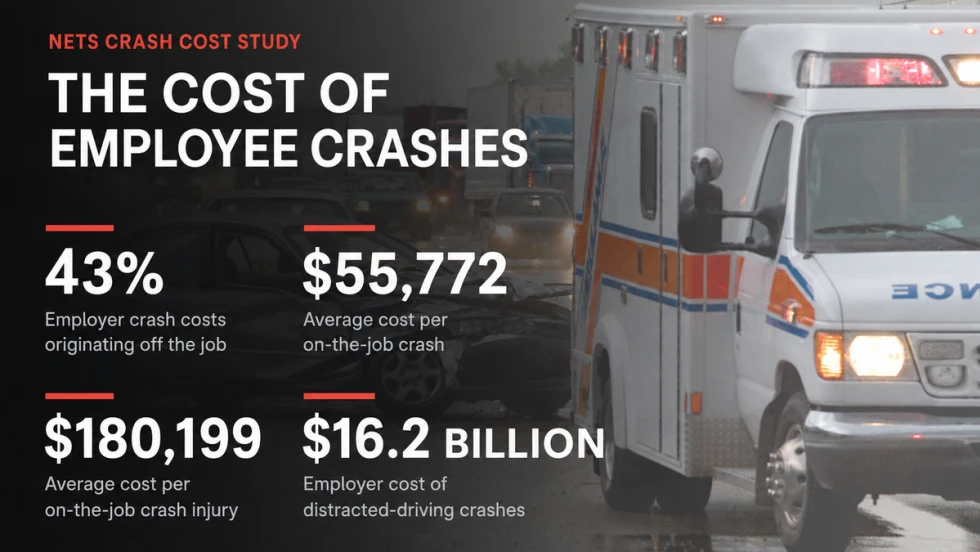
Off-the-Job Crashes Account for 43% of Employers’ $61.7 Billion Crash Burden
NETS quantifies costs dispersed across fleet, risk, HR, and other departments while providing new per-crash benchmarks for employers.
Read More →
Ram Recalls More Than 1.27 Million 1500 Pickups for Seat Belt Anchor Issue
The recall affects certain 2019-2026 Ram 1500 pickups that may have improperly attached second-row seat belt buckle anchors.
Read More →