




Going Global Offers Fleet Benefits
Globalized fleet management can offer benefits of scale and greater transparency and control for international fleet managers, Stuart Donnelly, chief regional officer - Europe North for Fleet Logistics, told delegates at the recent Fleet Europe forum in Cannes.

Donnelly

Donnelly
Globalized fleet management can offer benefits of scale and greater transparency and control for international fleet managers, Stuart Donnelly, chief regional officer - Europe North for Fleet Logistics, told delegates at the recent Fleet Europe forum in Cannes.
Speaking to delegates at a presentation entitled “Globalization of Fleet Management,” Donnelly said that managing a fleet on a global level, rather than by a series of national deals, gives the international fleet manager greater leverage with vehicle manufacturers to negotiate larger discounts.
Without being able to capitalize on the size of the combined fleet across the world, international fleet managers were missing out on the potential for improved discounts, while smaller companies could, by negotiating across their combined fleets in all countries in which they operated, achieve minimum thresholds for manufacturer volume discounts, he added.
Donnelly cited the example of one Fleet Logistics client that had been able to negotiate an incremental value of around $300,000 by using its global fleet as leverage to increase rebates with its supplying manufacturers on all cars.
Another objective of globalization was to achieve greater transparency and increased insight into all the fleets operated across various countries and divisions throughout the world.
“There is an old adage that if you can’t measure it, you can’t manage it and that certainly applies to global fleet operations,” said Donnelly. “By looking at all the fleets you operate on a global level, you get a much clearer picture of the manufacturers, leasing companies and third-party suppliers that you work with. This can provide the opportunity for global deals and greater centralized decision making at head office level rather than a series of decisions and agreements at a local level.”
Donnelly identified several clear steps to creating and implementing the ideal global fleet strategy.
The first was to create a global category management team of specialists, capable of negotiating with suppliers for various asset classes and products and services that leant themselves to global negotiations. These included vehicle manufacturers, insurance companies, leasing companies, fuel companies and other third party suppliers where a global agreement was also a possibility, such as tire manufacturers.
The second was to establish what Donnelly called a “single version of the truth” – a single vision for how the global fleet policy should look and what its constituent parts should be, to try and achieve buy-in from all those charged with implementing it.
At the same time, the global team needed to connect with senior regional stakeholders to create the strategy and achieve a mandate for implementing a global fleet policy. This ensured that no part of the organization was left out or overlooked in the implementation process and a consensus was achieved.
A key part of implementing the global fleet policy was to identify those vehicle manufacturers and other suppliers, such as leasing companies, capable of supporting and helping deliver a global strategy.
Donnelly said that linked to this objective was the need to rationalize the number of vehicle manufacturers globally in order to deliver the greatest leverage and maximize the potential for achieving volume discounts.
“There are only a finite number of manufacturers capable of providing homogenous products with standard specifications across the world to fit in with a global fleet strategy. Multi-marque global brands, such as the VW Group, are ideal,” he said.
A global fleet strategy approach might actually fit in with the requirements of the vehicle manufacturers, as many were looking to rationalize their brands, were facing over-capacity and keen to do volume deals and were also entering into platform sharing agreements with each other, said Donnelly.
A key element to implementing a global fleet strategy was to identify the partners able to meet your fleet requirements and negotiate global and regional agreements with them.
“There may be some services, such as servicing and maintenance, that still need to be negotiated at a local level as they need to be with suppliers on the ground, and there are few in the SMR arena than can offer global agreements,” he said.
In the same way it was also necessary to identify those leasing and fleet management companies capable of supporting vehicle sourcing and fleet management requirements geographically, added Donnelly.
Fleet Logistics, which has over 110,000 cars under management across Europe, covers 24 countries from its own offices and is looking to expand into new markets, including India, Brazil, South Africa and Turkey.
More Global Fleet

Cameras, Safety and Insurance: From Reactive Claims to Real-Time Prevention (Part 2 of 2)
Part Two: Commercial auto remains one of the most challenging and costly lines of coverage for fleet operators and insurers alike. Continue learning more about how to effectively address these issues from Onur Aksan, Enterprise Business Development Executive, Geotab
Read More →
Beyond Utilization Rates: Smarter Fleet Replacement Decisions
Vehicle replacement decisions affect every aspect of fleet performance, from operating costs to asset availability. This guide explores how fleet leaders use integrated data, benchmarking, and lifecycle analytics to determine the right fleet size and optimize replacement timing with greater confidence.
Read More →
Cameras, Safety and Insurance: From Reactive Claims to Real-time Prevention
Commercial auto remains one of the most challenging and costly lines of coverage for fleet operators and insurers alike. Learn more about how to effectively address these issues from Onur Aksan, Enterprise Business Development Executive, Geotab.
Read More →
Why Fleet Managers Are Replacing Departmental Vehicles with Shared Motor Pools
Departmentally assigned vehicles often create hidden costs through underutilization, poor visibility, and increased administrative burden. This white paper explores how shared motor pool strategies help fleets reduce costs, improve accountability, and optimize vehicle utilization.
Read More →
Fleet Costs Are Rising: Here’s How Leaders Are Responding
Fleet leaders are under pressure to reduce costs, adapt to economic uncertainty, and make smarter decisions. See how peers across North America are responding with real data, proven strategies, and forward-looking insights. Download the 2026 Market Pulse Report to benchmark your strategy and uncover where you can gain an edge.
Read More →
Enterprise Fleet Management Surpasses 900,000 Vehicles in U.S. & Canada
Enterprise Mobility connects with mobility solutions around the globe
Read More →
Automotive Fleet's Guide to Fleet Electrification
Unlock the secrets to a successful transition to electric fleets with Automotive Fleet's comprehensive Fleet Electrification Guide!
Read More →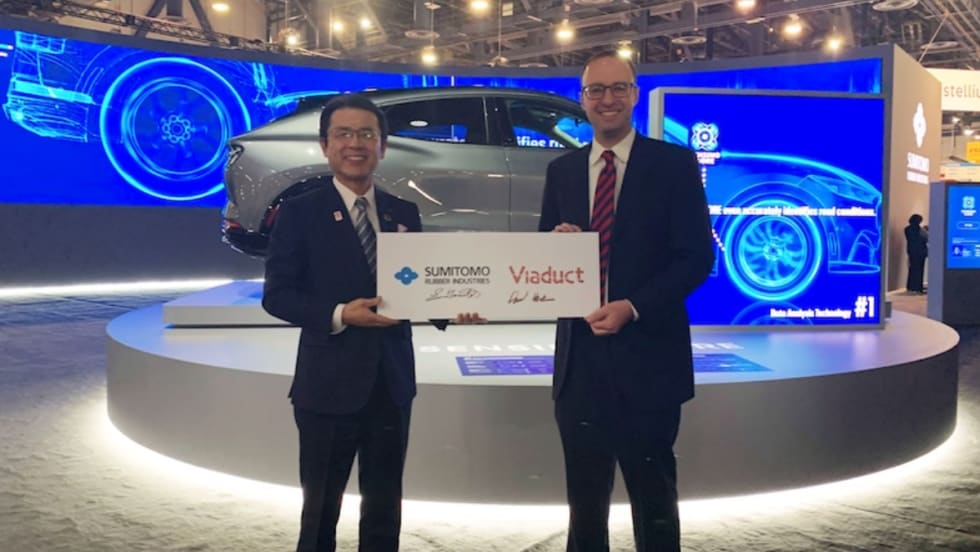
Sumitomo Rubber Industries to Acquire Viaduct
Viaduct will join Sumitomo as an independent subsidiary. Partnership strengthens global reach and accelerates AI-driven innovation for fleets and manufacturing.
Read More →
AfMA’s 2025 Education & Leadership Summit: 26 Years of Impactful Connection
Held in Sydney, the Australasian Fleet Management Association’s 2025 Summit marked ten years of growth as the event expanded its global reach and doubled down on practical, non-commercial fleet leadership programming.
Read More →
Closing Soon! Nominate a 2025 Global Fleet Team of the Year
Submit your nomination for the award that honors outstanding multinational fleet teams. Nominations close Aug. 15.
Read More →