




GM, University of Michigan Collaborate to Advance Safety Engineering
DETROIT – General Motors safety engineers are helping to advance crash test methods by getting out of the lab and into University of Michigan Hospital to witness surgeries and other medical procedures resulting from crash-related injuries.
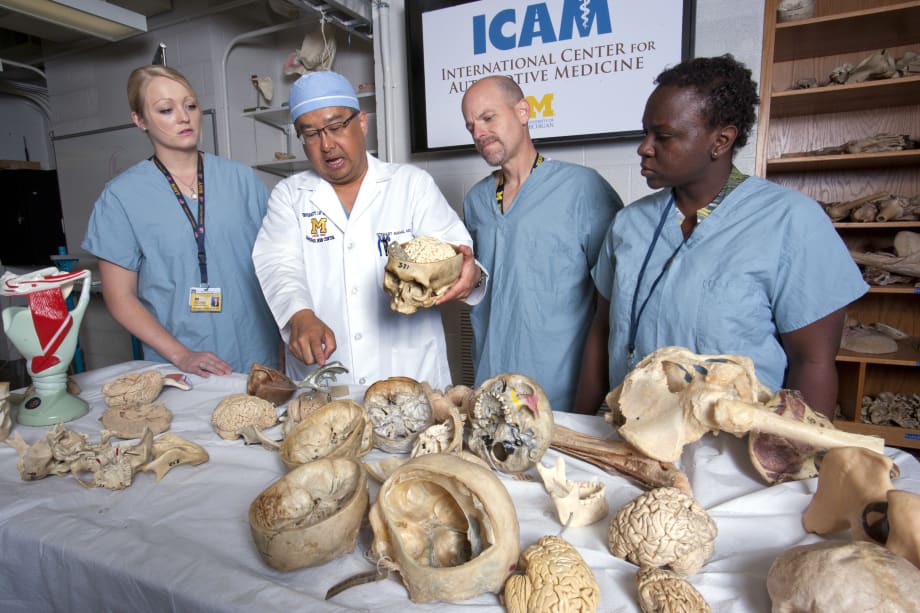
Dr. Stewart Wang (left center), founding director of the University of Michigan’s International Center of Automotive Medicine, discusses the effects of crash-related injuries on human anatomy with GM safety engineers (l to r) Suzanne Kayser, Mike Haldenwanger and Barbara Bunn, who participate in ICAM’s Technical Fellowship for Engineers. (Photo by Erik Campos for General Motors)
DETROIT – General Motors safety engineers are helping to advance crash test methods by getting out of the lab and into University of Michigan Hospital to witness surgeries and other medical procedures resulting from crash-related injuries.
GM’s collaboration with the University of Michigan’s International Center of Automotive Medicine (ICAM) over the past decade has resulted in 25 GM safety personnel participating in ICAM’s Technical Fellowship for Engineers.
Crash test engineer Barbara Bunn, vehicle safety performance engineer Suzanne Kayser and senior field performance assessment engineer Mike Haldenwanger currently spend a day each week at ICAM’s research labs at the University of Michigan Hospital in Ann Arbor, where they attend surgeries and dissections to understand crash-related injuries up close. It is knowledge they use to advance automotive safety.
“ICAM is dedicated to preventing injuries from happening in the first place,” said Dr. Stewart Wang, the center’s founding director and head of the University of Michigan Program for Injury Research and Education as well as director of acute care surgery research. “We estimate our work has influenced the design of more than 75 million vehicles on the road today.”
GM noted that its collaboration with ICAM reflects the automaker’s commitment to crash safety. For the 2012 model year, 14 Chevrolet, Cadillac, Buick and GMC vehicles have been named 2012 Top Safety Picks by the Insurance Institute for Highway Safety. Eleven 2012 models have received 5-Star overall vehicle scores in U.S. New Car Assessment Program testing.
“It truly is collaborative work,” Wang said. “GM’s engineers are the best at what they do and we learn a great deal from them. With all my experience as a researcher, they’ve really pushed me to up my game by demanding mathematically specific injury data that can serve as the basis for new test methodologies and occupant protection solutions.”
ICAM provides GM’s safety engineers “analytical morphomics,” a 3D medical imaging and computational biomechanics process developed specifically for crash research. ICAM has amassed tens of thousands of full body scans of crash victims, measuring millions of data points. The information is not only useful for safety engineers; it also enables more precise, personalized medical care.
“Morphomics helps bridge the gap between crash test dummies and real people,” Haldenwanger said. “Being able to see individual variations from body to body is helping us understand at an anatomical level how to better adapt safety systems to provide a higher level of protection to a wider segment of the population.”
The ICAM research has helped the GM engineers better understand leg and hip injuries in frontal crashes. This, in turn, helps them design knee bolsters and seat belts to help mitigate injuries to lower extremities.
“Understanding what people go through biomechanically as a result of vehicle crashes is a strong motivator for finding ways to prevent injuries from happening in the first place, or at the very least lessen their severity,” Kayser said.
For all the high-tech analysis involved in ICAM work, it is the human side of the fellowship – specifically attending surgeries of crash victims – that profoundly affects GM’s participants in the safety fellowship.
Dr. Stewart Wang (left center), founding director of the University of Michigan’s International Center of Automotive Medicine, discusses the effects of crash-related injuries on human anatomy with GM safety engineers (l to r) Suzanne Kayser, Mike Haldenwanger and Barbara Bunn, who participate in ICAM’s Technical Fellowship for Engineers. (Photo by Erik Campos for General Motors)
“Knowing that crash field data is enabling first responders as well as doctors and surgeons at U of M help more crash victims make a full recovery is truly inspiring,” Bunn said. “Hopefully, the advances we’re making in occupant protection as a result of this fellowship will mean even fewer people will suffer crash injuries in years to come.”
To view a Buick crash test video, click here.
More Safety

Nexar-Nauto Merger Aims to Give Fleets Better Safety Intelligence Through Larger Driving Dataset
Stefan Heck tells Automotive Fleet that combining more than 10 billion miles of driving history with Nexar's AI models will give fleets deeper insights into driver risk and roadway conditions than either company could provide independently.
Read More →
Don't Wait for a Crisis: 5 Ways to Build Mental Health Into Your Fleet Safety Program
For Suicide Prevention Month, fleet and safety leaders have an opportunity to put mental health where it belongs: at the center of workplace safety.
Read More →
How Camera Data Can Strengthen a Fleet’s Insurance Renewal
Insights from a commercial insurance carrier and a broker show how fleets can turn video telematic data, driver coaching, and improved claims results into a stronger case at insurance renewal.
Read More →
The Safest Fleets Aren’t the Ones with the Most Technology
You’ve made the telematics investment. Here’s how to capture the other half of its value and build the safest fleet on the road.
Read More →
Hidden in Plain Sight: Fleet Compliance Risks
Fleet compliance isn't just about having policies — it's about consistently enforcing them. This practical guide reveals six hidden compliance risks common in public sector and shared fleet operations and outlines proven strategies to improve visibility, accountability, and audit readiness
Read More →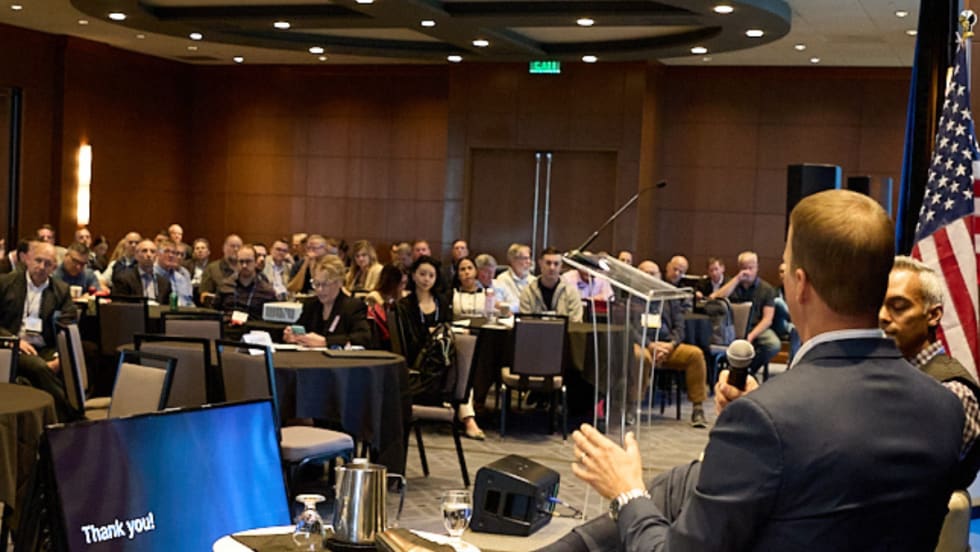
NETS Sets 2026 Fleet Safety Benchmark Conference for Indianapolis
The Sept. 15–17 program will feature fleet benchmarking data, case studies, emerging technologies, and implementation strategies while running alongside the NSC Safety Congress & Expo.
Read More →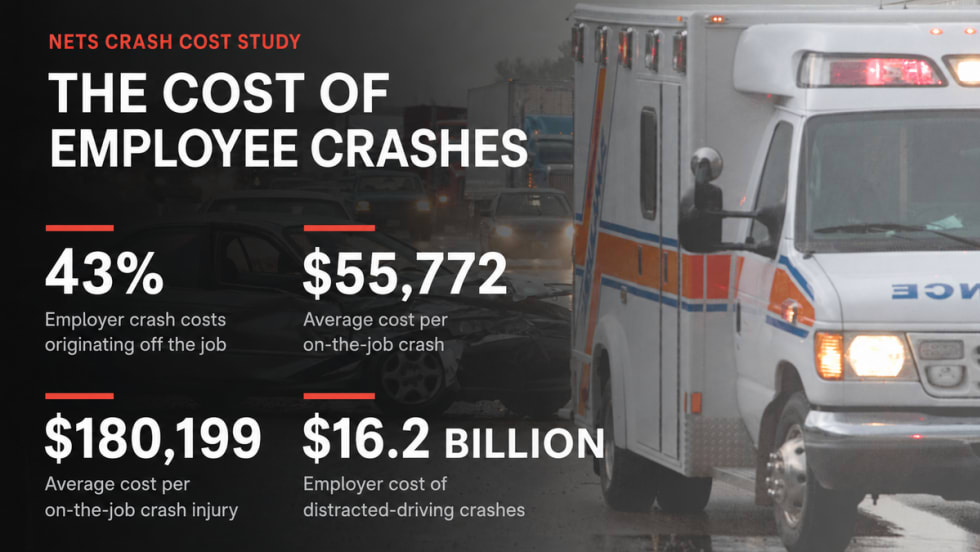
Off-the-Job Crashes Account for 43% of Employers’ $61.7 Billion Crash Burden
NETS quantifies costs dispersed across fleet, risk, HR, and other departments while providing new per-crash benchmarks for employers.
Read More →
Ram Recalls More Than 1.27 Million 1500 Pickups for Seat Belt Anchor Issue
The recall affects certain 2019-2026 Ram 1500 pickups that may have improperly attached second-row seat belt buckle anchors.
Read More →
How Better Visibility Cut Speeding Violations by 48%
Fleet leaders don't need more data, they need clearer visibility into what the data is saying. This case study explores how one utility replaced speeding-event counts with a single metric — miles driven in violation — to strengthen safety and significantly reduce speeding violations.
Read More →
Operation Safe Driver Week: Why the Industry's Oldest Safety Campaign Still Matters to Fleets
A look at how a 2007 enforcement initiative became one of the most consequential weeks on the fleet safety calendar, and what it means for your drivers in 2026.
Read More →